Executive Summary
The Hydroponics project in the agricultural sector in Spain targets a promising market opportunity. With an investment of €75,000, it achieves a Net Present Value of €6,024, an Internal Rate of Return of 11%, and a payback period of 3.9 years.
| Indicator | Value |
|---|---|
| Initial Investment | €٧٥,٠٠٠ |
| First Year Revenue | €٨٥,٠٠٠ |
| Annual Growth (CAGR) | ١٢٪ |
| Net Margin (Y1) | ٢٪ |
| Return on Investment (Avg.) | ٨٪ annually |
| Net Present Value (NPV) | €٦,٠٢٤ |
| Internal Rate of Return (IRR) | ١١٪ |
| Profitability Index (PI) | ١ |
| Payback Period | ٤ years |
| Break-even Year | Year ٤ |
| Expected NPV (Probability-Weighted) | €٧,٣٢٩ |
Assumptions and Basis
The figures in this study are based on project data, the nature of the agricultural sector in Spain, and local market indicators, according to the following assumptions:
| Assumption | Value |
|---|---|
| Initial Capital | €٧٥,٠٠٠ |
| First Year Revenue | €٨٥,٠٠٠ |
| Annual Growth | ١٢٪ |
| Cost of Goods Sold (COGS) | ٣٥٪ of Revenue |
| Operating Expenses | ٤٥٪ of Revenue |
| Tax/Zakat | ١٥٪ |
| Discount Rate (WACC) | ٨٪ |
| Study Horizon | ٥ years |
Basis of Assumptions: The figures are based on average startup costs, revenues, and expected profit margins for small to medium-sized hydroponic farms in Spain, considering government support and market conditions for 2026.
Project Description and Opportunity
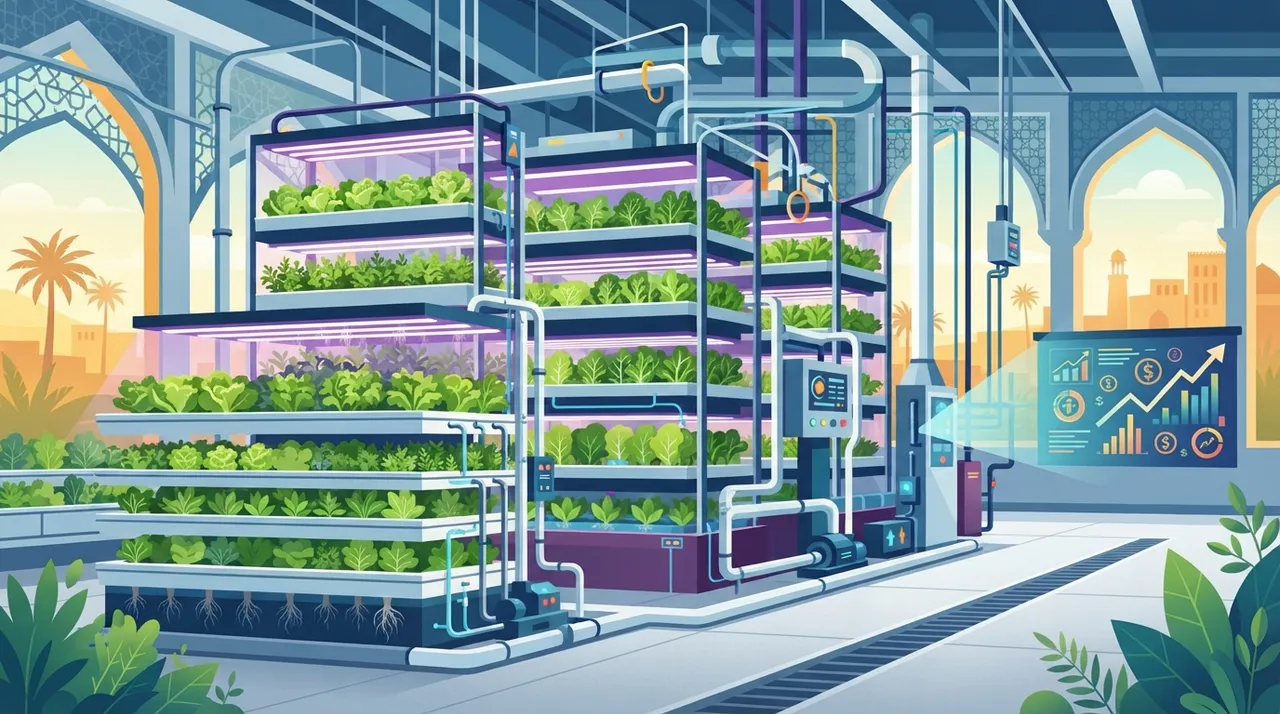
The hydroponics project in Spain aims to leverage the growing opportunities in the sustainable agriculture sector. The concept relies on cultivating vegetables and fruits using soil-less farming systems, significantly reducing water and fertilizer consumption and increasing productivity year-round. The business model focuses on selling fresh produce locally to health and environmentally conscious consumers, as well as to restaurants and hotels. Target customers are individuals and families seeking high-quality, pesticide-free products, in addition to establishments committed to offering fresh, locally sourced ingredients.
Market and Demand Study
The Spanish market is experiencing increasing demand for fresh local agricultural products, especially with growing awareness of the importance of healthy food and sustainable farming practices. Spain faces water scarcity and the effects of climate change, making hydroponics an attractive solution for ensuring food security and increasing productivity in limited spaces. The Spanish government and the European Union support the adoption of modern and sustainable agricultural technologies through financial incentives and subsidies. Urban farming and demand for organic and pesticide-free products are growing in popularity, driving the growth of the hydroponics market in Spain.
Market Sizing (TAM / SAM / SOM)
The Total Addressable Market (TAM) was determined based on the total annual spending on vegetables and fruits in Spain. The Serviceable Available Market (SAM) represents the percentage of this market that hydroponic products can capture, considering current trends toward sustainability and local produce. The Serviceable Obtainable Market (SOM) was estimated as a small percentage of the SAM that the project can achieve in the initial years, taking into account initial production capacity and competition. Market reports and Spanish agricultural data were used to estimate these figures.
| Level | Annual Size | Description |
|---|---|---|
| TAM — Total Addressable Market | €٨١٠٠.٠ million | Total serviceable demand |
| SAM — Serviceable Available Market | €٥٠.٠ million | Portion reachable by your model |
| SOM — Serviceable Obtainable Market | €٥.٠ million | Your realistic early share |
Sizing Basis: Estimates for the Total Addressable Market (TAM) represent the entire market for vegetables and fruits in Spain. The Serviceable Available Market (SAM) represents the portion that hydroponics can target, while the Serviceable Obtainable Market (SOM) reflects an initial share achievable by a project of this size.
Unit Economics
Measures the profitability of each unit sale/customer — the most accurate feasibility indicator:
| Unit Indicator | Value |
|---|---|
| Sales Unit | Kilogram of Product |
| Average Price/Revenue per Unit | €٤ |
| Customer Acquisition Cost (CAC) | €١٥ |
| Customer Lifetime Value (LTV) | €٣٠٠ |
| LTV/CAC Ratio | ٢٠× (healthy) |
| Contribution Margin | ٤٠٪ |
Competitive Analysis
Current competitors include large and small traditional farms, as well as a growing number of other hydroponic farms in Spain. The sustainable advantage of our project lies in focusing on the high quality of fresh produce, year-round production, environmental sustainability (lower water and fertilizer consumption), and proximity to local markets. Differentiation can be achieved by offering unique varieties, organic certifications, excellent customer experience, and building a strong brand focused on sustainability and healthy products.
Market Entry and Pricing Strategy
The market entry plan involves targeting specialized local stores, farmers' markets, restaurants and hotels, and direct sales to consumers via an online platform. Marketing will be conducted through social media, environmental awareness campaigns, collaborations with local chefs, and participation in community events. Pricing will be determined based on high quality, operational costs, and competitor prices, while offering added value to the consumer in terms of freshness and sustainability. Distribution channels will be direct initially to ensure product quality and reduce costs.
Capacity and Operations
The project is expected to start with an initial production capacity of approximately 20,000-25,000 kilograms per year of leafy greens and tomatoes, with a gradual occupancy rate starting at 60% in the first year and reaching 90% by the third year with gradual expansion of the cultivated area.
Daily operations include monitoring nutrient and water levels, controlling temperature, humidity, and lighting, planting seedlings, harvesting, packaging, and delivery. Strict procedures must be in place to ensure quality and food safety, in compliance with Spanish and European regulations. Best practices in waste management and water recycling will also be implemented to enhance sustainability.
Technical aspects include selecting the appropriate hydroponic system (such as NFT or DWC) based on the target crops, and designing greenhouses or vertical farms. The location must be considered to ensure access to water sources and renewable energy if possible, and proximity to markets. Suppliers for equipment, nutrient solutions, and seeds will be carefully chosen to ensure quality and efficiency. The project also requires a climate and lighting control system to maximize year-round productivity.
Projected Income Statement (٥ Years)
| Item \ Year | Y1 | Y2 | Y3 | Y4 | Y5 |
|---|---|---|---|---|---|
| Revenue | €٨٥,٠٠٠ | €٩٥,٢٠٠ | €١٠٦,٦٢٤ | €١١٩,٤١٩ | €١٣٣,٧٤٩ |
| Cost of Sales | (€٢٩,٧٥٠) | (€٣٣,٣٢٠) | (€٣٧,٣١٨) | (€٤١,٧٩٧) | (€٤٦,٨١٢) |
| Gross Profit | €٥٥,٢٥٠ | €٦١,٨٨٠ | €٦٩,٣٠٦ | €٧٧,٦٢٢ | €٨٦,٩٣٧ |
| Operating Expenses | (€٣٨,٢٥٠) | (€٤٢,٨٤٠) | (€٤٧,٩٨١) | (€٥٣,٧٣٨) | (€٦٠,١٨٧) |
| EBITDA | €١٧,٠٠٠ | €١٩,٠٤٠ | €٢١,٣٢٥ | €٢٣,٨٨٤ | €٢٦,٧٥٠ |
| Tax | (€٣٠٠) | (€٦٠٦) | (€٩٤٩) | (€١,٣٣٣) | (€١,٧٦٢) |
| Net Profit | €١,٧٠٠ | €٣,٤٣٤ | €٥,٣٧٦ | €٧,٥٥١ | €٩,٩٨٧ |
| Net Margin | ٢٪ | ٤٪ | ٥٪ | ٦٪ | ٨٪ |
Investment Cost Structure
| Item | Cost | Percentage |
|---|---|---|
| Setup and Equipment Costs | €٣٠,٠٠٠ | ٤٠٪ |
| Land Lease/Purchase and Facilities | €١٥,٠٠٠ | ٢٠٪ |
| Salaries and Wages | €١١,٢٥٠ | ١٥٪ |
| Raw Materials (Seeds, Nutrients) | €٧,٥٠٠ | ١٠٪ |
| Marketing and Sales | €٣,٧٥٠ | ٥٪ |
| Other Operating Expenses | €٧,٥٠٠ | ١٠٪ |
Cash Flow and Break-even Point
| Year | Operating Cash Flow | Cumulative Cash Flow |
|---|---|---|
| Year ١ | €١٦,٧٠٠ | -€٥٨,٣٠٠ |
| Year ٢ | €١٨,٤٣٤ | -€٣٩,٨٦٦ |
| Year ٣ | €٢٠,٣٧٦ | -€١٩,٤٩٠ |
| Year ٤ | €٢٢,٥٥١ | €٣,٠٦١ |
| Year ٥ | €٢٤,٩٨٧ | €٢٨,٠٤٩ |
Estimated break-even point at annual revenue ≈ €٨١,٩٢٣ (~٩٦٪ of first-year revenue), with a contribution margin of ٦٥٪. Cumulative cash break-even in Year ٤.
Funding Structure
| Funding Source | Percentage | Amount |
|---|---|---|
| Equity | ٦٠٪ | €٤٥,٠٠٠ |
| Debt Financing (٤٪ interest) | ٤٠٪ | €٣٠,٠٠٠ |
Sensitivity Analysis (Revenue × Operations)
The combined effect of changes in revenue and costs on Net Present Value:
| Revenue \ Operations | −10٪ | −5٪ | Base | +5٪ | +10٪ |
|---|---|---|---|---|---|
| −20٪ | €٢٠,٤٣٢ | €٦,٠٢٤ | -€٨,٥٧٨ | -€٢٤,٢٥٥ | -€٤١,٠٩٩ |
| −10٪ | €٣١,٢٣٨ | €١٥,٠٢٩ | -€١,١٨٠ | -€١٨,٢٢٧ | -€٣٦,٨٦١ |
| Base | €٤٢,٠٤٤ | €٢٤,٠٣٤ | €٦,٠٢٤ | -€١٢,٣٩١ | -€٣٢,٦٢٣ |
| +10٪ | €٥٢,٨٥٠ | €٣٣,٠٣٩ | €١٣,٢٢٨ | -€٦,٧١٨ | -€٢٨,٣٨٦ |
| +20٪ | €٦٣,٦٥٧ | €٤٢,٠٤٤ | €٢٠,٤٣٢ | -€١,١٨٠ | -€٢٤,٢٥٥ |
Scenario Analysis
| Scenario | Probability | NPV | Assessment |
|---|---|---|---|
| Pessimistic | ٢٥٪ | -€٢٢,٦١٥ | Not Feasible |
| Base | ٥٠٪ | €٦,٠٢٤ | Feasible |
| Optimistic | ٢٥٪ | €٣٩,٨٨٣ | Feasible |
Expected Present Value (Weighted): €٧,٣٢٩.
Risk Analysis and Management
| Risk | Probability | Impact | Mitigation |
|---|---|---|---|
| Fluctuations in energy prices (electricity) | Medium | High | Invest in renewable energy (solar panels), improve energy efficiency, negotiate fixed-price energy contracts. |
| Intense competition from large traditional farms | Medium | Medium | Focus on specialized and high-quality products, build a strong brand, target niche markets (high-end restaurants, health-conscious customers). |
| Agricultural diseases and pests | Low | Medium | Implement strict hygiene and sterilization protocols, continuous monitoring, use advanced environmental control systems, crop diversification. |
| Changes in government regulations and agricultural policies | Low | Medium | Continuous monitoring of legislation, joining professional associations, leveraging available government subsidies and support for sustainable agriculture. |
| Marketing and distribution challenges for new products | Medium | Medium | Build a strong network with distributors and buyers, use e-commerce platforms, focus on digital marketing and educational content about the benefits of hydroponics. |
Organizational Structure and Team
The proposed organizational structure consists of a farm manager with expertise in hydroponics, agricultural technicians specializing in operating hydroponic systems, and workers to assist with planting, harvesting, and packaging. Marketing and sales specialists can be hired part-time or outsourced initially. It is important to build a team with technical knowledge and a commitment to sustainable farming practices.
Legal and Regulatory Aspects
The project requires obtaining necessary agricultural and health licenses in Spain, as well as complying with EU regulations on food safety and agricultural products. Local regulations related to land use and construction should also be reviewed. Government incentives and subsidies for sustainable agriculture may be available and should be explored and utilized.
Expansion and Sustainability Plan
The project can be expanded by increasing the number of cultivation units, diversifying crops, and exploring new markets such as exporting to other European countries. Consideration can also be given to integrating innovative technologies such as full vertical farming or using renewable energy to reduce operating costs. Partnerships with large food companies or specialized stores can open new avenues for growth.
Environmental, Social, and Governance (ESG) Impact
The hydroponics project significantly reduces water consumption by up to 90% compared to traditional agriculture, and lessens the need for harmful pesticides and chemical fertilizers. This reduces environmental pollution and conserves natural resources. The project will focus on using environmentally friendly materials in construction and operation, and reducing its carbon footprint. The project contributes to providing healthy and sustainable food to the local community, and promotes good governance practices through transparency and accountability.
Conclusions and Recommendations
The hydroponics project in Spain represents a promising investment opportunity due to increasing demand for fresh and sustainable products, and the environmental challenges facing traditional agriculture. With an initial capital of approximately €75,000, the project can achieve good returns while adhering to sound environmental practices. The recommendation is to proceed with the project, focusing on operational efficiency and effective marketing.
Frequently Asked Questions
How much does it cost to start a hydroponics project in Spain?
The cost of starting a small to medium-sized hydroponics project in Spain is approximately €75,000, which includes setup and equipment costs, land, and initial operations.
What is the average projected revenue in the first year for a hydroponic farm in Spain?
Expected revenue in the first year for a project of this size can reach approximately €85,000, with potential for annual growth of 12%.
What are the applicable taxes for new agricultural companies in Spain?
New companies in Spain benefit from a reduced tax rate of 15% for the first two profitable years, after which the standard rate becomes 25%.
Is a hydroponics project profitable in Spain?
Yes, a hydroponics project is profitable in Spain due to increasing demand for fresh and sustainable products, high efficiency in resource use, and government support for the sector.
What are the most common crops for hydroponics in Spain?
The most common crops include tomatoes, lettuce, leafy greens, peppers, cucumbers, and microgreens.
What licenses are required for a hydroponic farm in Spain?
The project requires agricultural and health licenses from Spanish authorities, in addition to compliance with EU regulations on food safety and agricultural products.
Sources and Disclaimer
- 6Wresearch - Spain Hydroponics Market (March 2026)
- Taxadora - Corporate Tax in Spain 2026 (June 2026)
- Trading Economics - Bank Lending Rate in Spain (May 2026)
- Market Data Forecast - Europe Hydroponics Market (January 2026)
- StatLedger - Spain Greenhouse Farming Market (March 2026)
Disclaimer: This is a guideline study that provides financial analysis according to accepted industry standards; verify the figures locally according to your project's reality before any investment decision.