Executive Summary
The hydroponic farming project in Egypt's agricultural sector targets a promising market opportunity. With an investment of ١٬٢٥٠٬٠٠٠ EGP, it achieves a net present value of ١٢٬٦٤٦ EGP, an internal rate of return of ١٥٪, and a payback period of 3.4 years.
| Indicator | Value |
|---|---|
| Initial Investment | ١٬٢٥٠٬٠٠٠ EGP |
| First-Year Revenue | ١٬٨٠٠٬٠٠٠ EGP |
| Annual Growth (CAGR) | ٨٪ |
| Net Margin (Y1) | ٥٪ |
| Return on Investment (Avg.) | ١١٪ annually |
| Net Present Value (NPV) | ١٢٬٦٤٦ EGP |
| Internal Rate of Return (IRR) | ١٥٪ |
| Profitability Index (PI) | ١ |
| Payback Period | ٣ years |
| Break-even Year | Year ٤ |
| Expected NPV (Probability Weighted) | ٣٠٬٨٣٦ EGP |
Assumptions and Basis
The figures in this study are based on project data, the nature of the agricultural sector in Egypt, and local market indicators, according to the following assumptions:
| Assumption | Value |
|---|---|
| Initial Capital | ١٬٢٥٠٬٠٠٠ EGP |
| First-Year Revenue | ١٬٨٠٠٬٠٠٠ EGP |
| Annual Growth | ٨٪ |
| Cost of Goods Sold (COGS) | ٤٥٪ of Revenue |
| Operating Expenses | ٣٥٪ of Revenue |
| Tax/Zakat | ٢٣٪ |
| Discount Rate (WACC) | ١٥٪ |
| Study Horizon | ٥ years |
Basis of Assumptions: The figures are based on the average costs of establishing and operating a medium-sized hydroponic farm in Egypt, considering local crop prices and tax rates.
Project Description and Opportunity
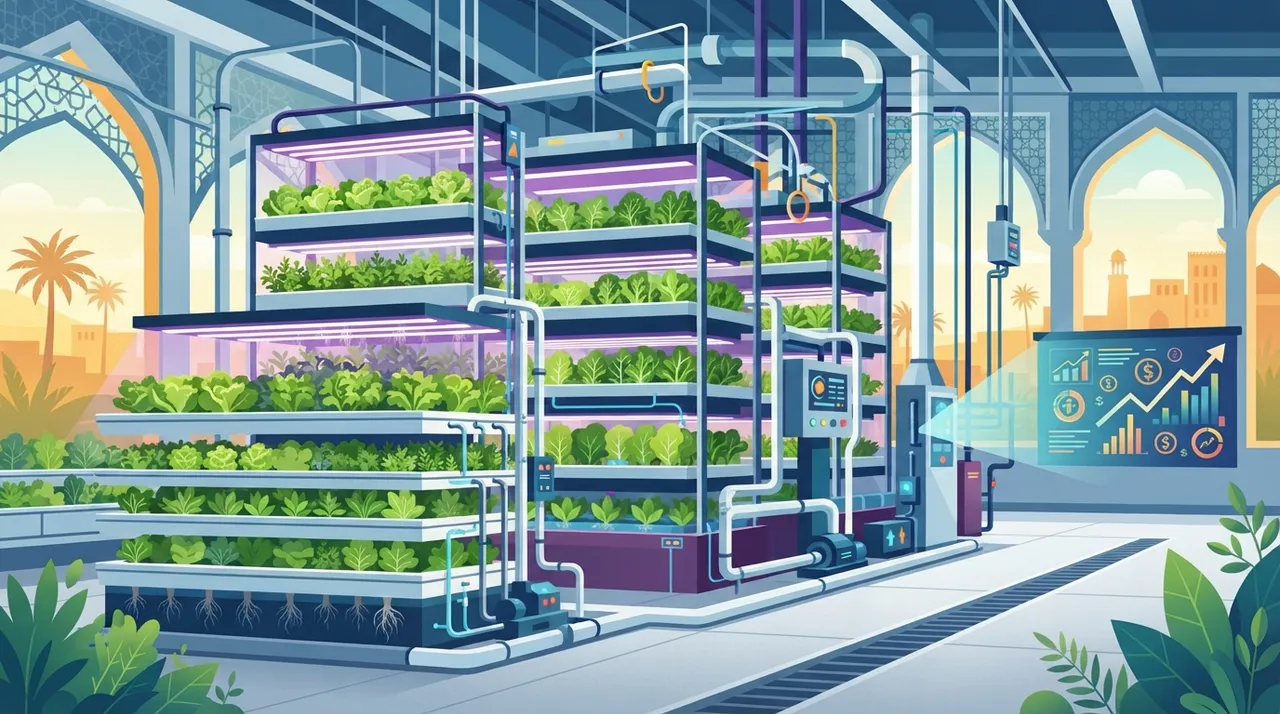
The hydroponic farming project in Egypt aims to leverage modern techniques to produce high-quality vegetables, fruits, and herbs efficiently in terms of water and space consumption. The agricultural sector in Egypt faces significant challenges such as water scarcity and limited arable land, making hydroponics a strategic and sustainable solution. The business model focuses on direct sales to consumers (B2C), restaurants and hotels (B2B), and supermarkets that prioritize fresh and organic products. Target customers include health-conscious individuals and institutions seeking consistent, high-quality supplies.
Market and Demand Study
The Egyptian market is characterized by increasing demand for fresh and healthy agricultural products, driven by population growth and rising awareness of proper nutrition. Egypt is among the countries suffering from absolute water scarcity, making hydroponic solutions an urgent necessity to ensure food security. The Egyptian government is moving towards supporting modern agriculture, such as hydroponics, as part of its strategy to achieve food security, offering tax incentives and financing facilities for these projects. The hydroponics market in Egypt is expected to grow at a compound annual growth rate (CAGR) of approximately 8.25% between 2025 and 2031, confirming promising opportunities in this sector.
Market Sizing (TAM / SAM / SOM)
To size the market, the Total Addressable Market (TAM) was estimated based on the total value of the vegetable market in Egypt, which reached $24.3 billion in 2024 (approximately 750 billion EGP at 2024 exchange rates). The Serviceable Available Market (SAM) represents a segment of this market that hydroponics can target, considering the growth of this sector. The Serviceable Obtainable Market (SOM) for the project reflects the market share that can be achieved in the initial years based on the project's initial production capacity and expansion plans. These estimates rely on recent data regarding the size of the hydroponics market in Egypt and projected growth rates.
| Level | Annual Size | Description |
|---|---|---|
| TAM — Total Market | 24300.0 million EGP | Total serviceable demand |
| SAM — Available Market | 500.0 million EGP | Portion reachable by your model |
| SOM — Realistic Target | 100.0 million EGP | Your realistic early share |
Basis of Sizing: Market sizing is based on the market value of vegetables in Egypt for 2024, the growth rate of the hydroponics market, and the operational capacity of the proposed project.
Unit Economics
Measures the profitability of each sales unit/customer — the most accurate feasibility indicator:
| Unit Indicator | Value |
|---|---|
| Sales Unit | kilogram |
| Average Price/Revenue per Unit | ٣٥ EGP |
| Customer Acquisition Cost (CAC) | ٥ EGP |
| Customer Lifetime Value (LTV) | ٥٠٠ EGP |
| LTV/CAC Ratio | ١٠٠× (healthy) |
| Contribution Margin | ٥٠٪ |
Competitive Analysis
The main competition consists of traditional farms and greenhouse farms. However, the hydroponic farming project is distinguished by its ability to offer higher quality, pesticide-free products, with faster and more sustainable productivity. The project's sustainable advantage lies in its water efficiency (saving up to 90% compared to traditional farming), reduced reliance on soil, and precise control over growth conditions to ensure a high-quality product year-round. The government's support for this type of agriculture also provides an additional competitive advantage.
Market Entry and Pricing Strategy
The market entry plan includes digital marketing through social media and specialized platforms, and participation in local agricultural exhibitions. A brand focused on quality, freshness, and sustainability will be built. Distribution channels will include direct sales to consumers through dedicated points of sale or delivery services, in addition to contracting with major restaurants, hotels, and supermarkets. Products will be priced competitively, focusing on the added value of high quality and organic products, which can be sold at prices 20-30% higher than traditional products.
Capacity and Operations
The project starts with a medium production capacity (1000-2000 square meters) with a gradual expansion plan to increase crops and achieve full occupancy within 3 years, focusing on leafy greens, tomatoes, and strawberries.
Daily operations include monitoring water levels, nutrient solutions, pH, temperature, and humidity within the greenhouses. Plant growth is regularly monitored, and any potential pests or diseases are detected for rapid intervention. Harvesting, packaging, and packing operations will follow the highest quality standards to ensure the product reaches customers fresh. Quality depends on precise environmental control and providing optimal nutrients for the plants.
The project requires selecting a suitable location with a nearby electricity and water source, preferably close to target markets to reduce transportation costs. Technical aspects include using hydroponic systems such as Nutrient Film Technique (NFT) or Deep Water Culture (DWC), in addition to greenhouses for environmental control. Equipment includes water tanks, pumps, irrigation pipes, pH and electrical conductivity measurement systems, and temperature and humidity control systems. Suppliers will be carefully selected to ensure the quality of seedlings, nutrient solutions, and equipment.
Projected Income Statement (٥ Years)
| Item \ Year | Y1 | Y2 | Y3 | Y4 | Y5 |
|---|---|---|---|---|---|
| Revenues | ١٬٨٠٠٬٠٠٠ EGP | ١٬٩٤٤٬٠٠٠ EGP | ٢٬٠٩٩٬٥٢٠ EGP | ٢٬٢٦٧٬٤٨٢ EGP | ٢٬٤٤٨٬٨٨٠ EGP |
| Cost of Sales | (٨١٠٬٠٠٠ EGP) | (٨٧٤٬٨٠٠ EGP) | (٩٤٤٬٧٨٤ EGP) | (١٬٠٢٠٬٣٦٧ EGP) | (١٬١٠١٬٩٩٦ EGP) |
| Gross Profit | ٩٩٠٬٠٠٠ EGP | ١٬٠٦٩٬٢٠٠ EGP | ١٬١٥٤٬٧٣٦ EGP | ١٬٢٤٧٬١١٥ EGP | ١٬٣٤٦٬٨٨٤ EGP |
| Operating Expenses | (٦٣٠٬٠٠٠ EGP) | (٦٨٠٬٤٠٠ EGP) | (٧٣٤٬٨٣٢ EGP) | (٧٩٣٬٦١٩ EGP) | (٨٥٧٬١٠٨ EGP) |
| EBITDA | ٣٦٠٬٠٠٠ EGP | ٣٨٨٬٨٠٠ EGP | ٤١٩٬٩٠٤ EGP | ٤٥٣٬٤٩٦ EGP | ٤٨٩٬٧٧٦ EGP |
| Tax | (٢٤٬٧٥٠ EGP) | (٣١٬٢٣٠ EGP) | (٣٨٬٢٢٨ EGP) | (٤٥٬٧٨٧ EGP) | (٥٣٬٩٥٠ EGP) |
| Net Profit | ٨٥٬٢٥٠ EGP | ١٠٧٬٥٧٠ EGP | ١٣١٬٦٧٦ EGP | ١٥٧٬٧١٠ EGP | ١٨٥٬٨٢٦ EGP |
| Net Margin | ٥٪ | ٦٪ | ٦٪ | ٧٪ | ٨٪ |
Investment Cost Structure
| Item | Cost | Percentage |
|---|---|---|
| Greenhouse Construction and Preparation | ٤٣٧٬٥٠٠ EGP | ٣٥٪ |
| Hydroponic Systems and Equipment | ٣٧٥٬٠٠٠ EGP | ٣٠٪ |
| Water Tanks, Pumps, and Irrigation Networks | ١٢٥٬٠٠٠ EGP | ١٠٪ |
| Initial Seedlings, Seeds, and Nutrients | ١٢٥٬٠٠٠ EGP | ١٠٪ |
| Licenses, Studies, and Initial Working Capital | ١٨٧٬٥٠٠ EGP | ١٥٪ |
Cash Flow and Break-even Point
| Year | Operating Cash Flow | Cumulative Cash Flow |
|---|---|---|
| Year ١ | ٣٣٥٬٢٥٠ EGP | -٩١٤٬٧٥٠ EGP |
| Year ٢ | ٣٥٧٬٥٧٠ EGP | -٥٥٧٬١٨٠ EGP |
| Year ٣ | ٣٨١٬٦٧٦ EGP | -١٧٥٬٥٠٤ EGP |
| Year ٤ | ٤٠٧٬٧١٠ EGP | ٢٣٢٬٢٠٥ EGP |
| Year ٥ | ٤٣٥٬٨٢٦ EGP | ٦٦٨٬٠٣٢ EGP |
Estimated break-even point at annual revenue ≈ ١٬٦٠٠٬٠٠٠ EGP (~٨٩٪ of first-year revenue), with a contribution margin of ٥٥٪. Cumulative cash break-even in Year ٤.
Funding Structure
| Funding Source | Percentage | Amount |
|---|---|---|
| Equity | ٦٠٪ | ٧٥٠٬٠٠٠ EGP |
| Debt Financing (١٨٪ interest) | ٤٠٪ | ٥٠٠٬٠٠٠ EGP |
Sensitivity Analysis (Revenue × Operations)
Impact of simultaneous changes in revenue and costs on Net Present Value:
| Revenue \ Operations | −10٪ | −5٪ | Base | +5٪ | +10٪ |
|---|---|---|---|---|---|
| −20٪ | ٢٢٧٬٤٦٣ EGP | ١٢٬٦٤٦ EGP | -٢٠٢٬١٧١ EGP | -٤٢٦٬٤٨٦ EGP | -٦٩٥٬٦٣٢ EGP |
| −10٪ | ٣٨٨٬٥٧٧ EGP | ١٤٦٬٩٠٧ EGP | -٩٤٬٧٦٣ EGP | -٣٣٧٬٨٠٢ EGP | -٦٢٦٬٣٣٦ EGP |
| Base | ٥٤٩٬٦٩٠ EGP | ٢٨١٬١٦٨ EGP | ١٢٬٦٤٦ EGP | -٢٥٥٬٨٧٦ EGP | -٥٥٧٬٠٤٠ EGP |
| +10٪ | ٧١٠٬٨٠٣ EGP | ٤١٥٬٤٢٩ EGP | ١٢٠٬٠٥٥ EGP | -١٧٥٬٣١٩ EGP | -٤٨٩٬٩١٢ EGP |
| +20٪ | ٨٧١٬٩١٦ EGP | ٥٤٩٬٦٩٠ EGP | ٢٢٧٬٤٦٣ EGP | -٩٤٬٧٦٣ EGP | -٤٢٦٬٤٨٦ EGP |
Scenario Analysis
| Scenario | Probability | NPV | Assessment |
|---|---|---|---|
| Pessimistic | ٢٥٪ | -٣٥٤٬٩٧٠ EGP | Not feasible |
| Base | ٥٠٪ | ١٢٬٦٤٦ EGP | Feasible |
| Optimistic | ٢٥٪ | ٤٥٣٬٠٢٢ EGP | Feasible |
Expected Present Value (weighted): ٣٠٬٨٣٦ EGP.
Risk Analysis and Management
| Risk | Probability | Impact | Mitigation |
|---|---|---|---|
| Rising operating costs (electricity and water) | Medium | High | Partial reliance on solar energy, improving water and nutrient solution use efficiency. |
| Fluctuations in crop prices in the market | Medium | Medium | Diversifying cultivated crops, pre-contracting with buyers (restaurants, hotels, supermarkets). |
| Plant diseases or technical malfunctions | Low | Medium | Implementing strict pest and disease management programs, regular equipment maintenance, and staff training. |
| Lack of technical expertise in hydroponics | Low | High | Hiring specialized agricultural engineers and providing continuous training for workers. |
| Changes in government policies or regulations | Low | Medium | Monitoring legal updates and full compliance with all requirements to ensure continuity. |
Organizational Structure and Team
The organizational structure consists of a project manager experienced in modern agriculture, agricultural engineers specializing in hydroponics, technicians for system installation and maintenance, and agricultural labor trained in harvesting and packaging operations. This structure ensures a qualified team capable of efficiently managing the project and achieving production and quality goals.
Legal and Regulatory Aspects
The project requires obtaining a license from the Ministry of Agriculture and Land Reclamation, in addition to approvals from the Ministries of Environment and Water Resources and Irrigation. Compliance with environmental and health requirements, water quality standards, and safe waste disposal is essential. The project must also be registered as an agricultural company and obtain a commercial register, adhering to labor laws and employee insurance.
Expansion and Sustainability Plan
The expansion plan includes gradually increasing the number of agricultural units after achieving initial goals and diversifying crops to meet broader market needs. Geographic expansion can target other cities with high demand. For sustainability, the focus will be on improving resource efficiency, continuous research and development to enhance productivity and reduce costs, and exploring export opportunities for high-quality products.
Environmental, Social, and Governance (ESG) Impact
The hydroponic farming project significantly reduces water consumption (up to 90%) compared to traditional agriculture, contributing to the conservation of scarce water resources in Egypt. It also reduces the use of pesticides and chemical fertilizers, improving environmental quality and reducing soil and water pollution. The project contributes to achieving local food security and reduces the carbon footprint associated with transporting agricultural products from long distances. Socially, the project creates job opportunities and contributes to raising awareness of sustainable agriculture. Governance is committed to environmental and social standards at all stages of the project.
Conclusions and Recommendations
The hydroponic farming project in Egypt is a promising and profitable investment opportunity, especially given the water and agricultural challenges facing the country. With increasing demand for fresh and sustainable products, and government support for this sector, the project can achieve good financial returns and contribute to food security. It is recommended to start the project on a medium scale with a well-planned expansion, focusing on quality and effective marketing.
Frequently Asked Questions
How much does it cost to set up a hydroponic farming project in Egypt?
The estimated cost for setting up a medium-sized hydroponic farming project in Egypt is approximately 1,250,000 EGP. The cost varies based on project size, type of system used, and level of automation.
Is hydroponic farming profitable in Egypt?
Yes, hydroponic farming is considered profitable in Egypt due to increasing demand for fresh produce, reduced water consumption, and higher productivity compared to traditional farming.
What licenses are required for a hydroponic farming project in Egypt?
The project requires a license from the Ministry of Agriculture and Land Reclamation, in addition to approvals from the Ministries of Environment and Water Resources and Irrigation. The project must also be registered as an agricultural company.
What are the most profitable crops in hydroponic farming in Egypt?
Leafy greens such as lettuce and spinach, in addition to tomatoes, strawberries, and aromatic herbs, are among the most profitable and suitable crops for hydroponic farming in Egypt.
What is the average selling price of hydroponic products in Egypt?
Hydroponic products can be sold at a retail price ranging from 26.07 to 44.47 EGP per kilogram. Prices for organic or high-quality products may increase by 20-30%.
Sources and Disclaimer
- Hydroponics market reports in Egypt (TechSci Research, BlueWeave)
- Data from the Egyptian Ministry of Agriculture and Land Reclamation
- Average prices of vegetables and fruits in the Egyptian market
- Feasibility studies for hydroponic agricultural projects in the region
- Economic articles and analyses on water challenges in Egypt
Disclaimer: This is a guiding study that provides financial analysis according to approved industry standards; verify the figures locally according to your project's reality before any investment decision.