Executive Summary
The project Smart Vertical Farm for Year-Round Strawberry Production using Advanced Hydroponics and Controlled LED Lighting Systems, Focusing on Local Markets and Hotels in the agricultural sector in Jordan targets a promising market opportunity. With an investment of ٢٥٠٬٠٠٠ JOD, it achieves a Net Present Value (NPV) of -٧٥٬٩٩٢ JOD, an Internal Rate of Return (IRR) of -٣٪, and a payback period of — years.
| Indicator | Value |
|---|---|
| Initial Investment | ٢٥٠٬٠٠٠ JOD |
| Year 1 Revenue | ١٨٠٬٠٠٠ JOD |
| Annual Growth (CAGR) | ١٢٪ |
| Net Margin (Y1) | -٨٪ |
| Return on Investment (Avg.) | -٢٪ annually |
| Net Present Value (NPV) | -٧٥٬٩٩٢ JOD |
| Internal Rate of Return (IRR) | -٣٪ |
| Profitability Index (PI) | ١ |
| Payback Period | — |
| Break-even Year | — |
| Expected NPV (Probability-Weighted) | -٧٣٬٩٩٠ JOD |
Assumptions and Basis
The figures in this study are based on project data, the nature of the agricultural sector in Jordan, and local market indicators, according to the following assumptions:
| Assumption | Value |
|---|---|
| Initial Capital | ٢٥٠٬٠٠٠ JOD |
| Year 1 Revenue | ١٨٠٬٠٠٠ JOD |
| Annual Growth | ١٢٪ |
| Cost of Goods Sold (COGS) | ٤٥٪ of Revenue |
| Operating Expenses | ٣٥٪ of Revenue |
| Tax/Zakat | ١٠٪ |
| Discount Rate (WACC) | ٩٪ |
| Study Horizon | ٥ years |
Basis of Assumptions: Figures are based on average costs for establishing and operating vertical farms and hydroponics in Jordan, considering local strawberry prices and operating costs in the modern agricultural sector.
Project Description and Opportunity
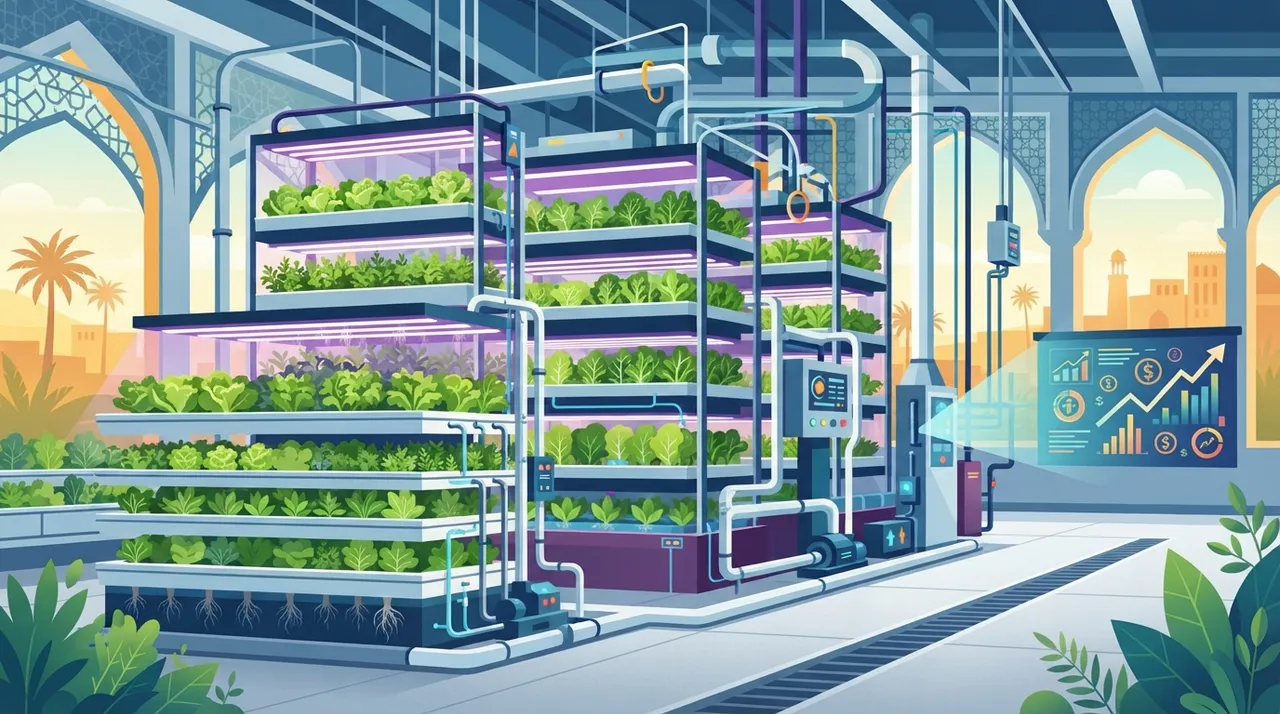
The project aims to establish a smart vertical farm for strawberry production in Jordan, leveraging modern technologies such as hydroponics and LED lighting systems to ensure year-round production. Jordan faces challenges in water scarcity and arable land, making vertical farming a sustainable solution to enhance food security. The business model relies on direct sales to local markets and supplying hotels and luxury restaurants seeking fresh, high-quality produce, with export potential. Target customers are individual consumers who value quality and freshness, as well as hotels and restaurants that require a consistent supply of strawberries throughout the year.
Market and Demand Study
The Jordanian market is characterized by increasing demand for fresh, high-quality agricultural products, especially strawberries. Traditional agriculture faces challenges due to water and land scarcity, supporting the trend towards modern and sustainable farming such as vertical farming. Hotels and restaurants in Jordan show growing interest in local sourcing to ensure quality and reduce logistical costs, and strawberries offer a high-value economic product. There is also an opportunity for export to Gulf and European markets due to the quality of Jordanian strawberries and their unique harvest timing.
Market Sizing (TAM / SAM / SOM)
The market sizing methodology relies on analyzing fruit consumption data in Jordan, with a focus on strawberries. The Total Addressable Market (TAM) is estimated based on population size and average per capita fruit consumption, then determining the proportion allocated to strawberries. The Serviceable Available Market (SAM) is estimated by analyzing the share of imported and local fresh strawberries, in addition to the growing demand from targeted sectors such as hotels and restaurants. The Serviceable Obtainable Market (SOM) is determined based on the farm's production capacity in the initial years and the project's ability to penetrate the market and meet specific demand. Retail and wholesale prices for strawberries in Jordan are considered.
| Level | Annual Size | Description |
|---|---|---|
| TAM — Total Market | 2.5 million JOD | Total serviceable demand |
| SAM — Available Market | ٧٥٠ ألف JOD | The portion your model can reach |
| SOM — Realistic Target | ٢٠٠ ألف JOD | Your realistic early share |
Sizing Basis: Market sizing is based on average strawberry consumption in Jordan, increasing demand for high-quality and sustainable agricultural products from hotels and restaurants, and regional export potential.
Unit Economics
Measures the profitability of each sales unit/customer — the most accurate feasibility indicator:
| Unit Indicator | Value |
|---|---|
| Sales Unit | kilogram of strawberries |
| Avg. Price/Revenue per Unit | ٣ JOD |
| Customer Acquisition Cost (CAC) | ١ JOD |
| Customer Lifetime Value (LTV) | ١٥ JOD |
| LTV/CAC Ratio | ٣٠× (healthy) |
| Contribution Margin | ٥٥٪ |
Competitive Analysis
The main competitors in the Jordanian strawberry market are traditional local farms and importers. The sustainable advantage of the vertical farm lies in its ability to produce year-round, ensuring a consistent product supply outside traditional harvest seasons. The high quality of the product, being pesticide-free (if organic farming standards are applied), the very low water consumption (up to 90% less than traditional farming), and the unique harvest timing distinguish the project. Proximity to local markets also reduces transportation costs and ensures product freshness. Additionally, control over the indoor environment allows for the production of specific strawberry varieties with distinct characteristics suited to the needs of hotels and restaurants.
Market Entry and Pricing Strategy
The market entry and marketing plan focus on building a distinctive brand for high-quality Jordanian strawberries. Multiple marketing channels will be utilized, including: direct sales to consumers through specialized stores and direct sales points, and supply contracts with high-end hotels and restaurants in major cities like Amman and Aqaba. Emphasis will be placed on digital marketing through social media and visual content to highlight product quality, freshness, and sustainability. The product's local, fresh, and eco-friendly production methods will be emphasized. The pricing strategy will be competitive with a focus on added value and distinctive quality, allowing for slightly higher pricing than traditional strawberries, but ensuring high levels of customer satisfaction.
Capacity and Operations
The first phase will operate at 50% of maximum capacity, reaching 80% in the third year, with future expansion plans to increase production capacity. Vertical farms can yield up to 26 harvests annually.
Daily farm operations include precise monitoring of hydroponic systems, lighting, and environment. The project requires a specialized team in vertical farming, including agricultural engineers and technicians. Regular preventive maintenance programs for equipment and systems will be implemented to ensure continuous production. The highest standards of quality and food safety will be followed at all production stages, from cultivation to harvesting and packaging. Harvesting operations will be manual to ensure fruit quality. An effective inventory management system will be used to ensure product availability and efficiently meet customer orders. Operations aim to achieve maximum efficiency in resource use and minimize waste.
The project site will be selected in an area close to target markets to reduce transportation costs and ensure fresh product delivery, with necessary infrastructure like electricity and water available. The farm will rely on the latest hydroponics technology for soilless strawberry growth, significantly reducing water consumption. Controlled LED lighting systems will provide the optimal light spectrum for year-round strawberry growth, with environmental control systems to monitor temperature, humidity, and carbon dioxide. Seeds and seedlings will be sourced from reliable suppliers to ensure crop quality. Smart control systems powered by AI will be installed to monitor and optimize growing conditions. The project requires agricultural engineers specialized in hydroponics and vertical farming.
Projected Income Statement (5 Years)
| Item \ Year | Y1 | Y2 | Y3 | Y4 | Y5 |
|---|---|---|---|---|---|
| Revenues | ١٨٠٬٠٠٠ JOD | ٢٠١٬٦٠٠ JOD | ٢٢٥٬٧٩٢ JOD | ٢٥٢٬٨٨٧ JOD | ٢٨٣٬٢٣٣ JOD |
| Cost of Sales | (٨١٬٠٠٠ JOD) | (٩٠٬٧٢٠ JOD) | (١٠١٬٦٠٦ JOD) | (١١٣٬٧٩٩ JOD) | (١٢٧٬٤٥٥ JOD) |
| Gross Profit | ٩٩٬٠٠٠ JOD | ١١٠٬٨٨٠ JOD | ١٢٤٬١٨٦ JOD | ١٣٩٬٠٨٨ JOD | ١٥٥٬٧٧٨ JOD |
| Operating Expenses | (٦٣٬٠٠٠ JOD) | (٧٠٬٥٦٠ JOD) | (٧٩٬٠٢٧ JOD) | (٨٨٬٥١٠ JOD) | (٩٩٬١٣٢ JOD) |
| EBITDA | ٣٦٬٠٠٠ JOD | ٤٠٬٣٢٠ JOD | ٤٥٬١٥٨ JOD | ٥٠٬٥٧٧ JOD | ٥٦٬٦٤٧ JOD |
| Tax | (٠ JOD) | (٠ JOD) | (٠ JOD) | (٥٨ JOD) | (٦٦٥ JOD) |
| Net Profit | -١٤٬٠٠٠ JOD | -٩٬٦٨٠ JOD | -٤٬٨٤٢ JOD | ٥٢٠ JOD | ٥٬٩٨٢ JOD |
| Net Margin | -٨٪ | -٥٪ | -٢٪ | ٠٪ | ٢٪ |
Investment Cost Structure
| Item | Cost | Percentage |
|---|---|---|
| Hydroponic equipment and LED lighting systems | ١٠٠٬٠٠٠ JOD | ٤٠٪ |
| Farm infrastructure establishment (structures, insulation, ventilation) | ٦٢٬٥٠٠ JOD | ٢٥٪ |
| Environmental control and automation systems | ٣٧٬٥٠٠ JOD | ١٥٪ |
| Initial seedlings and nutrients | ٢٥٬٠٠٠ JOD | ١٠٪ |
| Initial operating costs and team salaries | ٢٥٬٠٠٠ JOD | ١٠٪ |
Cash Flow and Break-even Point
| Year | Operating Cash Flow | Cumulative Cash Flow |
|---|---|---|
| Year 1 | ٣٦٬٠٠٠ JOD | -٢١٤٬٠٠٠ JOD |
| Year 2 | ٤٠٬٣٢٠ JOD | -١٧٣٬٦٨٠ JOD |
| Year 3 | ٤٥٬١٥٨ JOD | -١٢٨٬٥٢٢ JOD |
| Year 4 | ٥٠٬٥٢٠ JOD | -٧٨٬٠٠٢ JOD |
| Year 5 | ٥٥٬٩٨٢ JOD | -٢٢٬٠٢٠ JOD |
Estimated break-even point at annual revenue ≈ ٢٠٥٬٤٥٥ JOD (~١١٤٪ of Year 1 revenue), with a contribution margin of ٥٥٪. Cumulative cash break-even is beyond the study horizon.
Funding Structure
| Funding Source | Percentage | Amount |
|---|---|---|
| Equity | ٦٠٪ | ١٥٠٬٠٠٠ JOD |
| Debt Financing (4% interest) | ٤٠٪ | ١٠٠٬٠٠٠ JOD |
Sensitivity Analysis (Revenue × Operations)
The impact of changes in both revenue and costs on Net Present Value:
| Revenue \ Operations | −10٪ | −5٪ | Base | +5٪ | +10٪ |
|---|---|---|---|---|---|
| −20٪ | -٤٢٬٨٧٢ JOD | -٧٥٬٩٩٢ JOD | -١١٠٬٤١٥ JOD | -١٤٥٬٣١١ JOD | -١٨٠٬٢٠٧ JOD |
| −10٪ | -١٨٬٦٨٥ JOD | -٥٥٬١٥١ JOD | -٩٣٬٠٣١ JOD | -١٣٢٬٢٢٥ JOD | -١٧١٬٤٨٣ JOD |
| Base | ٤٬٩٩٨ JOD | -٣٤٬٧١٩ JOD | -٧٥٬٩٩٢ JOD | -١١٩٬١٣٩ JOD | -١٦٢٬٧٥٩ JOD |
| +10٪ | ٢٨٬٥٥٣ JOD | -١٤٬٦٧٧ JOD | -٥٩٬٢٧٠ JOD | -١٠٦٬٠٥٣ JOD | -١٥٤٬٠٣٥ JOD |
| +20٪ | ٥٢٬١٠٨ JOD | ٤٬٩٩٨ JOD | -٤٢٬٨٧٢ JOD | -٩٣٬٠٣١ JOD | -١٤٥٬٣١١ JOD |
Scenario Analysis
| Scenario | Probability | NPV | Assessment |
|---|---|---|---|
| Pessimistic | ٢٥٪ | -١٣٤٬٨٤٢ JOD | Not viable |
| Base | ٥٠٪ | -٧٥٬٩٩٢ JOD | Not viable |
| Optimistic | ٢٥٪ | -٩٬١٣٥ JOD | Not viable |
Expected Present Value (Weighted): -٧٣٬٩٩٠ JOD.
Risk Analysis and Management
| Risk | Probability | Impact | Mitigation |
|---|---|---|---|
| Fluctuations in electricity prices | Medium | High | Invest in renewable energy sources (solar power) and use energy-efficient LED lighting systems. |
| Agricultural diseases and pests | Medium | Medium | Implement strict hygiene and sterilization protocols, use advanced monitoring systems, and select disease-resistant seedlings. |
| Competition from imported or traditional local products | Medium | Medium | Focus on product quality, targeted marketing to hotels and restaurants, and year-round supply. |
| Difficulty in obtaining additional funding for expansion | Low | Medium | Build a strong financial track record for the project, seek strategic partnerships, and leverage agricultural support programs. |
| Marketing challenges in building distribution channels | Medium | Medium | Pre-contracting with hotels and restaurants, building strong relationships with local retailers, and effective digital marketing. |
Organizational Structure and Team
The project's organizational structure will consist of a general manager with experience in agricultural management and entrepreneurship, and an agricultural engineer specialized in hydroponics and vertical farming to oversee technical and production aspects. The team also includes agricultural technicians for daily operations and maintenance, and a sales and marketing manager to develop customer relationships and expand the market base. The structure may also include administrative and financial staff to support operations. Emphasis will be placed on recruiting and training local personnel to ensure knowledge transfer and skill development in this emerging sector.
Legal and Regulatory Aspects
The project requires obtaining necessary licenses from the Ministry of Agriculture and other relevant government entities in Jordan, including construction and operating permits, and compliance with environmental and health standards. Adherence to Jordanian legislation related to occupational health and safety for workers, and labor laws is essential. Compliance with any specific regulations for hydroponics or vertical farming that may exist or be developed in Jordan is also required. The project may benefit from government incentives or facilities offered by the Jordanian government to support modern agricultural projects that contribute to food security.
Expansion and Sustainability Plan
Future expansion and sustainability plans include increasing the number of production units in the current farm, or establishing additional vertical farms in other regions to meet growing demand. Product diversification to include other types of leafy greens or fruits that can be grown vertically can be considered. Sustainability will be achieved through continuous improvement of production techniques to increase energy and water efficiency, and research and development in new strawberry varieties suitable for vertical farming. Export opportunities to new markets can also be explored to increase revenue.
Environmental, Social, and Governance (ESG) Impact
The project has a significant positive environmental impact, substantially reducing water consumption compared to traditional agriculture (up to 90%). It also reduces the need for agricultural land and limits the use of harmful pesticides and chemical fertilizers. The project contributes to enhancing food security in Jordan and reducing reliance on imports. Socially, the project provides specialized job opportunities and contributes to the transfer of knowledge and modern technologies to the local community. In terms of governance, the project will adhere to best practices in environmental and social management, with transparency in reporting and compliance with relevant local and international legislation.
Conclusions and Recommendations
The smart vertical farm project for strawberry production in Jordan represents a promising investment opportunity, given the growing demand for high-quality strawberries locally and in the hotel and restaurant sector, and the challenges of water and land scarcity facing traditional agriculture in Jordan. With an estimated initial capital of approximately 250,000 Jordanian Dinars, the financial assumptions show positive indicators for the project's economic viability. The project contributes to achieving food security and environmental sustainability, and provides a high-quality product year-round. The recommendation is to proceed with the project, with a focus on a detailed study of the target market and precise operating costs.
Frequently Asked Questions
How much does it cost to set up a vertical strawberry farm in Jordan?
Assumptions indicate that the proposed initial capital for a smart vertical strawberry farm in Jordan is approximately 250,000 Jordanian Dinars.
How profitable is a vertical strawberry farm project in Jordan?
The project is expected to generate revenues of approximately 180,000 Jordanian Dinars in the first year, with an annual growth rate of 12%.
What licenses are required for a vertical farm in Jordan?
The project requires obtaining licenses from the Ministry of Agriculture and other relevant government entities in Jordan, which include construction and operating permits, and compliance with environmental and health standards.
Is vertical farming profitable in Jordan?
Yes, the vertical farming project for strawberry production in Jordan is profitable due to the increasing demand for high-quality produce and the ability to produce year-round, which mitigates the challenges of water and land scarcity.
What is the average wholesale price of strawberries in Jordan?
The average price per kilogram of strawberries is approximately 2.5 Jordanian Dinars, with seasonal fluctuations and higher prices for high-quality products.
What funding sources are available for agricultural projects in Jordan?
Funding can be obtained through equity (60%) and debt (40%), with financing options available from institutions such as the Agricultural Credit Corporation with reduced interest rates.
Sources and Disclaimer
- Reports from the Food and Agriculture Organization of the United Nations (FAO) on Jordan
- Feasibility studies for vertical farming projects in the Middle East
- Data from the Jordanian Ministry of Agriculture and official statistics
- Articles and analyses on the strawberry market and consumption in Jordan
- Reports on the hotel and restaurant sector in Jordan
Disclaimer: This is a guidance study that provides financial analysis according to approved industry standards; verify figures locally according to your project's reality before any investment decision.