Executive Summary
The cardboard packaging factory project in the industrial and manufacturing sector in Spain targets a promising market opportunity. With an investment of €850,000, it achieves a Net Present Value of €-302,595, an Internal Rate of Return of -6%, and a payback period of — years.
| Indicator | Value |
|---|---|
| Initial Investment | €850,000 |
| Year 1 Revenue | €1,100,000 |
| Annual Growth (CAGR) | 4% |
| Net Margin (Y1) | -3% |
| Return on Investment (Avg.) | -3% annually |
| Net Present Value (NPV) | €-302,595 |
| Internal Rate of Return (IRR) | -6% |
| Profitability Index (PI) | 1 |
| Payback Period | — |
| Break-even Year | — |
| Expected NPV (Probability-Weighted) | €-300,042 |
Assumptions and Basis
The figures in this study are based on project data, the nature of the industrial and manufacturing sector in Spain, and local market indicators, according to the following assumptions:
| Assumption | Value |
|---|---|
| Initial Capital | €850,000 |
| Year 1 Revenue | €1,100,000 |
| Annual Growth | 4% |
| Cost of Goods Sold (COGS) | 68% of Revenue |
| Operating Expenses | 20% of Revenue |
| Tax/Zakat | 25% |
| Discount Rate (WACC) | 9% |
| Study Horizon | 5 years |
Basis of Assumptions: These figures are based on industrial sector averages in Spain for 2026, taking into account the proposed project size and raw material price fluctuations.
Project Description and Opportunity
The project aims to establish an integrated factory for producing cardboard packaging of various sizes and shapes in Spain. The opportunity lies in the increasing demand for sustainable packaging solutions, especially in the food and beverage sector (which accounts for 51% of the sector's sales volume), the pharmaceutical and cosmetics sector, and the thriving e-commerce in Spain. The business model relies on on-demand production and providing customized solutions for B2B corporate clients, with a focus on quality, innovation, and sustainability. Target clients are large and medium-sized companies in the mentioned sectors, who are looking for a reliable partner to meet their packaging needs.
Market and Demand Study
The cardboard packaging market in Spain is experiencing stable growth, with the sector's turnover reaching €1.281 billion in 2025. The corrugated cardboard market in Spain is expected to grow at a compound annual growth rate (CAGR) of 3.57% during the forecast period (2026-2031). Key drivers for this growth include increased e-commerce, demand for more sustainable packaging solutions, and the replacement of less recyclable materials. Spain is adopting new legislation to promote the circular economy and waste management, which increases the attractiveness of recyclable cardboard packaging.
Market Sizing (TAM / SAM / SOM)
The market sizing methodology relies on analyzing available data for the cardboard packaging sector in Spain, starting from the Total Addressable Market (TAM), then narrowing the scope to define the Serviceable Available Market (SAM) and the Serviceable Obtainable Market (SOM). TAM is estimated based on the total revenue of the cardboard packaging sector (€1.281 billion in 2025), considering projected growth. SAM is determined by focusing on relevant sectors that the factory can serve, such as food, pharmaceuticals, and e-commerce. SOM is defined based on the factory's initial production capacity and targeted market share in the early years, taking into account competition and the market share of major companies.
| Level | Annual Size | Description |
|---|---|---|
| TAM — Total Market | €1383.0 million | Total Addressable Demand |
| SAM — Serviceable Market | €800.0 million | Portion reachable by your model |
| SOM — Serviceable Obtainable Market | €80.0 million | Your realistic early share |
Basis of Sizing: Market size was estimated based on the total size of the cardboard packaging market in Spain, focusing on target sectors and the project's competitive capability.
Unit Economics
Measures the profitability of each unit sale/customer — the most accurate feasibility indicator:
| Unit Metric | Value |
|---|---|
| Unit of Sale | Ton of Cardboard Packaging |
| Average Price/Revenue per Unit | €2,000 |
| Customer Acquisition Cost (CAC) | €1,500 |
| Customer Lifetime Value (LTV) | €15,000 |
| LTV/CAC Ratio | 10× (Healthy) |
| Contribution Margin | 20% |
Competitive Analysis
The Spanish market is characterized by major players such as Smurfit Kappa Group, DS Smith Plc, Saica Group, and Hinojosa Packaging Group. However, the project can achieve a sustainable competitive advantage through: 1) Specialization in innovative and customized packaging solutions that meet specific customer needs (such as smart packaging or uniquely designed packaging). 2) Focus on sustainability and the use of fully recycled materials, aligning with regulatory trends and increasing consumer demand. 3) Building strong customer relationships and providing excellent customer service and technical support. 4) Operational efficiency and cost control to offer competitive prices.
Go-to-Market Strategy and Pricing
The go-to-market strategy will rely on a B2B marketing approach directly targeting businesses in key sectors. Marketing channels will include participation in specialized industrial exhibitions in Spain, digital marketing via LinkedIn and email, and establishing direct relationships with major manufacturers and distributors. A specialized sales team will be built to visit potential clients and offer customized proposals. Pricing will be based on a value strategy, offering high-quality products and customized solutions at competitive prices, considering production costs and expected profit margins. It is recommended to focus on building direct personal relationships with local business representatives in Spain to ensure successful market entry.
Capacity and Operations
Phase one: production capacity of 500 tons/month, 60% utilization in the first year, gradually increasing to 85% by the third year. Future expansion to increase capacity to 1000 tons/month.
Daily operations focus on efficiency and quality. Strict quality checks will be implemented at every stage of production, from raw material receipt to the final product. Efficient inventory management systems will be adopted to ensure raw material availability and minimize waste. The team will be continuously trained on the latest technologies and quality standards. Emphasis will also be placed on achieving sustainability requirements through improving energy and water efficiency, reducing waste, and recycling industrial by-products. Adherence to new Spanish packaging regulations, which require clear sorting instructions and prohibit vague environmental claims, is essential.
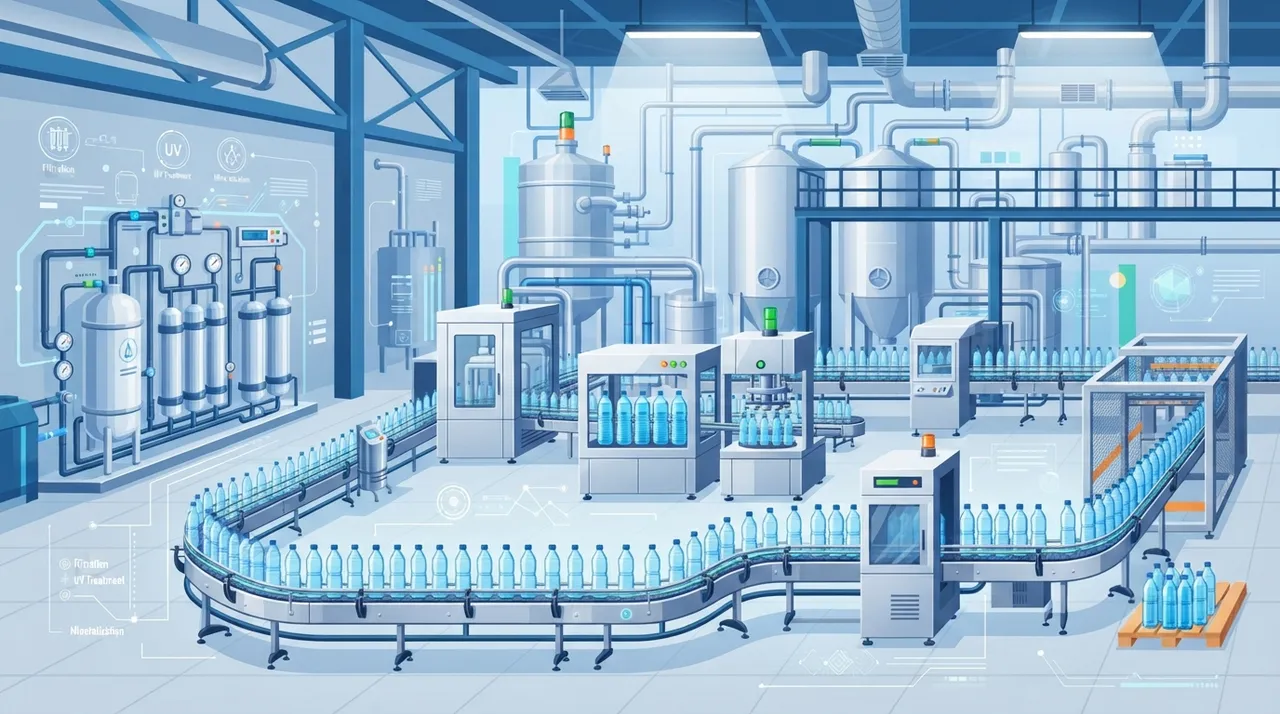
Technical aspects of the project include selecting a strategic location for the factory near key raw material suppliers (such as recycled cardboard) and target customers, with easy access to transportation networks. The factory will be equipped with modern production lines for corrugated board and finished packaging, including corrugating, cutting, printing, and gluing machines. Raw materials will be sourced from reliable local and international suppliers, with a focus on sustainable sources. Essential equipment includes corrugated board manufacturing machines and flexible (Flexography) or offset printing systems for high-quality printing.
Projected Income Statement (5 Years)
| Item \ Year | Y1 | Y2 | Y3 | Y4 | Y5 |
|---|---|---|---|---|---|
| Revenue | €1,100,000 | €1,138,500 | €1,178,347 | €1,219,590 | €1,262,275 |
| Cost of Sales | (€748,000) | (€774,180) | (€801,276) | (€829,321) | (€858,347) |
| Gross Profit | €352,000 | €364,320 | €377,071 | €390,269 | €403,928 |
| Operating Expenses | (€220,000) | (€227,700) | (€235,669) | (€243,918) | (€252,455) |
| EBITDA | €132,000 | €136,620 | €141,402 | €146,351 | €151,473 |
| Tax | (€0) | (€0) | (€0) | (€0) | (€0) |
| Net Profit | €-38,000 | €-33,380 | €-28,598 | €-23,649 | €-18,527 |
| Net Margin | -3% | -3% | -2% | -2% | -1% |
Investment Cost Structure
| Item | Cost | Percentage |
|---|---|---|
| Raw Materials (cardboard, inks, adhesives) | €467,500 | 55% |
| Machinery and Equipment | €170,000 | 20% |
| Wages and Salaries | €85,000 | 10% |
| Factory Rent/Purchase and Utilities | €68,000 | 8% |
| Marketing and Sales | €34,000 | 4% |
| Licenses and Legal Expenses | €25,500 | 3% |
Cash Flow and Break-even Point
| Year | Operating Cash Flow | Cumulative Cash Flow |
|---|---|---|
| Year 1 | €132,000 | €-718,000 |
| Year 2 | €136,620 | €-581,380 |
| Year 3 | €141,402 | €-439,978 |
| Year 4 | €146,351 | €-293,628 |
| Year 5 | €151,473 | €-142,155 |
Estimated break-even point at annual revenue ≈ €1,218,750 (~111% of Year 1 revenue), with a contribution margin of 32%. Cumulative cash break-even beyond the study horizon.
Funding Structure
| Funding Source | Percentage | Amount |
|---|---|---|
| Equity | 60% | €510,000 |
| Debt Financing (6% interest) | 40% | €340,000 |
Sensitivity Analysis (Revenue × Operations)
Impact of combined changes in revenue and costs on Net Present Value:
| Revenue \ Operations | −10% | −5% | Base | +5% | +10% |
|---|---|---|---|---|---|
| −20% | €-82,544 | €-229,879 | €-412,076 | €-594,544 | €-777,013 |
| −10% | €-7,276 | €-161,624 | €-357,336 | €-562,612 | €-767,889 |
| Base | €67,992 | €-103,072 | €-302,595 | €-530,680 | €-758,766 |
| +10% | €143,260 | €-44,910 | €-247,855 | €-498,749 | €-749,642 |
| +20% | €218,528 | €13,251 | €-196,022 | €-466,817 | €-740,519 |
Scenario Analysis
| Scenario | Probability | NPV | Assessment |
|---|---|---|---|
| Pessimistic | 25% | €-485,063 | Unfeasible |
| Base | 50% | €-302,595 | Unfeasible |
| Optimistic | 25% | €-109,915 | Unfeasible |
Expected Present Value (Weighted): €-300,042.
Risk Analysis and Management
| Risk | Probability | Impact | Mitigation |
|---|---|---|---|
| Raw material price fluctuations | High | High | Long-term supply contracts, supplier diversification, price hedging |
| Intense competition from major companies | Medium | High | Focus on specialization and innovation, building strong customer relationships, operational efficiency |
| Regulatory and environmental changes | Medium | Medium | Continuous monitoring of legislation, adherence to high environmental standards, investment in sustainable technologies |
| Difficulties in acquiring initial customers | Medium | Medium | Strong marketing and sales plan, attractive trial offers, building an industrial network |
| Equipment breakdowns and production stoppages | Low | Medium | Preventive maintenance program, provision of essential spare parts, comprehensive equipment insurance |
Organizational Structure and Team
The factory's organizational structure will consist of a General Manager, a Production Manager, a Sales and Marketing Manager, a Financial Manager, and a Quality Manager. The technical staff will include production engineers, operation and maintenance technicians, and skilled production workers. The sales team will focus on building strong customer relationships, while the quality team will ensure adherence to international and local standards. Emphasis will be placed on recruiting local Spanish talent to leverage their expertise and knowledge of the market and local regulations.
Legal and Regulatory Aspects
The project requires obtaining various industrial and environmental licenses in Spain. Compliance with local and national regulations related to industrial production, worker safety, and environmental protection is essential. Particularly important is adherence to Royal Decree 1055/2022 on packaging and packaging waste, which imposes extended producer responsibility and requires manufacturers to register in the packaging register. New European regulations on packaging and packaging waste (EU) 2025/40 must also be observed.
Expansion and Sustainability Plan
The project can expand in the future by increasing production capacity to meet growing demand and introducing new production lines for specialized types of cardboard packaging (e.g., liquid packaging or high-quality digital print packaging). Geographic expansion can also be pursued by targeting other markets in the European Union or North Africa, given Spain's strategic location. Opportunities for partnerships with major logistics or e-commerce companies can also be explored to expand distribution channels.
Environmental, Social, and Governance (ESG) Impact
The project will adhere to the highest environmental, social, and governance (ESG) standards. Recycled materials will be primarily used in production, with a focus on reducing energy and water consumption, and responsible waste management. Corrugated cardboard is a renewable, biodegradable, and fully recyclable material, with a recycling rate of up to 95% in Spain. Recognized environmental certifications will be obtained. Socially, the project will provide stable employment opportunities and adhere to decent labor standards. In terms of governance, principles of transparency and accountability will be applied in all aspects of work.
Conclusions and Recommendations
The cardboard packaging factory project in Spain has strong economic and market feasibility, supported by increasing demand for sustainable packaging solutions and growth in the food, pharmaceutical, and e-commerce sectors. The turnover in the cardboard packaging sector in Spain reached approximately €1.281 billion in 2025. With careful planning and a focus on innovation, quality, and compliance with environmental regulations, the project can achieve rewarding returns and contribute to the Spanish circular economy.
Frequently Asked Questions
How much does it cost to set up a cardboard packaging factory in Spain?
The proposed initial cost for this project is estimated at approximately €850,000, which includes machinery, equipment, and factory setup.
Is a cardboard packaging factory project profitable in Spain?
Yes, the project is considered profitable due to increasing demand in sectors such as food and e-commerce, where the sector's turnover reached €1.281 billion in 2025 and is expected to grow.
What licenses are required for a cardboard packaging factory in Spain?
The project requires industrial and environmental licenses, compliance with Royal Decree 1055/2022 related to packaging and packaging waste, and company registration in the packaging register.
What is the size of the cardboard packaging market in Spain?
The size of the corrugated board market in Spain reached €1.281 billion in 2025 and is expected to grow at a rate of 3.57% annually during the period 2026-2031.
What are the main challenges facing this project?
Key challenges include fluctuations in raw material prices, competition from major companies, and environmental regulatory changes. These challenges require strong mitigation strategies.
Sources and Disclaimer
- Aspack (Spanish Association of Cardboard Packaging Manufacturers)
- Mordor Intelligence (Spain Corrugated Board Market Reports)
- Trading Economics (Spain Tax Data)
- Altios (Manufacturing Setup Guide in Spain)
- Maraz Corporate Finance (Average WACC in Spain)
Disclaimer: This is a guiding study that provides financial analysis according to approved industry standards; verify figures locally according to your project's reality before any investment decision.