Executive Summary
The project 'Agri-Algae France' Project: Integrated Vertical Microalgae Farms for Alternative Protein Production and Specialized Agricultural Nutrients targets a promising market opportunity in the agricultural sector in Spain. With an investment of ١٬٥٠٠٬٠٠٠ €, it achieves a Net Present Value (NPV) of -١٬١٧٧٬٣٨١ €, an Internal Rate of Return (IRR) of -٣٠٪, and a payback period of — years.
| Indicator | Value |
|---|---|
| Initial Investment | ١٬٥٠٠٬٠٠٠ € |
| First Year Revenue | ٤٥٠٬٠٠٠ € |
| Annual Growth (CAGR) | ١٢٪ |
| Net Margin (Y1) | -٥٢٪ |
| Return on Investment (Avg) | -١٤٪ Annually |
| Net Present Value (NPV) | -١٬١٧٧٬٣٨١ € |
| Internal Rate of Return (IRR) | -٣٠٪ |
| Profitability Index (PI) | ٠ |
| Payback Period | — |
| Breakeven Year | — |
| Expected NPV (Probability-Weighted) | -١٬١٦٨٬٧٧٩ € |
Assumptions and Basis
The figures in this study are specifically derived for this project, sector, and country:
| Assumption | Value |
|---|---|
| Initial Capital | ١٬٥٠٠٬٠٠٠ € |
| First Year Revenue | ٤٥٠٬٠٠٠ € |
| Annual Growth | ١٢٪ |
| Cost of Goods Sold (COGS) | ٤٥٪ of Revenue |
| Operating Expenses | ٤٠٪ of Revenue |
| Tax/Zakat | ٢٥٪ |
| Discount Rate (WACC) | ١٠٪ |
| Study Horizon | ٥ years |
Basis of Assumptions: These figures are based on the average costs of establishing and operating vertical farms and microalgae production in Spain, taking into account the expected growth in the agri-food and alternative protein sectors.
Project Description and Opportunity
The 'Agri-Algae France' project aims to establish integrated vertical farms for microalgae cultivation in Spain, targeting two main sectors: alternative proteins and specialized agricultural nutrients. This project is considered a promising opportunity given the increasing global and local demand for sustainable protein sources and environmentally friendly agricultural solutions. The business model relies on cultivation in a controlled environment to ensure product quality and resource efficiency. It targets B2B customers such as food manufacturing companies, pharmaceutical and nutritional supplement companies, agricultural supply companies, as well as organic and conventional farms.
Market Study and Demand
The Spanish agri-food sector is experiencing steady growth, with its value reaching USD 56.2 billion in 2025, and is expected to reach USD 71.0 billion by 2034, with a compound annual growth rate (CAGR) of 2.63% during the period 2026-2034. Local demand for food products is increasing, driven by population growth and changing dietary preferences towards healthy and sustainable foods. Spain is also a leader in agri-food product exports, further enhancing market dynamism.
As for the alternative protein market in Spain, it is expected to reach 6.7 billion Euros by 2040, potentially rising to 9 billion Euros when considering the entire value chain. Microalgae play an increasingly important role in this market, used as a protein source in foods, beverages, and nutritional supplements. The European algae protein market size was USD 79.72 million in 2026 and is projected to grow at a CAGR of 9.31% between 2026 and 2031. Spain is one of the leading countries in microalgae production in Europe.
Regarding specialized agricultural nutrients, the market for fertilizers and agricultural inputs in Spain is growing, driven by increased demand for food production, the adoption of advanced agricultural technologies, and a focus on sustainability. The organic fertilizer market in Spain is expected to grow at a CAGR exceeding 2.81% from 2024 to 2029. Organic farming in Spain contributes significantly, with the area of land dedicated to it increasing by 12% in 2023, reaching 2.99 million hectares, making Spain the leader in Europe in this field. Demand for specialized fertilizers is also increasing, especially in the fruit and vegetable and protected cultivation sectors.
Market Sizing (TAM / SAM / SOM)
Market sizing was conducted using both top-down and bottom-up methodologies. For Total Addressable Market (TAM), comprehensive forecasts for the alternative protein market in Spain by 2040 were relied upon, estimated at 9 billion Euros (including the value chain). The Serviceable Available Market (SAM) was estimated by focusing on the size of the algae protein and microalgae product market in Europe generally and Spain specifically. In 2026, the European algae protein market size was estimated at USD 79.72 million (approximately 75 million Euros), and it is expected to reach USD 124.43 million (approximately 117 million Euros) by 2031. For specialized agricultural nutrients, the agricultural inputs market in Spain is estimated at approximately USD 2.95 billion (approximately 2.77 billion Euros). These figures represent the markets that the project can directly serve.
The Serviceable Obtainable Market (SOM) in the initial years was estimated based on a conservative market share of the Serviceable Available Market, taking into account the project's production and distribution capacity in its early stages. This share represents a realistic goal that can be achieved given the nascent nature of vertical microalgae farming technologies and existing competition.
| Level | Annual Size | Description |
|---|---|---|
| TAM — Total Addressable Market | 6700.0 million € | Total addressable demand |
| SAM — Serviceable Available Market | 80.0 million € | Portion reachable by your model |
| SOM — Serviceable Obtainable Market | 8.0 million € | Your realistic early share |
Sizing Basis: The Total Addressable Market (TAM) was estimated based on the Spanish market for alternative proteins and specialized agricultural nutrients by 2032-2040. The Serviceable Available Market (SAM) focuses on a portion of the alternative proteins and microalgae product market in Europe and Spain, while the Serviceable Obtainable Market (SOM) represents a conservative achievable share in the early years.
Unit Economics
Measures the profitability of each unit sale/customer — the most accurate feasibility indicator:
| Unit Indicator | Value |
|---|---|
| Sales Unit | Kilogram of final products (protein/nutrients) |
| Average Price/Revenue per Unit | ٢٥ € |
| Customer Acquisition Cost (CAC) | ٣٠٠ € |
| Customer Lifetime Value (LTV) | ١٬٥٠٠ € |
| LTV/CAC Ratio | ٥× (Healthy) |
| Contribution Margin | ٥٥٪ |
Competitive Analysis
Spain is one of the leading countries in Europe in microalgae production, with active companies and research centers in this field. Key competitors in the European algae protein market include companies such as Corbion, DIC Corporation, and Allmicroalgae, among others. In the agricultural nutrient sector, competition comes from traditional and organic fertilizer producers, as well as new developers of bio-nutrients.
The sustainable advantage of the 'Agri-Algae France' project lies in integrating vertical farming, which offers high efficiency in water and land use and reduces the environmental footprint compared to traditional agriculture. Focusing on high value-added products, such as alternative proteins and specialized nutrients, gives the project a competitive edge. The ability to control the growth environment (Controlled Environment Agriculture) ensures product quality and consistency throughout the year, which is difficult to achieve in traditional agriculture. Additionally, potential partnerships with Spanish research institutions specializing in algae (such as Banco Español de Algas) can enhance innovation and product development.
Market Entry and Pricing Plan
The market entry plan is based on a B2B strategy focused on building strong relationships with target customers. Marketing channels will include participation in specialized agricultural and industrial trade fairs in Spain and Europe, targeted digital marketing campaigns, and the development of product samples for testing by potential customers. Emphasis will be placed on highlighting the competitive advantages of the products, such as sustainability, purity, high nutritional value, and agricultural effectiveness.
Pricing will be competitively determined based on production costs and the added value of the product compared to available alternatives in the market. For example, the selling price per kilogram of microalgae products might average 25 Euros, with a contribution margin of 55%, reflecting the high value of these specialized products.
Capacity and Operations
The project starts with a phased production capacity, beginning with a small pilot phase (less than 100 square meters) to verify the local market and calibrate production recipes, then gradually expanding to establish multi-layer production units. Occupancy is expected to reach 60% in the first year and gradually increase to 90% within 3-5 years.
Daily operations will focus on continuous monitoring of growth conditions using sensors and the Internet of Things (IoT) to ensure optimal performance. Strict protocols for contamination control will be implemented, as microalgae are susceptible to contamination by protozoa, bacteria, and fungi, requiring effective sterilization of equipment and the growth environment.
Production processes will include periodic harvesting of algae, followed by processing to extract proteins and nutrients, then packaging. Strict quality standards will be applied to ensure product safety and effectiveness, in line with European regulations for food and agricultural products. Quality operations will include regular testing of final products and quality control at every stage of production.
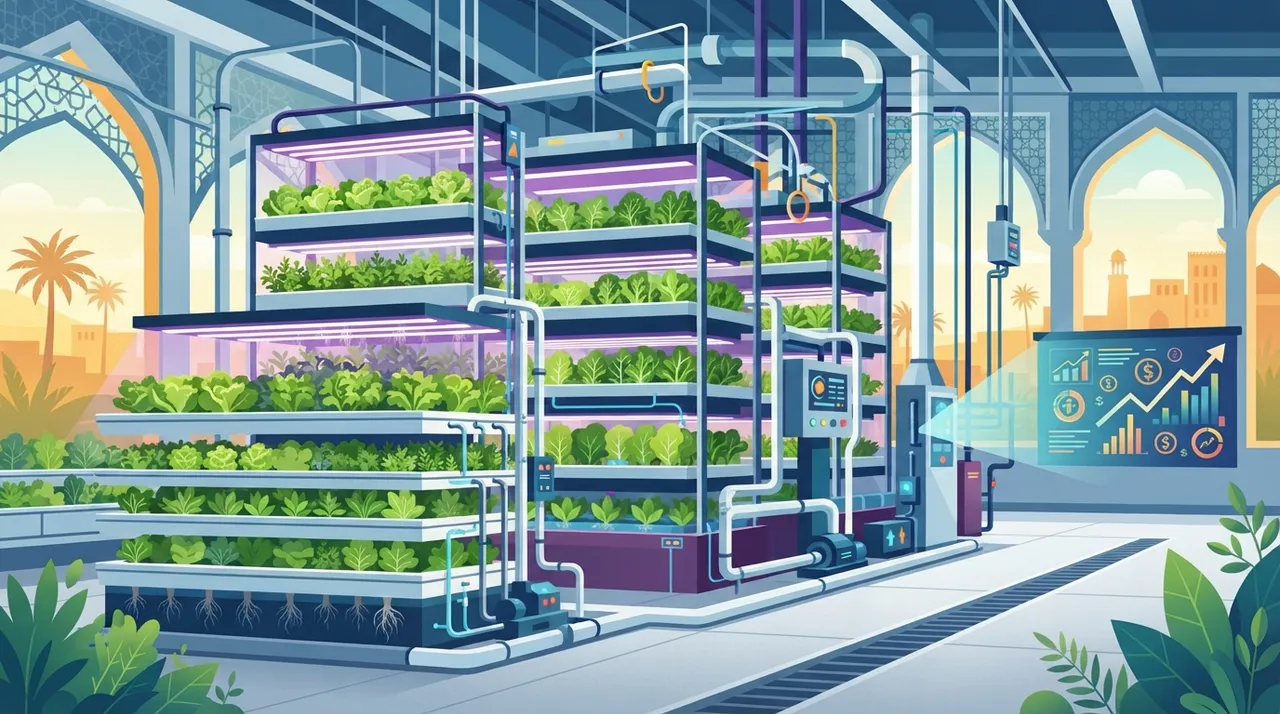
The technical aspects of the project rely on the latest integrated vertical microalgae farming technologies (photobioreactors). This includes precise environmental control systems for temperature, humidity, and carbon dioxide, as well as specialized LED lighting systems to meet the different growth needs of algae. Soilless irrigation systems (such as hydroponics or aeroponics) will be used to ensure efficient water and nutrient use.
The project site in Spain will be selected based on several factors, including the availability of suitable land (preferably abandoned industrial or agricultural sites that can be repurposed) and easy access to renewable energy sources to reduce environmental and operational costs. Proximity to key raw material suppliers (such as carbon dioxide gas and water sources) and target markets will also be considered.
Projected Income Statement (5 Years)
| Item \ Year | Y1 | Y2 | Y3 | Y4 | Y5 |
|---|---|---|---|---|---|
| Revenue | ٤٥٠٬٠٠٠ € | ٥٠٤٬٠٠٠ € | ٥٦٤٬٤٨٠ € | ٦٣٢٬٢١٨ € | ٧٠٨٬٠٨٤ € |
| Cost of Sales | (٢٠٢٬٥٠٠ €) | (٢٢٦٬٨٠٠ €) | (٢٥٤٬٠١٦ €) | (٢٨٤٬٤٩٨ €) | (٣١٨٬٦٣٨ €) |
| Gross Profit | ٢٤٧٬٥٠٠ € | ٢٧٧٬٢٠٠ € | ٣١٠٬٤٦٤ € | ٣٤٧٬٧٢٠ € | ٣٨٩٬٤٤٦ € |
| Operating Expenses | (١٨٠٬٠٠٠ €) | (٢٠١٬٦٠٠ €) | (٢٢٥٬٧٩٢ €) | (٢٥٢٬٨٨٧ €) | (٢٨٣٬٢٣٣ €) |
| EBITDA | ٦٧٬٥٠٠ € | ٧٥٬٦٠٠ € | ٨٤٬٦٧٢ € | ٩٤٬٨٣٣ € | ١٠٦٬٢١٣ € |
| Tax | (٠ €) | (٠ €) | (٠ €) | (٠ €) | (٠ €) |
| Net Profit | -٢٣٢٬٥٠٠ € | -٢٢٤٬٤٠٠ € | -٢١٥٬٣٢٨ € | -٢٠٥٬١٦٧ € | -١٩٣٬٧٨٧ € |
| Net Margin | -٥٢٪ | -٤٤٪ | -٣٨٪ | -٣٢٪ | -٢٧٪ |
Investment Cost Structure
| Item | Cost | Percentage |
|---|---|---|
| Construction and Initial Fit-out | ٤٥٠٬٠٠٠ € | ٣٠٪ |
| Purchase and Installation of Vertical Farming Systems and Photobioreactors | ٣٧٥٬٠٠٠ € | ٢٥٪ |
| Research and Development and Product Testing | ٢٢٥٬٠٠٠ € | ١٥٪ |
| Salaries and Staff in the First Year | ٢٢٥٬٠٠٠ € | ١٥٪ |
| Working Capital and Initial Marketing | ١٥٠٬٠٠٠ € | ١٠٪ |
| Administrative Expenses and Contingencies | ٧٥٬٠٠٠ € | ٥٪ |
Cash Flow and Breakeven Point
| Year | Operating Cash Flow | Cumulative Cash Flow |
|---|---|---|
| Year 1 | ٦٧٬٥٠٠ € | -١٬٤٣٢٬٥٠٠ € |
| Year 2 | ٧٥٬٦٠٠ € | -١٬٣٥٦٬٩٠٠ € |
| Year 3 | ٨٤٬٦٧٢ € | -١٬٢٧٢٬٢٢٨ € |
| Year 4 | ٩٤٬٨٣٣ € | -١٬١٧٧٬٣٩٥ € |
| Year 5 | ١٠٦٬٢١٣ € | -١٬٠٧١٬١٨٣ € |
Estimated breakeven point at annual revenue ≈ ٨٧٢٬٧٢٧ € (~١٩٤٪ of first-year revenue), with a contribution margin of ٥٥٪. Cumulative cash breakeven is beyond the study horizon.
Funding Structure
| Funding Source | Percentage | Amount |
|---|---|---|
| Equity | ٦٠٪ | ٩٠٠٬٠٠٠ € |
| Debt Financing (6% Interest) | ٤٠٪ | ٦٠٠٬٠٠٠ € |
Sensitivity Analysis (Revenue × Operations)
Impact of combined changes in revenue and costs on Net Present Value:
| Revenue \ Operations | −10٪ | −5٪ | Base | +5٪ | +10٪ |
|---|---|---|---|---|---|
| −20٪ | -١٬٠٦٩٬٨٤٢ € | -١٬١٥٥٬٨٧٤ € | -١٬٢٤١٬٩٠٥ € | -١٬٣٢٧٬٩٣٧ € | -١٬٤١٣٬٩٦٨ € |
| −10٪ | -١٬٠١٦٬٠٧٣ € | -١٬١١٢٬٨٥٨ € | -١٬٢٠٩٬٦٤٤ € | -١٬٣٠٦٬٤٢٩ € | -١٬٤٠٣٬٢١٥ € |
| Base | -٩٦٢٬٣٠٣ € | -١٬٠٦٩٬٨٤٢ € | -١٬١٧٧٬٣٨٢ € | -١٬٢٨٤٬٩٢١ € | -١٬٣٩٢٬٤٦١ € |
| +10٪ | -٩٠٨٬٥٣٣ € | -١٬٠٢٦٬٨٢٧ € | -١٬١٤٥٬١٢٠ € | -١٬٢٦٣٬٤١٣ € | -١٬٣٨١٬٧٠٧ € |
| +20٪ | -٨٥٤٬٧٦٤ € | -٩٨٣٬٨١١ € | -١٬١١٢٬٨٥٨ € | -١٬٢٤١٬٩٠٥ € | -١٬٣٧٠٬٩٥٣ € |
Scenario Analysis
| Scenario | Probability | NPV | Assessment |
|---|---|---|---|
| Pessimistic | ٢٥٪ | -١٬٣١٠٬٧٣١ € | Not Feasible |
| Base | ٥٠٪ | -١٬١٧٧٬٣٨٢ € | Not Feasible |
| Optimistic | ٢٥٪ | -١٬٠٠٩٬٦٢٠ € | Not Feasible |
Expected Present Value (Weighted): -١٬١٦٨٬٧٧٩ €.
Risk Analysis and Management
| Risk | Probability | Impact | Mitigation |
|---|---|---|---|
| High Operating Costs (especially energy) | Medium | High | Invest in renewable energy sources, improve energy efficiency, negotiate long-term energy contracts. |
| Biological Contamination of Farms | Medium | High | Implement strict sterilization protocols, continuous monitoring, develop resistant algae strains. |
| Market Demand Fluctuations in New Market | Medium | Medium | Diversify products, build strong customer relationships, marketing campaigns highlighting product benefits. |
| Regulatory Challenges and Permitting | Low | Medium | Collaborate with local legal experts, early communication with regulatory bodies, adherence to international standards. |
| Difficulties in Scaling and Achieving Efficiency at Scale | Medium | Medium | Start with a small pilot phase, invest in automation and AI, learn from similar projects. |
Organizational Structure and Team
The project's organizational structure consists of a core team comprising experts in vertical farming, microalgae technologies, food science, financial management, and sales and marketing. Specialized technical staff will be hired to operate and maintain the vertical farming systems, in addition to agricultural workers. The average salary for a crop farmer in Spain is approximately 40,516 Euros annually, while the average salary for an agricultural worker is approximately 21,154 Euros annually. Labor is available in the Spanish agricultural sector, including migrant workers who form a significant part of the workforce.
Legal and Regulatory Aspects
The project requires obtaining necessary licenses from Spanish and local authorities related to construction, agricultural, and industrial operations. Adherence to European regulations concerning food safety, the use of bio-products, and the reduction of environmental impact is mandatory. In February 2024, the European Commission approved over 20 species of algae for use in food, reducing commercial timelines and industry costs. Compliance with legislation related to occupational health and safety and environmental protection is also required. The project may require an environmental impact assessment.
Expansion and Sustainability Plan
The future expansion plan includes increasing production capacity by adding more vertical farming units and expanding existing facilities. Expansion may also involve diversifying products to include other types of algae-derived proteins or specialized nutrients to meet the needs of different markets. Expansion also includes exploring new markets in other European countries, especially those experiencing increasing demand for sustainable products and plant-based proteins. Sustainability can be achieved through continuous improvement in energy efficiency and resource utilization, and ongoing research and development to reduce costs and increase productivity.
Environmental, Social, and Governance (ESG) Impact
The microalgae vertical farming project has a significant positive environmental and social impact. It drastically reduces water consumption compared to traditional agriculture (up to 90% less), minimizes the need for agricultural land, and prevents fertilizer and pesticide runoff into water bodies, thereby protecting aquatic biodiversity. Algae contribute to carbon dioxide absorption, supporting circular and blue economy goals.
Regarding governance, the project will adhere to the highest standards of transparency and corporate social responsibility, with a focus on sustainable practices in the supply chain and production. The project's environmental impact will be regularly assessed, and opportunities for continuous improvement will be sought, such as using renewable energy to reduce the carbon footprint.
Conclusions and Recommendations
The 'Agri-Algae France' project demonstrates promising economic and environmental feasibility in the thriving Spanish market for alternative proteins and specialized agricultural nutrients. With increasing awareness of sustainability and demand for plant-based products, the project has a strong competitive advantage due to the efficiency of vertical farming and its positive environmental impact. However, risks related to high initial costs and operational challenges must be carefully managed to ensure long-term success.
Sources and Disclaimer
- Mordor Intelligence reports on the European Algae Protein Market (2026)
- Systemiq and GFI Europe analysis of the Alternative Protein Market in Spain (2026)
- IMARC Group reports on the Agri-Food Market in Spain (2026)
- ERI SalaryExpert data on labor costs in Spain (2026)
- Frontiers in Marine Science studies on algae production in Europe (2021)
Disclaimer: This is a guiding study based on sector assumptions and standards at the time of preparation; verify local figures before any investment decision.