Executive Summary
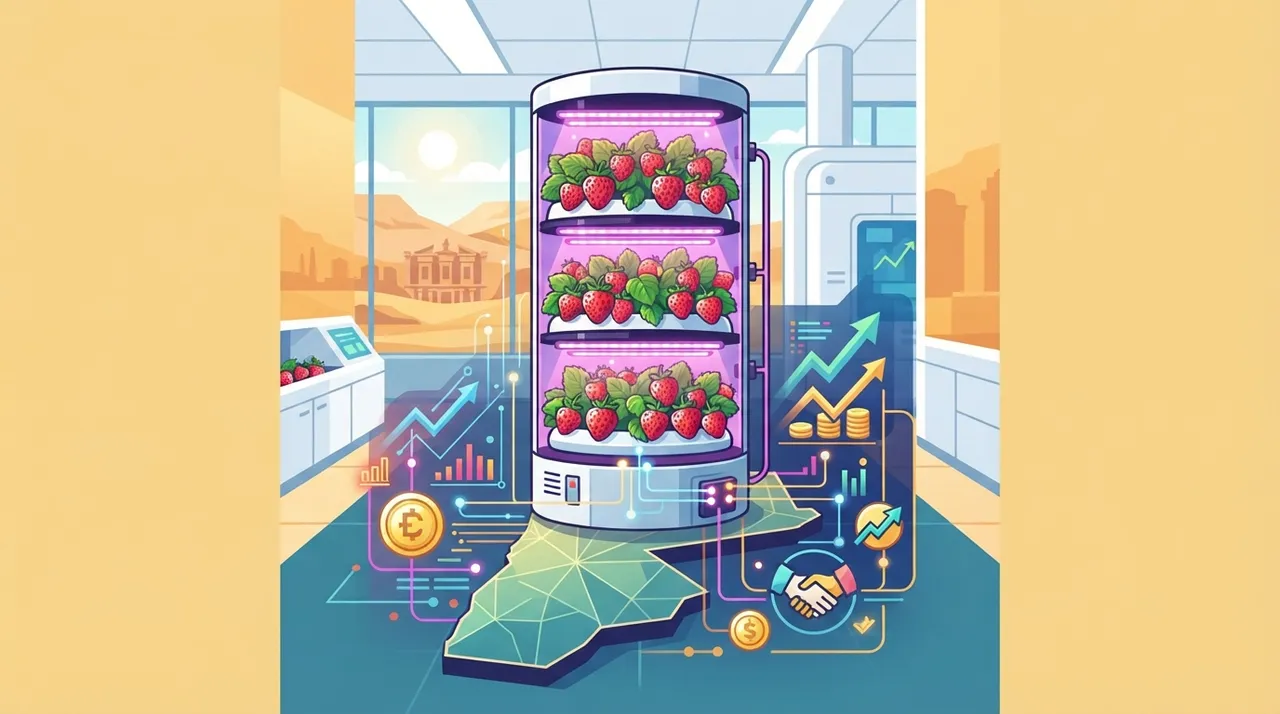
The Hydroponics project in the agricultural sector in the Sultanate of Oman targets a promising market opportunity. With an investment of OMR 18,000, it achieves a Net Present Value (NPV) of OMR -8,139, an Internal Rate of Return (IRR) of -9%, and a payback period of — years.
| Indicator | Value |
|---|---|
| Initial Investment | OMR 18,000 |
| Year 1 Revenue | OMR 15,000 |
| Annual Growth (CAGR) | 8% |
| Net Margin (Y1) | -9% |
| Return on Investment (Avg.) | -5% annually |
| Net Present Value (NPV) | OMR -8,139 |
| Internal Rate of Return (IRR) | -9% |
| Profitability Index (PI) | 1 |
| Payback Period | — |
| Break-even Year | — |
| Expected NPV (Probability-Weighted) | OMR -7,825 |
Assumptions and Basis
The figures in this study are based on project data, the nature of the agricultural sector in the Sultanate of Oman, and local market indicators, according to the following assumptions:
| Assumption | Value |
|---|---|
| Initial Capital | OMR 18,000 |
| Year 1 Revenue | OMR 15,000 |
| Annual Growth | 8% |
| Cost of Goods Sold (COGS) | 35% of Revenue |
| Operating Expenses | 50% of Revenue |
| Tax/Zakat | 3% |
| Discount Rate (WACC) | 10% |
| Study Horizon | 5 years |
Basis of Assumptions: Figures are based on small and medium agricultural projects in the Sultanate of Oman, considering government support and the trend towards modern agriculture.
Project Description and Opportunity
The proposed hydroponics project in the Sultanate of Oman aims to establish an advanced farm for producing leafy greens, cucumbers, tomatoes, and peppers using soilless farming techniques. The business model relies on direct sales to individual consumers via subscriptions, in addition to supplying local restaurants and hotels seeking fresh, high-quality products. The opportunity lies in the increasing demand for sustainable local agricultural products, especially given the challenges of water scarcity and limited arable land in the Sultanate. The project targets customers who value quality, freshness, and pesticide-free products, and aims to contribute to local food security.
Market and Demand Study
The agricultural market in the Sultanate of Oman is experiencing significant growth, with its size expected to reach USD 2.58 billion in 2026. The Sultanate heavily relies on groundwater and faces challenges in managing its water resources. This challenge reinforces the demand for modern agricultural techniques such as hydroponics, which reduces water consumption by up to 90% compared to traditional farming. The Omani government supports the shift towards smart and sustainable agriculture as part of Oman Vision 2040, and there is increasing interest in boosting self-sufficiency in food products. Key factors driving demand include population growth, increasing consumer health awareness, and the need for fresh, local products year-round.
Market Sizing (TAM / SAM / SOM)
Market sizing began with the total agricultural market size in the Sultanate of Oman, then identified a percentage of this market representing fresh vegetables and leafy crops that can be produced through hydroponics. Subsequently, the available market was estimated by focusing on urban areas and institutions (restaurants and hotels) that show interest in high-quality local products. Finally, the realistic target market was determined based on the project's initial production capacity and distribution potential in the first phase, considering competition and potential market share. The sizing was based on Oman's agricultural market reports and data from the Ministry of Agricultural Wealth, Fisheries and Water Resources.
| Level | Annual Size | Description |
|---|---|---|
| TAM — Total Available Market | OMR 2,580.0 million | Total addressable demand |
| SAM — Serviceable Available Market | OMR 500.0 million | Portion reachable by your model |
| SOM — Serviceable Obtainable Market | OMR 25.0 million | Your realistic early share |
Basis of Sizing: Total market size represents Oman's agricultural market for 2026 (USD 2.58 billion, equivalent to approximately OMR 1 billion). The serviceable available market focuses on the fresh vegetable sector, and the serviceable obtainable market represents a realistic share achievable for a small project.
Unit Economics
Measures the profitability of each sales unit/customer — the most accurate feasibility indicator:
| Unit Metric | Value |
|---|---|
| Sales Unit | Kilogram of leafy greens |
| Average Price/Revenue per Unit | OMR 3 |
| Customer Acquisition Cost (CAC) | OMR 3 |
| Customer Lifetime Value (LTV) | OMR 150 |
| LTV/CAC Ratio | 50× (Healthy) |
| Contribution Margin | 40% |
Competitive Analysis
Competition in the Omani market comes from local traditional farming and imports. The project's sustainable competitive advantage lies in the quality of fresh, pesticide-free products produced locally year-round. Efficient water and resource use will also be a strong selling point for consumers and government entities. The project can also differentiate itself by offering unique vegetable varieties or providing organic options at a competitive price. Building a strong brand focused on sustainability and health will contribute to customer loyalty.
Market Entry and Pricing Plan
The market entry plan includes digital marketing through social media to reach consumers interested in healthy and sustainable products. Focus will be placed on partnerships with local restaurants and hotels to ensure stable distribution channels. Sales booths can be set up in local markets or participation in farmers' events to showcase products. Pricing will be competitive, focusing on the added value of quality, freshness, and sustainability, with the possibility of offering subscription packages for individual consumers.
Capacity and Operations
The farm will start with an initial production capacity of 500 kilograms per month of leafy greens, with a plan for gradual expansion to 1500 kilograms per month within 3 years, focusing on vertical farming systems to increase space efficiency.
Daily operations include monitoring water and nutrient levels, adjusting pH, and inspecting plant health to detect any pests or diseases. This requires a team trained in hydroponics techniques. A schedule for harvesting, packaging, and distribution will be established to ensure fresh products reach customers. Strict quality and hygiene standards will be applied to ensure safe and healthy products. The use of simple automation systems can reduce operational burdens and increase efficiency.
Technical aspects rely on using closed hydroponic systems (such as NFT or DWC) to reduce water consumption and achieve maximum productivity in a limited space. The project will require a greenhouse equipped with temperature, humidity, and lighting control systems, especially given the climatic conditions in Oman. The ideal location should provide easy access to water and electricity and be close to target markets to reduce transportation costs. Local suppliers can be utilized for hydroponic equipment and nutrient solutions, while seeking the best quality seeds and seedlings.
Projected Income Statement (5 Years)
| Item \ Year | Y1 | Y2 | Y3 | Y4 | Y5 |
|---|---|---|---|---|---|
| Revenues | OMR 15,000 | OMR 16,200 | OMR 17,496 | OMR 18,896 | OMR 20,407 |
| Cost of Sales | (OMR 5,250) | (OMR 5,670) | (OMR 6,124) | (OMR 6,613) | (OMR 7,143) |
| Gross Profit | OMR 9,750 | OMR 10,530 | OMR 11,372 | OMR 12,282 | OMR 13,265 |
| Operating Expenses | (OMR 7,500) | (OMR 8,100) | (OMR 8,748) | (OMR 9,448) | (OMR 10,204) |
| EBITDA | OMR 2,250 | OMR 2,430 | OMR 2,624 | OMR 2,834 | OMR 3,061 |
| Tax | (OMR 0) | (OMR 0) | (OMR 0) | (OMR 0) | (OMR 0) |
| Net Profit | OMR -1,350 | OMR -1,170 | OMR -976 | OMR -766 | OMR -539 |
| Net Margin | -9% | -7% | -6% | -4% | -3% |
Investment Cost Structure
| Item | Cost | Percentage |
|---|---|---|
| Hydroponic Systems and Initial Equipment | OMR 7,200 | 40% |
| Greenhouses or Protective Structures | OMR 4,500 | 25% |
| Labor, Nutrient Solution, and Seeds | OMR 3,600 | 20% |
| Licenses and Establishment Costs | OMR 900 | 5% |
| Marketing and Initial Operating Expenses | OMR 1,800 | 10% |
Cash Flow and Break-even Point
| Year | Operating Cash Flow | Cumulative Cash Flow |
|---|---|---|
| Year 1 | OMR 2,250 | OMR -15,750 |
| Year 2 | OMR 2,430 | OMR -13,320 |
| Year 3 | OMR 2,624 | OMR -10,696 |
| Year 4 | OMR 2,834 | OMR -7,861 |
| Year 5 | OMR 3,061 | OMR -4,800 |
Estimated break-even point at annual revenue ≈ OMR 17,077 (~114% of Year 1 revenue), with a contribution margin of 65%. Cumulative cash break-even is beyond the study horizon.
Funding Structure
| Funding Source | Percentage | Amount |
|---|---|---|
| Equity | 60% | OMR 10,800 |
| Debt Financing (6% interest) | 40% | OMR 7,200 |
Sensitivity Analysis (Revenue × Operations)
Impact of combined changes in revenue and costs on Net Present Value:
| Revenue \ Operations | −10% | −5% | Base | +5% | +10% |
|---|---|---|---|---|---|
| −20% | OMR -4,863 | OMR -7,480 | OMR -10,110 | OMR -12,740 | OMR -15,370 |
| −10% | OMR -3,247 | OMR -6,167 | OMR -9,124 | OMR -12,083 | OMR -15,041 |
| Base | OMR -1,647 | OMR -4,863 | OMR -8,138 | OMR -11,425 | OMR -14,713 |
| +10% | OMR -53 | OMR -3,569 | OMR -7,152 | OMR -10,768 | OMR -14,384 |
| +20% | OMR 1,542 | OMR -2,285 | OMR -6,167 | OMR -10,110 | OMR -14,055 |
Scenario Analysis
| Scenario | Probability | NPV | Assessment |
|---|---|---|---|
| Pessimistic | 25% | OMR -12,740 | Not feasible |
| Base | 50% | OMR -8,138 | Not feasible |
| Optimistic | 25% | OMR -2,285 | Not feasible |
Expected Present Value (Weighted): OMR -7,825.
Risk Analysis and Management
| Risk | Probability | Impact | Mitigation |
|---|---|---|---|
| Market price fluctuations for crops | Medium | High | Crop diversification and building contractual relationships with buyers. |
| Plant diseases or pests | Medium | High | Applying strict hygiene protocols, regular monitoring, and using advanced early detection systems. |
| Technical failures of farming systems | Low | Medium | Regular equipment maintenance, providing essential spare parts, and training the team to handle minor malfunctions. |
| Difficulty acquiring new customers | Medium | Medium | Targeted marketing campaigns focusing on the health and environmental benefits of products, and building relationships with restaurants and hotels. |
| Funding challenges for future expansion | Low | Medium | Developing a strong business plan and attractive investment proposals, and utilizing support programs for SMEs in Oman. |
Organizational Structure and Team
The basic organizational structure will consist of a project manager with experience in managing agricultural operations, and a technical team specialized in hydroponics to monitor systems and maintain equipment. The project will also require a sales and marketing team to manage customer relationships and expand the market base. Agricultural experts and consultants can be utilized in the initial stages to ensure proper establishment and training of local cadres.
Legal and Regulatory Aspects
The project requires obtaining necessary licenses from the Ministry of Agricultural Wealth, Fisheries and Water Resources in the Sultanate of Oman. Licenses may include a permit for establishing an agricultural farm, environmental permits, and health licenses for handling food products. Compliance with local regulations regarding water use and waste disposal is crucial. The company must also be registered in accordance with Omani commercial laws.
Expansion and Sustainability Plan
Future expansion plans include increasing the number of hydroponic units to boost production capacity and diversifying crops to include small fruits or high-value herbs. Geographical expansion to include other cities and regions in the Sultanate of Oman can be considered. Sustainability is achieved through improving resource efficiency, such as integrating solar energy to power systems, and recycling water and nutrients. Continuous research and development in hydroponics technologies can open new avenues for growth.
Environmental, Social, and Governance (ESG) Impact
The hydroponics project has a significant positive environmental impact, substantially reducing water consumption compared to traditional agriculture. It also reduces the need for pesticides and chemical fertilizers, thereby protecting soil and groundwater from pollution. The project contributes to local food security and reduces the carbon footprint associated with transporting imported products. Socially, it can create job opportunities for youth and support local farmers in adopting modern technologies. These goals align with Oman Vision 2040, which focuses on sustainable environment and technological innovation.
Conclusions and Recommendations
The hydroponics project in the Sultanate of Oman is a promising and highly economically viable investment, especially given government directives to support food security and sustainable agriculture. With a reasonable initial capital of OMR 18,000, good revenues and sustainable growth can be achieved. The recommendation is to proceed with the project, focusing on quality, effective marketing, building strong partnerships, and leveraging government support for the agricultural sector.
Frequently Asked Questions
Is hydroponics profitable in the Sultanate of Oman?
Yes, the hydroponics project is considered profitable in the Sultanate of Oman due to increasing demand for fresh and local products, high efficiency in resource utilization, and government support for the sector.
How much does it cost to set up a small hydroponic farm in Oman?
The estimated cost to set up a small hydroponic farm in Oman is approximately OMR 18,000, including farming systems, greenhouses, and initial operating expenses.
What licenses are required for a hydroponics project in the Sultanate of Oman?
The project requires licenses from the Ministry of Agricultural Wealth, Fisheries and Water Resources, which may include permits for establishing a farm, environmental permits, and health licenses.
What is the tax rate for agricultural companies in the Sultanate of Oman?
Small companies in the Sultanate of Oman with capital not exceeding OMR 50,000 and total revenues not exceeding OMR 100,000 are subject to a corporate income tax of 3%, in addition to a 5% Value Added Tax.
What are the best crops for hydroponics in Oman?
Among the best crops for hydroponics in Oman are leafy greens such as lettuce and rocket, as well as tomatoes, cucumbers, peppers, and strawberries.
Does the Omani government offer support for hydroponics projects?
Yes, the Omani government, represented by the Ministry of Agricultural Wealth, Fisheries and Water Resources and the Agricultural and Fisheries Development Fund, provides support and initiatives to encourage modern and smart agriculture, including hydroponics, to enhance food security.
Sources and Disclaimer
- Ministry of Agricultural Wealth, Fisheries and Water Resources, Sultanate of Oman
- Agricultural market reports in the Middle East and Oman (e.g., Mordor Intelligence)
- Feasibility studies for similar hydroponics projects
- Oman government data on taxes and regulations
- Articles and analyses on sustainable agriculture and food security in Oman
Disclaimer: This is a guiding study that provides financial analysis according to approved sector standards; verify local figures according to your project's reality before any investment decision.