Executive Summary
The project for a High-Efficiency Pre-Fabricated Cooling and Heating Units Factory for Buildings in Bahrain in the industrial and manufacturing sector in Bahrain targets a promising market opportunity. With an investment of ١٬٢٠٠٬٠٠٠ BHD, it achieves a Net Present Value (NPV) of -٦٤١٬١٥٠ BHD, an Internal Rate of Return (IRR) of -١٣٪, and a payback period of — years.
| Indicator | Value |
|---|---|
| Initial Investment | ١٬٢٠٠٬٠٠٠ د.ب |
| First Year Revenue | ٨٥٠٬٠٠٠ د.ب |
| Annual Growth (CAGR) | ٨٪ |
| Net Margin (Y1) | -١٣٪ |
| Return on Investment (Avg.) | -٧٪ annually |
| Net Present Value (NPV) | -٦٤١٬١٥٠ د.ب |
| Internal Rate of Return (IRR) | -١٣٪ |
| Profitability Index (PI) | ٠ |
| Payback Period | — |
| Break-even Year | — |
| Expected NPV (Probability-Weighted) | -٦٢٩٬٩٧٢ د.ب |
Assumptions and Basis
The figures in this study are specifically derived for this project, sector, and country:
| Assumption | Value |
|---|---|
| Initial Capital | ١٬٢٠٠٬٠٠٠ د.ب |
| First Year Revenue | ٨٥٠٬٠٠٠ د.ب |
| Annual Growth | ٨٪ |
| Cost of Goods Sold (COGS) | ٥٥٪ of Revenue |
| Operating Expenses | ٣٠٪ of Revenue |
| Tax/Zakat | ٠٪ |
| Discount Rate (WACC) | ١٠٪ |
| Study Horizon | ٥ years |
Basis of Assumptions: Figures are based on average operating costs and projected revenues for light and medium manufacturing projects in Bahraini industrial zones, considering the growth of the construction sector and stimulating environmental regulations.
Project Description and Opportunity
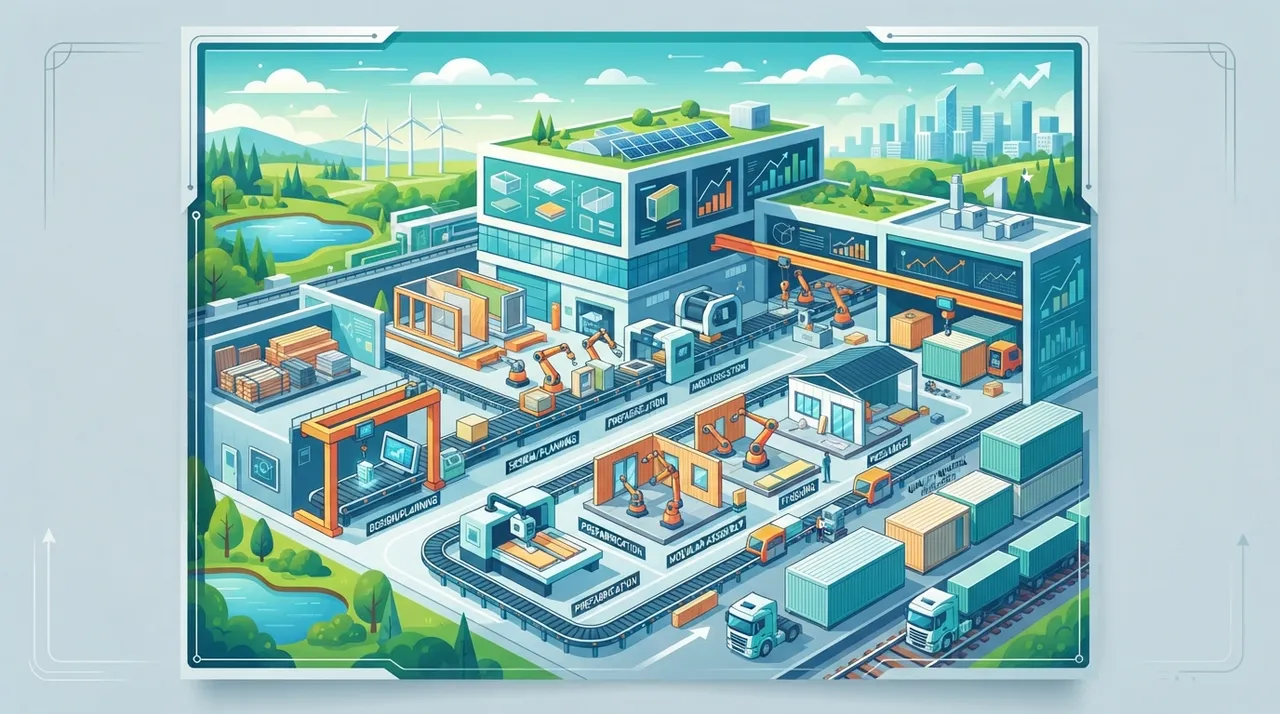
The project aims to establish a specialized factory for producing high-efficiency, pre-fabricated cooling and heating units in Bahrain, to meet the growing demand for sustainable and cost-effective building solutions. The project leverages the Bahraini government's direction towards enhancing energy efficiency in buildings and developing the local manufacturing sector. The business model focuses on providing real estate developers and contracting companies with ready-to-install units, reducing construction time and costs, and offering environmentally friendly solutions. The project primarily targets new residential and commercial developments, as well as renovation projects seeking to improve energy efficiency.
Market Study and Demand
The construction market in Bahrain is experiencing steady growth, expected to reach USD 3.3 billion (approximately 1.24 billion BHD) in 2026, with a projected compound annual growth rate (CAGR) of 4.13% until 2031. This growth is attributed to Bahrain's Economic Vision 2030, which focuses on infrastructure development and residential and commercial projects. There is increasing demand for energy-efficient building solutions due to high electricity costs in the Gulf region, a focus on sustainability, and government regulations encouraging the use of energy-saving building systems. The manufacturing sector is a key driver of non-oil growth in Bahrain, and the government is working to develop it through the Industrial Sector Strategy 2022-2026. This strategy aims to increase the industrial sector's contribution to GDP and encourage investment in technological infrastructure.
Market Sizing (TAM / SAM / SOM)
Market sizing was conducted using both top-down and bottom-up approaches. The top-down approach starts by analyzing the total size of the construction and building market in Bahrain, estimated at billions of Bahraini Dinars. The scope is then narrowed to target projects requiring central cooling and heating systems, focusing on new buildings and renovation projects adopting energy efficiency standards. The proportion of buildings that could benefit from pre-fabricated units is then estimated. The bottom-up approach relies on estimating the number of anticipated new residential and commercial units, the average demand for cooling and heating units per project, and realistically determining the targeted market share, considering competition and the factory's operational capacity.
| Level | Annual Size | Description |
|---|---|---|
| TAM — Total Addressable Market | 1240.0 مليون د.ب | Total service-addressable demand |
| SAM — Serviceable Available Market | 250.0 مليون د.ب | The portion your model addresses |
| SOM — Serviceable Obtainable Market | 30.0 مليون د.ب | Your realistic early share |
Basis of Sizing: The Total Addressable Market (TAM) was estimated based on the size of the construction and building market in Bahrain, which is projected to reach USD 3.3 billion (approximately 1.24 billion BHD) in 2026, with a CAGR of 4.13% until 2031. The Serviceable Available Market (SAM) focuses on the new commercial and residential building sector adopting energy-efficient solutions. The Serviceable Obtainable Market (SOM) represents a realistic share achievable in the early years of operation, focusing on large projects and developers who prefer pre-fabricated, high-efficiency units.
Unit Economics
Measures the profitability of each sales unit/customer — the most accurate feasibility indicator:
| Unit Indicator | Value |
|---|---|
| Sales Unit | Unit (cooling/heating) |
| Avg. Price/Revenue per Unit | ٤٬٥٠٠ د.ب |
| Customer Acquisition Cost (CAC) | ٧٠٠ د.ب |
| Customer Lifetime Value (LTV) | ١٥٬٠٠٠ د.ب |
| LTV/CAC Ratio | ٢١٫٤× (healthy) |
| Contribution Margin | ٤٠٪ |
Competitive Analysis
The market for cooling and heating units in Bahrain is characterized by the presence of a number of traditional suppliers and contractors. However, our project's sustainable advantage lies in offering pre-fabricated, high-efficiency units, which reduces on-site installation time, provides better quality and production control, and contributes to lower building energy consumption. Bahrain is adopting green building standards that encourage energy efficiency, which gives our products a competitive edge. Moreover, focusing on integrated and customized solutions for each project, along with technical support and after-sales services, will enhance customer loyalty. Additionally, Bahrain enjoys a competitive advantage in terms of lower operating costs compared to other GCC countries, allowing for competitive pricing.
Market Entry Plan and Pricing
The market entry plan includes targeting key real estate developers and large contracting companies in Bahrain, and participating in specialized construction and design trade fairs. The marketing strategy will focus on highlighting the product's competitive advantages, such as high energy efficiency, quick installation, superior quality, and compatibility with sustainable building standards. Distribution channels will include direct sales from the factory and building a network of authorized distributors and specialized contractors. Products will be competitively priced to reflect the added value offered by pre-fabricated units, with flexible financing options provided for large projects.
Capacity and Operations
The factory will start with an initial production capacity of 200 units per month, with a gradual occupancy rate starting at 60% in the first year and gradually increasing to 85% by the third year, with the potential to expand to 400 units per month.
Daily factory operations will rely on tightly controlled production processes and strict quality control at every stage, from raw material reception to final product delivery. ISO quality management systems will be implemented to ensure products meet required specifications and international standards. A qualified team will be hired and trained on the latest manufacturing and operational technologies. Emphasis will be placed on supply chain efficiency to ensure raw material availability and minimize waiting periods. Preventive maintenance plans for equipment will be established to ensure production continuity.
The factory will be established in one of Bahrain's industrial zones, such as Salman Industrial City or the Bahrain International Investment Park, to benefit from advanced infrastructure and logistical facilities, and the possibility of customs duty exemptions on imported raw materials and equipment for factories. The latest technologies and equipment will be selected for production lines to ensure high quality and efficiency, with a focus on automation and digital control. Raw materials will be sourced from reliable local and international suppliers, with priority given to sustainable sources. Local and international technical and environmental standards will be adhered to at all manufacturing stages, including building energy efficiency requirements.
Projected Income Statement (5 Years)
| Item \ Year | Y1 | Y2 | Y3 | Y4 | Y5 |
|---|---|---|---|---|---|
| Revenues | ٨٥٠٬٠٠٠ د.ب | ٩١٨٬٠٠٠ د.ب | ٩٩١٬٤٤٠ د.ب | ١٬٠٧٠٬٧٥٥ د.ب | ١٬١٥٦٬٤١٦ د.ب |
| Cost of Sales | (٤٦٧٬٥٠٠ د.ب) | (٥٠٤٬٩٠٠ د.ب) | (٥٤٥٬٢٩٢ د.ب) | (٥٨٨٬٩١٥ د.ب) | (٦٣٦٬٠٢٩ د.ب) |
| Gross Profit | ٣٨٢٬٥٠٠ د.ب | ٤١٣٬١٠٠ د.ب | ٤٤٦٬١٤٨ د.ب | ٤٨١٬٨٤٠ د.ب | ٥٢٠٬٣٨٧ د.ب |
| Operating Expenses | (٢٥٥٬٠٠٠ د.ب) | (٢٧٥٬٤٠٠ د.ب) | (٢٩٧٬٤٣٢ د.ب) | (٣٢١٬٢٢٧ د.ب) | (٣٤٦٬٩٢٥ د.ب) |
| EBITDA | ١٢٧٬٥٠٠ د.ب | ١٣٧٬٧٠٠ د.ب | ١٤٨٬٧١٦ د.ب | ١٦٠٬٦١٣ د.ب | ١٧٣٬٤٦٢ د.ب |
| Tax | (٠ د.ب) | (٠ د.ب) | (٠ د.ب) | (٠ د.ب) | (٠ د.ب) |
| Net Profit | -١١٢٬٥٠٠ د.ب | -١٠٢٬٣٠٠ د.ب | -٩١٬٢٨٤ د.ب | -٧٩٬٣٨٧ د.ب | -٦٦٬٥٣٨ د.ب |
| Net Margin | -١٣٪ | -١١٪ | -٩٪ | -٧٪ | -٦٪ |
Investment Cost Structure
| Item | Cost | Percentage |
|---|---|---|
| Establishment and Licensing Costs | ١٢٠٬٠٠٠ د.ب | ١٠٪ |
| Production Machinery and Equipment | ٤٨٠٬٠٠٠ د.ب | ٤٠٪ |
| Factory Fittings and Infrastructure | ٣٠٠٬٠٠٠ د.ب | ٢٥٪ |
| Initial Working Capital (raw materials, wages) | ١٨٠٬٠٠٠ د.ب | ١٥٪ |
| Initial Marketing and Sales | ٦٠٬٠٠٠ د.ب | ٥٪ |
| Unforeseen Expenses | ٦٠٬٠٠٠ د.ب | ٥٪ |
Cash Flow and Break-even Point
| Year | Operating Cash Flow | Cumulative Cash Flow |
|---|---|---|
| Year 1 | ١٢٧٬٥٠٠ د.ب | -١٬٠٧٢٬٥٠٠ د.ب |
| Year 2 | ١٣٧٬٧٠٠ د.ب | -٩٣٤٬٨٠٠ د.ب |
| Year 3 | ١٤٨٬٧١٦ د.ب | -٧٨٦٬٠٨٤ د.ب |
| Year 4 | ١٦٠٬٦١٣ د.ب | -٦٢٥٬٤٧١ د.ب |
| Year 5 | ١٧٣٬٤٦٢ د.ب | -٤٥٢٬٠٠٨ د.ب |
Estimated break-even point at an annual revenue of ≈ ١٬١٠٠٬٠٠٠ د.ب (~١٢٩٪ of first-year revenue), with a contribution margin of ٤٥٪. Cumulative cash break-even is beyond the study horizon.
Funding Structure
| Funding Source | Percentage | Amount |
|---|---|---|
| Equity | ٦٠٪ | ٧٢٠٬٠٠٠ د.ب |
| Debt Financing (7% interest) | ٤٠٪ | ٤٨٠٬٠٠٠ د.ب |
Sensitivity Analysis (Revenue × Operations)
The combined effect of changes in revenue and costs on Net Present Value:
| Revenue \ Operations | −10٪ | −5٪ | Base | +5٪ | +10٪ |
|---|---|---|---|---|---|
| −20٪ | -٤٥٤٬٨٦٦ د.ب | -٦٠٣٬٨٩٢ د.ب | -٧٥٢٬٩١٩ د.ب | -٩٠١٬٩٤٦ د.ب | -١٬٠٥٠٬٩٧٣ د.ب |
| −10٪ | -٣٦١٬٧٢٤ د.ب | -٥٢٩٬٣٧٩ د.ب | -٦٩٧٬٠٣٤ د.ب | -٨٦٤٬٦٩٠ د.ب | -١٬٠٣٢٬٣٤٥ د.ب |
| Base | -٢٦٨٬٥٨٢ د.ب | -٤٥٤٬٨٦٦ د.ب | -٦٤١٬١٤٩ د.ب | -٨٢٧٬٤٣٣ د.ب | -١٬٠١٣٬٧١٦ د.ب |
| +10٪ | -١٧٥٬٤٤٠ د.ب | -٣٨٠٬٣٥٢ د.ب | -٥٨٥٬٢٦٤ د.ب | -٧٩٠٬١٧٦ د.ب | -٩٩٥٬٠٨٨ د.ب |
| +20٪ | -٨٢٬٢٩٨ د.ب | -٣٠٥٬٨٣٩ د.ب | -٥٢٩٬٣٧٩ د.ب | -٧٥٢٬٩١٩ د.ب | -٩٧٦٬٤٦٠ د.ب |
Scenario Analysis
| Scenario | Probability | NPV | Assessment |
|---|---|---|---|
| Pessimistic | ٢٥٪ | -٨٤٢٬٣٣٥ د.ب | Not feasible |
| Base | ٥٠٪ | -٦٤١٬١٤٩ د.ب | Not feasible |
| Optimistic | ٢٥٪ | -٣٩٥٬٢٥٥ د.ب | Not feasible |
Expected Present Value (Weighted): -٦٢٩٬٩٧٢ د.ب.
Risk Analysis and Management
| Risk | Probability | Impact | Mitigation |
|---|---|---|---|
| Changes in government regulations or tax policies | Medium | High | Continuous monitoring of legislative updates, building relationships with government agencies, developing financial contingency plans. |
| Rising raw material prices or supply chain disruptions | Medium | High | Diversifying suppliers, signing long-term contracts, maintaining a strategic inventory of essential materials. |
| Intense competition from traditional companies or entry of new competitors | Medium | Medium | Focusing on quality and innovation, building a sustainable competitive advantage (e.g., efficiency), effective marketing of added values. |
| Difficulty in acquiring specialized technical competencies | Medium | Medium | Collaborating with educational institutions for training, offering competitive benefits packages, internal training and development programs. |
| Insufficient initial demand for energy-efficient products | Low | Medium | Awareness campaigns on the importance of energy efficiency, targeting government projects and large companies adopting sustainability, competitive pricing offers. |
Organizational Structure and Team
The project's organizational structure will consist of a board of directors comprising experts in the industrial and financial sectors, and a management team with experience in manufacturing, engineering, and sales. Specialized engineers in cooling and heating systems will be hired, along with skilled technicians for the production lines. The project will leverage Bahraini employment support and training programs, in line with government objectives to increase the contribution of national labor in the industrial sector.
Legal and Regulatory Aspects
The project requires obtaining the necessary industrial licenses from the Ministry of Industry, Commerce and Tourism in Bahrain. It also requires adherence to all environmental laws and regulations issued by the Supreme Council for Environment, including environmental impact assessment and waste management requirements. Compliance with Bahrain's labor and employment regulations, and applicable tax laws, such as the 10% VAT, is also mandatory. It should be noted that Bahrain does not impose corporate income tax on most sectors, but a 10% tax may apply to companies with annual revenues exceeding one million Bahraini Dinars or net profits exceeding 200,000 Bahraini Dinars, effective from 2027.
Expansion and Sustainability Plan
Future expansion plans include increasing the factory's production capacity to meet growing demand in the local and regional markets. Expansion into other GCC markets is possible, especially since Bahrain enjoys a strategic location and advanced logistical infrastructure connecting it to these markets. Consideration can also be given to developing new products or improving existing ones to include more advanced technologies such as smart cooling and heating systems, or integrating renewable energy sources. Sustainability will be maintained through continuous innovation in energy efficiency, utilization of recycled materials, and reduction of industrial waste.
Environmental, Social, and Governance (ESG) Impact
The project is committed to the highest standards of Environmental, Social, and Governance (ESG) impact. The factory will be designed to be environmentally friendly, with a focus on reducing energy and water consumption in production processes. Strict waste management and recycling practices will be implemented. The factory's final products directly contribute to a positive environmental impact by providing high-efficiency cooling and heating solutions for buildings, which reduces carbon emissions and energy consumption. Socially, the project will provide job opportunities for Bahraini citizens and support the local economy. In terms of governance, the project will adhere to transparency and accountability in all its operations.
Conclusions and Recommendations
The project for a High-Efficiency Pre-Fabricated Cooling and Heating Units Factory in Bahrain represents a promising investment opportunity, given the continuous growth in the construction sector, the government's direction towards sustainability and energy efficiency, and the competitive advantages Bahrain offers as an attractive environment for industrial investment. With careful planning and effective strategy implementation, the project can achieve rewarding financial returns and contribute to the sustainable economic development of the Kingdom. The recommendation is to proceed with the project with a focus on innovation, quality, and operational efficiency.
Sources and Disclaimer
- Bahrain Economic Development Board (EDB) reports
- Mordor Intelligence and Market Research Future reports on the Bahrain construction market
- KPMG and EY publications on the cost of doing business in GCC countries
- Regulations and laws of the Ministry of Industry, Commerce and Tourism and the Supreme Council for Environment in Bahrain
- International Monetary Fund (IMF) reports on the Bahraini economy
Disclaimer: This is a guiding study based on sector-specific assumptions and standards at the time of preparation; verify figures locally before any investment decision.