Executive Summary
The 3D Printing Modular Building Units Factory project in the UAE targets a promising market opportunity within the industrial and manufacturing sector in the UAE. With an investment of ١٥٬٠٠٠٬٠٠٠ د.إ, it achieves a Net Present Value (NPV) of -٧٬٩٣٥٬٠٩٦ د.إ, an Internal Rate of Return (IRR) of -١١٪, and a payback period of — years.
| Indicator | Value |
|---|---|
| Initial Investment | ١٥٬٠٠٠٬٠٠٠ د.إ |
| First-Year Revenue | ١٠٬٠٠٠٬٠٠٠ د.إ |
| Annual Growth (CAGR) | ١٥٪ |
| Net Margin (Y1) | -١٥٪ |
| Return on Investment (Average) | -٦٪ annually |
| Net Present Value (NPV) | -٧٬٩٣٥٬٠٩٦ د.إ |
| Internal Rate of Return (IRR) | -١١٪ |
| Profitability Index (PI) | ٠ |
| Payback Period | — |
| Break-even Year | — |
| Expected NPV (Probability-Weighted) | -٧٬٨٠٧٬٨٠٥ د.إ |
Assumptions and Basis
The figures in this study are specifically derived for this project, sector, and country:
| Assumption | Value |
|---|---|
| Initial Capital | ١٥٬٠٠٠٬٠٠٠ د.إ |
| First-Year Revenue | ١٠٬٠٠٠٬٠٠٠ د.إ |
| Annual Growth | ١٥٪ |
| Cost of Goods Sold (COGS) | ٥٥٪ of Revenue |
| Operating Expenses | ٣٠٪ of Revenue |
| Tax/Zakat | ٩٪ |
| Discount Rate (WACC) | ١٢٪ |
| Study Horizon | ٥ years |
Basis of Assumptions: These figures are based on averages of the advanced construction and manufacturing sector in the UAE, taking into account potential efficiencies and savings from 3D printing and market growth.
Project Description and Opportunity
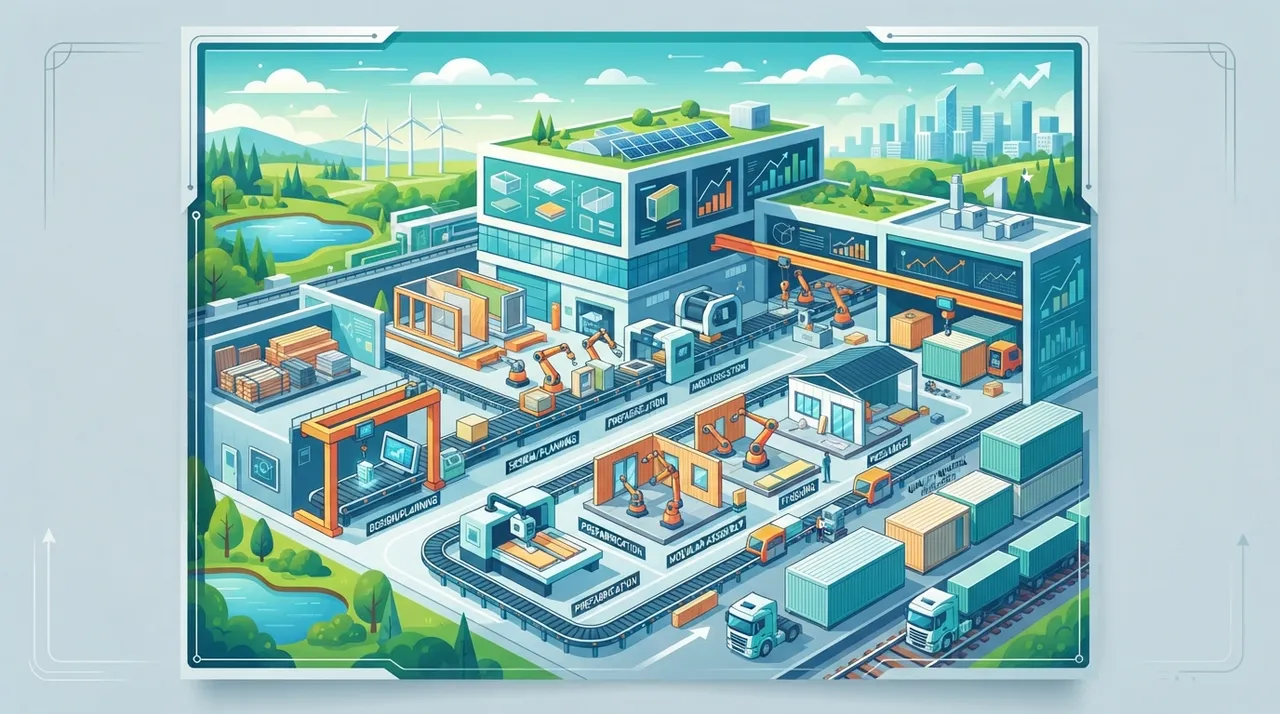
The project aims to establish an advanced factory in the United Arab Emirates specializing in the production of modular building units using 3D printing technology. The significant market opportunity lies in the continuously growing construction sector in the UAE, driven by urban development and infrastructure projects. The factory will operate on a business model based on off-site manufacturing of complete building units or major parts thereof, reducing construction time, costs, and waste. The project primarily targets real estate developers, contracting companies, and government entities seeking fast, sustainable, and economical construction solutions for residential, commercial, and industrial projects.
Market and Demand Study
The construction market in the UAE is experiencing strong growth, expected to reach AED 189.59 billion in 2026, with an annual growth rate of 6.2%. This growth is attributed to ambitious government initiatives such as Dubai Vision 2040 and Abu Dhabi Economic Plan 2030, which drive investments in infrastructure, residential, and commercial projects. There is also an increasing focus on green and sustainable buildings. The 3D printing market in the UAE construction sector is growing rapidly, with a projected Compound Annual Growth Rate (CAGR) of 35.23% during the 2025-2032 period, driven by innovative government policies and a focus on innovation. Specifically, Dubai's 3D Printing Strategy aims for 25% of new buildings in Dubai to be constructed using this technology by 2030. This governmental focus creates significant demand for innovative and efficient construction solutions, which 3D printed modular units provide.
Market Sizing (TAM / SAM / SOM)
The market was sized by analyzing the total construction market in the UAE and then estimating the proportion allocated to the modular construction and 3D printing sector. Given Dubai's strategic goals for 25% of new buildings to be 3D printed by 2030, it can be concluded that there is an available and growing market for this technology. The Total Addressable Market (TAM) was estimated based on the UAE construction market size for 2026. The Serviceable Available Market (SAM) was determined by considering the share of 3D printing and modular construction in the total construction market, representing a growing segment targeted by government initiatives. The Serviceable Obtainable Market (SOM) represents a conservative percentage that the project can capture in the initial years of operation, taking into account competition and initial production capacity.
| Level | Annual Size | Description |
|---|---|---|
| TAM — Total Market | 189590.0 Million د.إ | Total Serviceable Demand |
| SAM — Available Market | 700.0 Million د.إ | The portion your model reaches |
| SOM — Realistic Target | 70.0 Million د.إ | Your realistic early share |
Sizing Basis: The Total Addressable Market (TAM) is based on the UAE construction market for 2026. The Serviceable Available Market (SAM) represents a segment of the modular construction and 3D printing market, and the Serviceable Obtainable Market (SOM) is a realistic share achievable in the early years.
Unit Economics
Measures the profitability of each unit sale/customer — the most accurate feasibility indicator:
| Unit Indicator | Value |
|---|---|
| Unit of Sale | Modular Building Unit (square meter) |
| Average Price/Revenue per Unit | ٢٬٠٠٠ د.إ |
| Customer Acquisition Cost (CAC) | ٦٬٠٠٠ د.إ |
| Customer Lifetime Value (LTV) | ١٥٠٬٠٠٠ د.إ |
| LTV/CAC Ratio | ٢٥× (Healthy) |
| Contribution Margin | ٣٥٪ |
Competitive Analysis
The main competitors in the UAE construction sector are large traditional contracting companies, in addition to a limited number of companies that have started adopting modular construction or 3D printing technologies. Our factory's sustainable advantage lies in the high efficiency, speed of production, and low cost resulting from 3D printing, which reduces material waste and carbon emissions. The ability to offer unique and unconventional architectural designs at a cost similar to traditional construction, along with a focus on sustainability, gives us a competitive edge. Leveraging government incentives and legislation supporting the adoption of 3D printing in construction in Dubai will further enhance our competitive position.
Market Entry and Pricing Plan
The market entry plan relies on targeting real estate developers, large contracting companies, and government entities by building strategic relationships and showcasing the added value of our technology. The marketing strategy will focus on highlighting competitive advantages such as construction speed, cost reduction, sustainability, and design flexibility. Marketing channels will include participation in specialized industrial exhibitions and events in construction and technology in the UAE, public relations, targeted digital marketing (B2B), as well as building demonstration models of 3D printed buildings. Pricing will be based on a competitive model that offers significant savings compared to traditional construction, taking into account quality and speed.
Capacity and Operations
The factory's production capacity begins at a rate of 5,000 square meters per year of modular units, with a plan to gradually increase utilization to meet growing demand, reaching 80% within 3-5 years of operation.
Daily operations of the factory include managing the raw material supply chain, 3D printing processes, assembling modular units, and strict quality control to ensure compliance with engineering standards and sustainability criteria. The latest quality management systems (such as ISO 9001) will be implemented to ensure the quality of final products. Logistics operations will include transporting completed units to project sites and their installation. The factory will operate on a shift basis to increase machine utilization efficiency and reduce production time.
The technical aspect of the project will require advanced large-scale 3D printing equipment capable of printing concrete structures or using other building materials, in addition to production lines for modular units. The optimal location for the factory will be in one of the industrial zones or free zones in the UAE, such as Khalifa Industrial Zone Abu Dhabi (KEZAD) or ICAD in Abu Dhabi, or industrial zones in Dubai, to benefit from advanced infrastructure, easy access to ports and airports, and government incentives. The factory will rely on local and international suppliers for raw materials (such as specialized concrete for 3D printing, insulating materials, and finishes) and spare parts for equipment. A specialized engineering team in 3D printing and modular construction will be needed to design and develop the units.
Projected Income Statement (5 Years)
| Item \ Year | Y1 | Y2 | Y3 | Y4 | Y5 |
|---|---|---|---|---|---|
| Revenue | ١٠٬٠٠٠٬٠٠٠ د.إ | ١١٬٥٠٠٬٠٠٠ د.إ | ١٣٬٢٢٥٬٠٠٠ د.إ | ١٥٬٢٠٨٬٧٥٠ د.إ | ١٧٬٤٩٠٬٠٦٢ د.إ |
| Cost of Sales | (٥٬٥٠٠٬٠٠٠ د.إ) | (٦٬٣٢٥٬٠٠٠ د.إ) | (٧٬٢٧٣٬٧٥٠ د.إ) | (٨٬٣٦٤٬٨١٣ د.إ) | (٩٬٦١٩٬٥٣٤ د.إ) |
| Gross Profit | ٤٬٥٠٠٬٠٠٠ د.إ | ٥٬١٧٥٬٠٠٠ د.إ | ٥٬٩٥١٬٢٥٠ د.إ | ٦٬٨٤٣٬٩٣٧ د.إ | ٧٬٨٧٠٬٥٢٨ د.إ |
| Operating Expenses | (٣٬٠٠٠٬٠٠٠ د.إ) | (٣٬٤٥٠٬٠٠٠ د.إ) | (٣٬٩٦٧٬٥٠٠ د.إ) | (٤٬٥٦٢٬٦٢٥ د.إ) | (٥٬٢٤٧٬٠١٩ د.إ) |
| EBITDA | ١٬٥٠٠٬٠٠٠ د.إ | ١٬٧٢٥٬٠٠٠ د.إ | ١٬٩٨٣٬٧٥٠ د.إ | ٢٬٢٨١٬٣١٢ د.إ | ٢٬٦٢٣٬٥٠٩ د.إ |
| Tax | (٠ د.إ) | (٠ د.إ) | (٠ د.إ) | (٠ د.إ) | (٠ د.إ) |
| Net Profit | -١٬٥٠٠٬٠٠٠ د.إ | -١٬٢٧٥٬٠٠٠ د.إ | -١٬٠١٦٬٢٥٠ د.إ | -٧١٨٬٦٨٨ د.إ | -٣٧٦٬٤٩١ د.إ |
| Net Margin | -١٥٪ | -١١٪ | -٨٪ | -٥٪ | -٢٪ |
Investment Cost Structure
| Item | Cost | Percentage |
|---|---|---|
| Machinery and 3D Printing Equipment | ٥٬٢٥٠٬٠٠٠ د.إ | ٣٥٪ |
| Factory Construction and Outfitting | ٣٬٧٥٠٬٠٠٠ د.إ | ٢٥٪ |
| Initial Working Capital | ٣٬٠٠٠٬٠٠٠ د.إ | ٢٠٪ |
| Research, Development, and Licenses | ١٬٥٠٠٬٠٠٠ د.إ | ١٠٪ |
| Initial Marketing and Sales | ١٬٥٠٠٬٠٠٠ د.إ | ١٠٪ |
Cash Flow and Break-even Point
| Year | Operating Cash Flow | Cumulative Cash Flow |
|---|---|---|
| Year 1 | ١٬٥٠٠٬٠٠٠ د.إ | -١٣٬٥٠٠٬٠٠٠ د.إ |
| Year 2 | ١٬٧٢٥٬٠٠٠ د.إ | -١١٬٧٧٥٬٠٠٠ د.إ |
| Year 3 | ١٬٩٨٣٬٧٥٠ د.إ | -٩٬٧٩١٬٢٥٠ د.إ |
| Year 4 | ٢٬٢٨١٬٣١٢ د.إ | -٧٬٥٠٩٬٩٣٨ د.إ |
| Year 5 | ٢٬٦٢٣٬٥٠٩ د.إ | -٤٬٨٨٦٬٤٢٨ د.إ |
Estimated break-even point at annual revenue ≈ ١٣٬٣٣٣٬٣٣٣ د.إ (~١٣٣٪ of Year 1 revenue), with a contribution margin of ٤٥٪. Cumulative cash break-even beyond the study horizon.
Funding Structure
| Funding Source | Percentage | Amount |
|---|---|---|
| Equity | ٧٠٪ | ١٠٬٥٠٠٬٠٠٠ د.إ |
| Debt Financing (7% interest) | ٣٠٪ | ٤٬٥٠٠٬٠٠٠ د.إ |
Sensitivity Analysis (Revenue × Operating)
The combined impact of changes in revenue and costs on Net Present Value:
| Revenue \ Operating | −10٪ | −5٪ | Base | +5٪ | +10٪ |
|---|---|---|---|---|---|
| −20٪ | -٥٬٦٠٧٬٩٤٨ د.إ | -٧٬٤٦٤٬١٠٢ د.إ | -٩٬٣٤٨٬٠٧٧ د.إ | -١١٬٢٣٢٬٠٥١ د.إ | -١٣٬١١٦٬٠٢٦ د.إ |
| −10٪ | -٤٬٤٧٤٬٥٤١ د.إ | -٦٬٥٢٩٬٦٨٤ د.إ | -٨٬٦٤١٬٥٨٦ د.إ | -١٠٬٧٦١٬٠٥٧ د.إ | -١٢٬٨٨٠٬٥٢٩ د.إ |
| Base | -٣٬٣٦٠٬٧٥٣ د.إ | -٥٬٦٠٧٬٩٤٨ د.إ | -٧٬٩٣٥٬٠٩٦ د.إ | -١٠٬٢٩٠٬٠٦٤ د.إ | -١٢٬٦٤٥٬٠٣٢ د.إ |
| +10٪ | -٢٬٢٦٠٬١٨٥ د.إ | -٤٬٧٠١٬٢٢٣ د.إ | -٧٬٢٢٨٬٦٠٥ د.إ | -٩٬٨١٩٬٠٧٠ د.إ | -١٢٬٤٠٩٬٥٣٥ د.إ |
| +20٪ | -١٬١٦٨٬٥٨٥ د.إ | -٣٬٨٠٥٬٦٤٤ د.إ | -٦٬٥٢٩٬٦٨٤ د.إ | -٩٬٣٤٨٬٠٧٧ د.إ | -١٢٬١٧٤٬٠٣٨ د.إ |
Scenario Analysis
| Scenario | Probability | NPV | Assessment |
|---|---|---|---|
| Pessimistic | ٢٥٪ | -١٠٬٤٧٨٬٤٦١ د.إ | Not Feasible |
| Base | ٥٠٪ | -٧٬٩٣٥٬٠٩٦ د.إ | Not Feasible |
| Optimistic | ٢٥٪ | -٤٬٨٨٢٬٥٦٨ د.إ | Not Feasible |
Expected Present Value (Weighted): -٧٬٨٠٧٬٨٠٥ د.إ.
Risk Analysis and Management
| Risk | Probability | Impact | Mitigation |
|---|---|---|---|
| Technical challenges in large-scale 3D printing projects | Medium | High | Investing in continuous R&D, collaborating with global experts, and recruiting highly skilled personnel. |
| Slow market adoption of new technologies | Medium | Medium | Intensive marketing and awareness campaigns, building demonstration models, and competitive value propositions. |
| Fluctuations in raw material prices | Medium | Medium | Diversifying suppliers, long-term purchase contracts, and seeking cost-effective material alternatives. |
| Competition from traditional construction companies | High | Medium | Focusing on the competitive advantages of 3D printing (speed, cost, sustainability, design), and building strong customer relationships. |
| Changes in government regulations or lack of clarity | Low | Medium | Continuous follow-up with regulatory bodies, and participation in industry dialogues to ensure compliance. |
Organizational Structure and Team
The project's organizational structure will consist of a core management team including a General Manager, Operations Manager, Sales and Marketing Manager, Financial Manager, and a Technical Manager specializing in 3D printing. Technical staff will include design engineers (architectural and civil), 3D printing machine operation and maintenance technicians, and assembly workers. The focus will be on attracting local and international talent with experience in advanced construction and 3D printing.
Legal and Regulatory Aspects
The project requires obtaining the necessary industrial and commercial licenses from the relevant government authorities in the UAE, such as the Department of Economic Development and the Municipality in the respective Emirate. Compliance with laws and regulations related to construction, occupational health and safety, and the environment is essential. There are also specific regulations in Dubai governing the use of 3D printing in construction, which must be adhered to to obtain the required approvals.
Expansion and Sustainability Plan
Future expansion plans include increasing the factory's production capacity by adding more 3D printers and assembly lines. Expansion can also involve offering customized construction solutions for larger and more complex projects, or targeting other regional markets after establishing a strong presence in the UAE. The focus will be on research and development to improve material efficiency, develop new 3D printing materials, and innovate more diverse modular unit designs to meet changing market needs.
Environmental, Social, and Governance (ESG) Impact
The project contributes positively to environmental sustainability by reducing construction waste by up to 60% compared to traditional construction. 3D printing also reduces water consumption and carbon emissions. Socially, the project contributes to providing affordable and rapid housing solutions, and creating job opportunities in the advanced manufacturing sector. From a governance perspective, the project will adhere to the highest standards of transparency and accountability in all aspects of operations.
Conclusions and Recommendations
The 3D Printing Modular Building Units Factory project in the UAE represents a highly promising investment opportunity. With strong growth in the construction sector, government support for 3D printing technologies, and increasing demand for sustainable and cost-effective construction solutions, the project possesses all the ingredients for success. The recommendation is to proceed with the project, focusing on innovation, operational efficiency, and building strategic partnerships to ensure a strong market share and sustainable expansion.
Sources and Disclaimer
- UAE construction market reports (e.g., GlobeNewswire, Mordor Intelligence, IMARC Group)
- UAE and Middle East 3D printing market reports (e.g., Markets and Data, Future Market Insights, GMI Research)
- Dubai government 3D printing strategies and related regulations
- Case studies of 3D printed construction projects in the UAE
- Data on modular and traditional construction costs in the UAE
Disclaimer: This is a guiding study based on assumptions and sector standards at the time of preparation; verify the figures locally before any investment decision.