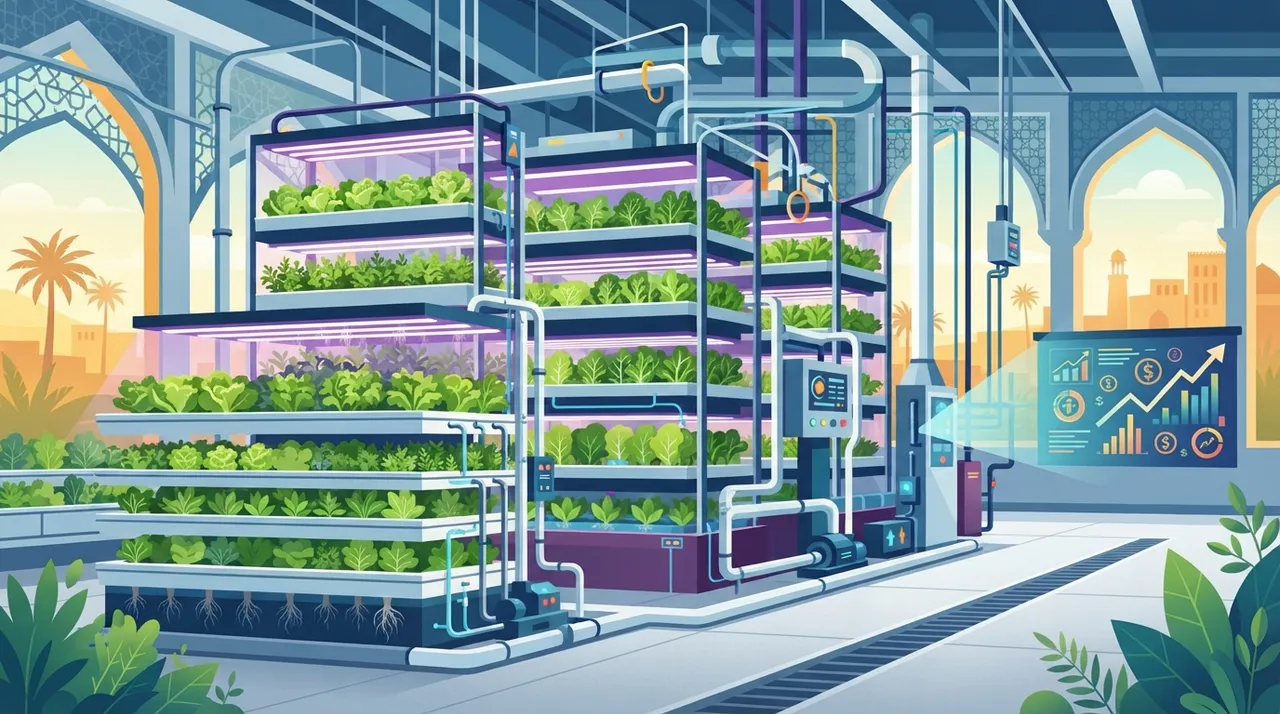
Executive Summary
The project Solar-Powered Vertical Farm for Leafy Greens and Small Fruits, Utilizing Hydroponics and Aeroponics targets a promising market opportunity within the agricultural sector in the UAE. With an investment of ٢٬٥٠٠٬٠٠٠ د.إ, it achieves a Net Present Value of -١٬٠٠٦٬٦٣٢ د.إ, an Internal Rate of Return of -٦٪, and a payback period of — years.
| Indicator | Value |
|---|---|
| Initial Investment | ٢٬٥٠٠٬٠٠٠ د.إ |
| First Year Revenue | ١٬٥٠٠٬٠٠٠ د.إ |
| Annual Growth (CAGR) | ١٥٪ |
| Net Margin (Year 1) | -١٣٪ |
| Return on Investment (Avg.) | -٤٪ annually |
| Net Present Value (NPV) | -١٬٠٠٦٬٦٣٢ د.إ |
| Internal Rate of Return (IRR) | -٦٪ |
| Profitability Index (PI) | ١ |
| Payback Period | — |
| Break-even Year | — |
| Expected NPV (Probability Weighted) | -٩٨٠٬٤٩٩ د.إ |
Assumptions and Basis
The figures in this study are based on project data, the nature of the agricultural sector in the UAE, and local market indicators, according to the following assumptions:
| Assumption | Value |
|---|---|
| Initial Capital | ٢٬٥٠٠٬٠٠٠ د.إ |
| First Year Revenue | ١٬٥٠٠٬٠٠٠ د.إ |
| Annual Growth | ١٥٪ |
| Cost of Goods Sold (COGS) | ٤٥٪ of Revenue |
| Operating Expenses | ٣٥٪ of Revenue |
| Tax/Zakat | ٠٪ |
| Discount Rate (WACC) | ١٠٪ |
| Study Horizon | ٥ years |
Basis of Assumptions: Figures are based on average establishment and operating costs for vertical farms in the UAE, hydroponic market growth rates, and average selling prices for fresh produce, taking into account the tax exemption for projects with taxable income less than AED 375,000.
Project Description and Opportunity
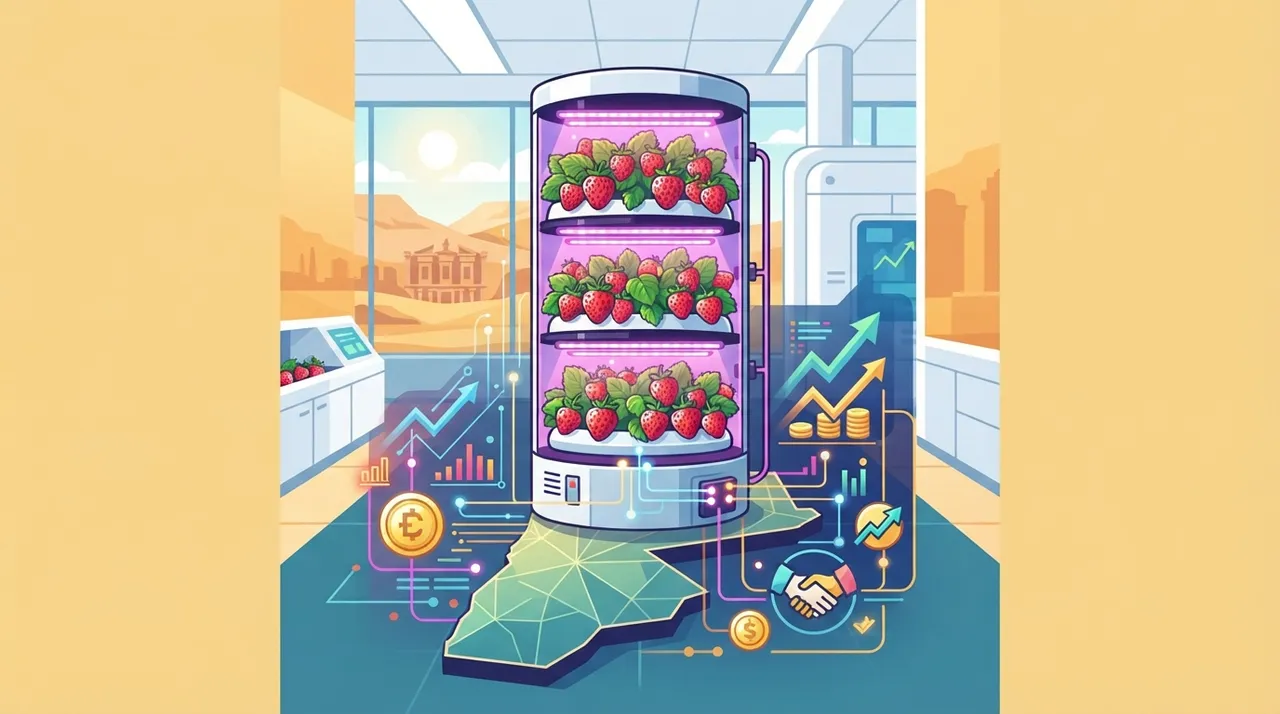
The project aims to establish an advanced vertical farm in the United Arab Emirates, relying on solar energy as its primary power source and utilizing hydroponics and aeroponics technologies to produce a variety of leafy greens (such as lettuce, spinach, kale) and small fruits (such as strawberries). This initiative is part of the UAE's efforts to enhance its food security and reduce reliance on imports, as the country imports more than 80% of its food needs. The project targets individual consumers, restaurants, hotels, and supermarkets seeking fresh, high-quality, locally produced, and environmentally sustainable products. The business model is based on direct sales to consumers and wholesale supply to businesses, with a focus on operational efficiency and reducing water and energy consumption, aligning with government directives to support agricultural innovation.
Market Study and Demand
The vertical farming and hydroponics market in the UAE is experiencing rapid growth, driven by several key factors. Firstly, the National Food Security Strategy 2051 aims to boost local production and reduce imports, providing significant government support for innovative agricultural projects. Secondly, the challenges of the desert climate, water scarcity, and arable land make traditional farming difficult and unsustainable, pushing for the adoption of indoor farming solutions that save up to 95% of water. Thirdly, there is increasing demand from consumers, restaurants, and hotels for fresh, pesticide-free, and locally grown produce to ensure quality and reduce carbon footprint. The hydroponics market size in the UAE is approximately USD 135 million (about AED 496 million) in 2026 and is expected to grow at a CAGR of 8.89% until 2032, with liquid farming systems like hydroponics and aeroponics dominating. Furthermore, the vertical farming market in the UAE was valued at USD 92.4 million in 2024 and is projected to reach USD 358.9 million by 2031, at a CAGR of 20.90%.
Market Sizing (TAM / SAM / SOM)
The market sizing methodology relies on estimating the Total Addressable Market (TAM) through the total spending on leafy greens and small fruits in the UAE, considering the high import ratio. The Serviceable Available Market (SAM) is determined based on the share of hydroponics and vertical farming in the total fresh produce market, and the realistic Serviceable Obtainable Market (SOM) is defined by focusing on the segment of consumers interested in high-quality local products, restaurants, and hotels. Data on the growth of the hydroponics and vertical farming market in the UAE, along with average selling prices for fresh agricultural products, are used to estimate potential revenues. The validity of these estimates is verified by comparing them with similar projects in the region and consumer spending on the targeted product category.
| Level | Annual Size | Description |
|---|---|---|
| TAM — Total Market | 730.0 million د.إ | Total Serviceable Demand |
| SAM — Available Market | 300.0 million د.إ | Portion reachable by your model |
| SOM — Realistic Target | 75.0 million د.إ | Your realistic early share |
Sizing Basis: Market sizing is based on the size of the hydroponics market in the UAE, estimated at USD 135 million (approximately AED 496 million) in 2026, with an expected CAGR of 8.89% until 2032. The target market includes fresh leafy greens and small fruits for consumers and restaurants.
Unit Economics
Measures the profitability of each sales unit/customer — the most accurate feasibility indicator:
| Unit Indicator | Value |
|---|---|
| Sales Unit | kilogram |
| Avg. Price/Revenue per Unit | ٣٠ د.إ |
| Customer Acquisition Cost (CAC) | ١٥ د.إ |
| Customer Lifetime Value (LTV) | ٤٥٠ د.إ |
| LTV/CAC Ratio | ٣٠× (Healthy) |
| Contribution Margin | ٦٠٪ |
Competitive Analysis
The competitive landscape in the vertical farming sector in the UAE is characterized by the presence of several local and international players. Prominent competitors include companies such as 'Pure Harvest Smart Farms', 'AeroFarms', 'Madar Farms', and 'UNS Vertical Farms'. The sustainable advantage of this project lies in its focus on solar energy to reduce the high operating costs associated with significant energy consumption in vertical farms. Additionally, the project will concentrate on producing a diverse range of leafy greens and small fruits that meet local market needs in terms of quality, freshness, and flavor. The water usage efficiency of up to 95% compared to traditional farming also provides a strong competitive advantage in a water-scarce environment like the UAE.
Market Entry and Pricing Strategy
The market entry plan relies on targeting two main segments: health and environmentally conscious individual consumers, and the commercial sector (restaurants, hotels, supermarkets). Marketing will be conducted through digital channels (social media, content marketing highlighting sustainability and quality), participation in local agricultural and food exhibitions, and establishing partnerships with major supermarkets and specialized food suppliers. Pricing will be based on a value strategy, where products will be competitively priced with high-quality imported products, focusing on the added value of fresh, locally produced, and sustainably grown products. Special offers will be provided to early customers and loyalty programs will be implemented to build a strong customer base.
Capacity and Operations
The farm will begin with an initial production capacity of approximately 4000 kilograms per month of leafy greens and small fruits, with plans for gradual expansion to increase occupancy and production by 15-20% annually to meet growing demand.
Daily operations of the farm include managing growth cycles, monitoring nutrient levels and pH, precise environmental control, harvesting, and packaging. Strict quality and hygiene protocols will be implemented to ensure the production of safe, healthy, and high-quality products. The farm will rely on advanced automation systems to monitor and manage operations, reducing the need for intensive labor and ensuring efficiency. Best practices in inventory management and cold chain logistics will also be applied to ensure products reach customers fresh.
The project requires a suitable location with sufficient space for establishing the vertical farm, considering access to road networks and essential utilities. Multi-layered vertical farming units integrated with hydroponics and aeroponics systems will be used, where plants are supplied with nutrients directly through water or mist. Solar energy systems will be integrated to generate the electricity needed for lighting (LED lamps), climate control systems (temperature, humidity, and carbon dioxide), and automation. Suppliers for agricultural equipment, seeds, nutrients, and solar energy systems will be carefully selected, with a focus on providers offering reliable, efficient, and sustainable technologies.
Projected Income Statement (5 Years)
| Item \ Year | Y1 | Y2 | Y3 | Y4 | Y5 |
|---|---|---|---|---|---|
| Revenues | ١٬٥٠٠٬٠٠٠ د.إ | ١٬٧٢٥٬٠٠٠ د.إ | ١٬٩٨٣٬٧٥٠ د.إ | ٢٬٢٨١٬٣١٢ د.إ | ٢٬٦٢٣٬٥٠٩ د.إ |
| Cost of Sales | (٦٧٥٬٠٠٠ د.إ) | (٧٧٦٬٢٥٠ د.إ) | (٨٩٢٬٦٨٧ د.إ) | (١٬٠٢٦٬٥٩١ د.إ) | (١٬١٨٠٬٥٧٩ د.إ) |
| Gross Profit | ٨٢٥٬٠٠٠ د.إ | ٩٤٨٬٧٥٠ د.إ | ١٬٠٩١٬٠٦٣ د.إ | ١٬٢٥٤٬٧٢٢ د.إ | ١٬٤٤٢٬٩٣٠ د.إ |
| Operating Expenses | (٥٢٥٬٠٠٠ د.إ) | (٦٠٣٬٧٥٠ د.إ) | (٦٩٤٬٣١٢ د.إ) | (٧٩٨٬٤٥٩ د.إ) | (٩١٨٬٢٢٨ د.إ) |
| EBITDA | ٣٠٠٬٠٠٠ د.إ | ٣٤٥٬٠٠٠ د.إ | ٣٩٦٬٧٥٠ د.إ | ٤٥٦٬٢٦٣ د.إ | ٥٢٤٬٧٠٢ د.إ |
| Tax | (٠ د.إ) | (٠ د.إ) | (٠ د.إ) | (٠ د.إ) | (٠ د.إ) |
| Net Profit | -٢٠٠٬٠٠٠ د.إ | -١٥٥٬٠٠٠ د.إ | -١٠٣٬٢٥٠ د.إ | -٤٣٬٧٣٧ د.إ | ٢٤٬٧٠٢ د.إ |
| Net Margin | -١٣٪ | -٩٪ | -٥٪ | -٢٪ | ١٪ |
Investment Cost Structure
| Item | Cost | Percentage |
|---|---|---|
| Establishment and Construction Costs (incl. farming and solar systems) | ١٬٥٠٠٬٠٠٠ د.إ | ٦٠٪ |
| First Year Operating Expenses (consumables, wages, marketing) | ٥٠٠٬٠٠٠ د.إ | ٢٠٪ |
| Initial Inventory and Working Capital | ٢٥٠٬٠٠٠ د.إ | ١٠٪ |
| License and Permit Fees | ١٢٥٬٠٠٠ د.إ | ٥٪ |
| Contingency Reserve | ١٢٥٬٠٠٠ د.إ | ٥٪ |
Cash Flow and Break-even Point
| Year | Operating Cash Flow | Cumulative Cash Flow |
|---|---|---|
| Year 1 | ٣٠٠٬٠٠٠ د.إ | -٢٬٢٠٠٬٠٠٠ د.إ |
| Year 2 | ٣٤٥٬٠٠٠ د.إ | -١٬٨٥٥٬٠٠٠ د.إ |
| Year 3 | ٣٩٦٬٧٥٠ د.إ | -١٬٤٥٨٬٢٥٠ د.إ |
| Year 4 | ٤٥٦٬٢٦٣ د.إ | -١٬٠٠١٬٩٨٧ د.إ |
| Year 5 | ٥٢٤٬٧٠٢ د.إ | -٤٧٧٬٢٨٦ د.إ |
Estimated break-even point at annual revenue ≈ ١٬٨٦٣٬٦٣٦ د.إ (~١٢٤٪ of Year 1 revenue), with a contribution margin of ٥٥٪. Cumulative cash break-even is beyond the study horizon.
Funding Structure
| Funding Source | Percentage | Amount |
|---|---|---|
| Equity | ٦٠٪ | ١٬٥٠٠٬٠٠٠ د.إ |
| Debt Financing (5% interest) | ٤٠٪ | ١٬٠٠٠٬٠٠٠ د.إ |
Sensitivity Analysis (Revenue × Operations)
Impact of combined changes in revenue and costs on Net Present Value:
| Revenue \ Operations | −10٪ | −5٪ | Base | +5٪ | +10٪ |
|---|---|---|---|---|---|
| −20٪ | -٧٠٧٬٩٥٩ د.إ | -١٬٠٠٦٬٦٣٣ د.إ | -١٬٣٠٥٬٣٠٦ د.إ | -١٬٦٠٣٬٩٨٠ د.إ | -١٬٩٠٢٬٦٥٣ د.إ |
| −10٪ | -٤٨٣٬٩٥٤ د.إ | -٨١٩٬٩٦٢ د.إ | -١٬١٥٥٬٩٦٩ د.إ | -١٬٤٩١٬٩٧٧ د.إ | -١٬٨٢٧٬٩٨٥ د.إ |
| Base | -٢٥٩٬٩٤٩ د.إ | -٦٣٣٬٢٩١ د.إ | -١٬٠٠٦٬٦٣٣ د.إ | -١٬٣٧٩٬٩٧٥ د.إ | -١٬٧٥٣٬٣١٦ د.إ |
| +10٪ | -٣٥٬٩٤٤ د.إ | -٤٤٦٬٦٢٠ د.إ | -٨٥٧٬٢٩٦ د.إ | -١٬٢٦٧٬٩٧٢ د.إ | -١٬٦٧٨٬٦٤٨ د.إ |
| +20٪ | ١٨٨٬٠٦١ د.إ | -٢٥٩٬٩٤٩ د.إ | -٧٠٧٬٩٥٩ د.إ | -١٬١٥٥٬٩٦٩ د.إ | -١٬٦٠٣٬٩٨٠ د.إ |
Scenario Analysis
| Scenario | Probability | NPV | Assessment |
|---|---|---|---|
| Pessimistic | ٢٥٪ | -١٬٥١٤٬٣٧٨ د.إ | Not feasible |
| Base | ٥٠٪ | -١٬٠٠٦٬٦٣٣ د.إ | Not feasible |
| Optimistic | ٢٥٪ | -٣٩٤٬٣٥٢ د.إ | Not feasible |
Expected Present Value (Weighted): -٩٨٠٬٤٩٩ د.إ.
Risk Analysis and Management
| Risk | Probability | Impact | Mitigation |
|---|---|---|---|
| Fluctuations in solar energy prices and vertical farming equipment | Medium | High | Diversify suppliers, sign long-term contracts with fixed prices if possible, and seek more efficient technologies. |
| Technical challenges in operating and maintaining hydroponic and aeroponic systems | Medium | Medium | Recruit qualified and experienced technical staff, provide continuous training programs, and secure maintenance contracts with specialized companies. |
| Intense competition from other vertical farms and traditional suppliers | High | Medium | Focus on high quality, effective marketing of sustainable local products, building a strong brand, and forging strategic partnerships. |
| Insufficient initial demand for products or difficulty penetrating the market | Medium | High | Conduct continuous market studies, build strong relationships with retailers and restaurants before launch, and offer competitive initial promotions. |
| Changes in government policies or regulations related to agriculture or energy | Low | Medium | Continuously monitor legislative developments and communicate with relevant government agencies. |
Organizational Structure and Team
The organizational structure will consist of a core team including a farm manager with experience in vertical or hydroponic farming, an agricultural engineer specialized in advanced farming technologies, and technicians for operation and maintenance. External consultants will be utilized as needed in areas such as fresh produce marketing and solar energy management. Emphasis will be placed on recruiting and training local talent to ensure knowledge transfer and build national capacities in this vital sector.
Legal and Regulatory Aspects
The project requires obtaining necessary licenses from relevant government authorities in the UAE, such as the Ministry of Climate Change and Environment and local economic departments. This includes agricultural activity licenses, industrial establishment licenses (if in an industrial zone), and environmental permits. Compliance with food safety standards and sustainable agriculture regulations set by the state is mandatory. The farm may benefit from corporate tax exemption for companies with taxable income less than AED 375,000.
Expansion and Sustainability Plan
The future expansion plan includes increasing the farm's production capacity by adding more vertical farming units, diversifying crops to include additional types of fruits and vegetables that can be grown vertically, and exploring new markets in the UAE and the region. Consideration can also be given to a franchise model or partnering with real estate developers to establish integrated vertical farms within residential or commercial complexes. Continuous investment in research and development will be emphasized to improve system efficiency and reduce operating costs.
Environmental, Social, and Governance (ESG) Impact
The project has a significant positive environmental impact, contributing to a reduction in water consumption of up to 95% compared to traditional farming. The use of solar energy also reduces the farm's carbon footprint and enhances sustainability. The project contributes to enhancing the country's food security by increasing local production and reducing reliance on imports. Socially, the project provides employment opportunities in the innovative agriculture sector and supports building a sustainable local community. The project is committed to good governance principles through transparency and accountability in all operations.
Conclusions and Recommendations
The solar-powered vertical farm project for producing leafy greens and small fruits in the UAE demonstrates high economic, environmental, and social feasibility. Given the increasing government support for the food security and technological agriculture sectors, and the growing demand for fresh local products, the project has strong growth potential. Despite high initial costs, operational efficiency, reduced resource consumption, and year-round production capability make it a promising investment that contributes to achieving the UAE's sustainability and food security goals.
Frequently Asked Questions
How much does it cost to set up a solar-powered vertical farm in the UAE?
The cost of establishing a vertical farm in the UAE, for a proposed project size of 2.5 million AED (approximately 680,000 USD) for a farm with a cultivation area of about 1000 square meters, includes farming and solar energy systems.
Is a vertical farm project profitable in the UAE?
Yes, a vertical farm project is expected to be profitable in the UAE, especially with a focus on high-demand products and reduced operating costs through solar energy. First-year revenues are estimated at approximately 1.5 million AED, with a contribution margin of 60%.
What licenses are required for a vertical farm in the UAE?
A vertical farm requires licenses from the Ministry of Climate Change and Environment, local economic departments, and environmental permits. Compliance with food safety regulations and sustainable agriculture standards is mandatory.
What types of crops can be grown in vertical farms in the UAE?
A wide range of leafy greens such as lettuce, spinach, kale, and herbs can be grown, in addition to small fruits like strawberries. These crops have proven to be economically viable in vertical farms.
Are there financing facilities for vertical farming projects in the UAE?
Yes, the Emirates Development Bank offers an Agri-tech financing program worth AED 100 million to support food security projects, including hydroponics and vertical farming, with competitive financing options and grace periods.
How much water do vertical farms consume compared to traditional farming?
Vertical farms using hydroponics and aeroponics consume up to 95% less water compared to traditional farming, making them a sustainable solution in a water-scarce environment like the UAE.
Sources and Disclaimer
- UAE Hydroponics and Vertical Farming Market Reports (e.g., MarkNtel Advisors, Mordor Intelligence, TechSci Research)
- Cost Studies for Establishing and Operating Vertical Farms in the UAE (e.g., iFarm, Greeneration)
- Fresh Agricultural Product Price Data in the UAE (e.g., The Fresh Market Dubai, Nazwa Farm, LuLu Hypermarket)
- UAE National Food Security Strategy Documents and Agricultural Project Support Programs (e.g., Emirates Development Bank, Arab Organization for Agricultural Development)
- Information related to corporate tax in the UAE (e.g., Wafeq, ClearTax, Federal Tax Authority)
Disclaimer: This is a preliminary study providing financial analysis according to approved industry standards; verify figures locally according to your project's reality before any investment decision.