Executive Summary
The project Microalgae Production Project for Manufacturing Animal Feed and Nutritional Supplements in Qatar, Using Closed and Controlled Photobiological Systems to Ensure the Highest Quality and Production targets a promising market opportunity in the agricultural sector in Qatar. With an investment of QAR 25,000,000, it achieves a net present value of QAR -16,064,002, an internal rate of return of -18%, and a payback period of — years.
| Indicator | Value |
|---|---|
| Initial Investment | ٢٥٬٠٠٠٬٠٠٠ ر.ق |
| First Year Revenue | ٨٬٥٠٠٬٠٠٠ ر.ق |
| Annual Growth (CAGR) | ١٨٪ |
| Net Margin (Y1) | -٣٩٪ |
| Return on Investment (Avg.) | -١٠٪ annually |
| Net Present Value (NPV) | -١٦٬٠٦٤٬٠٠٢ ر.ق |
| Internal Rate of Return (IRR) | -١٨٪ |
| Profitability Index (PI) | ٠ |
| Payback Period | — |
| Breakeven Year | — |
| Expected NPV (Probability-Weighted) | -١٥٬٩٠٧٬٦٢٢ ر.ق |
Assumptions and Basis
The figures in this study are based on project data, the nature of the agricultural sector in Qatar, and local market indicators, according to the following assumptions:
| Assumption | Value |
|---|---|
| Initial Capital | ٢٥٬٠٠٠٬٠٠٠ ر.ق |
| First Year Revenue | ٨٬٥٠٠٬٠٠٠ ر.ق |
| Annual Growth | ١٨٪ |
| Cost of Goods Sold (COGS) | ٤٥٪ of Revenue |
| Operating Expenses | ٣٥٪ of Revenue |
| Tax/Zakat | ٠٪ |
| Discount Rate (WACC) | ١٠٪ |
| Study Horizon | ٥ years |
Basis of Assumptions: Projections based on average global microalgae product prices and increasing demand in the Qatari market, considering the relatively high operating costs of advanced technologies in Qatar.
Project Description and Opportunity
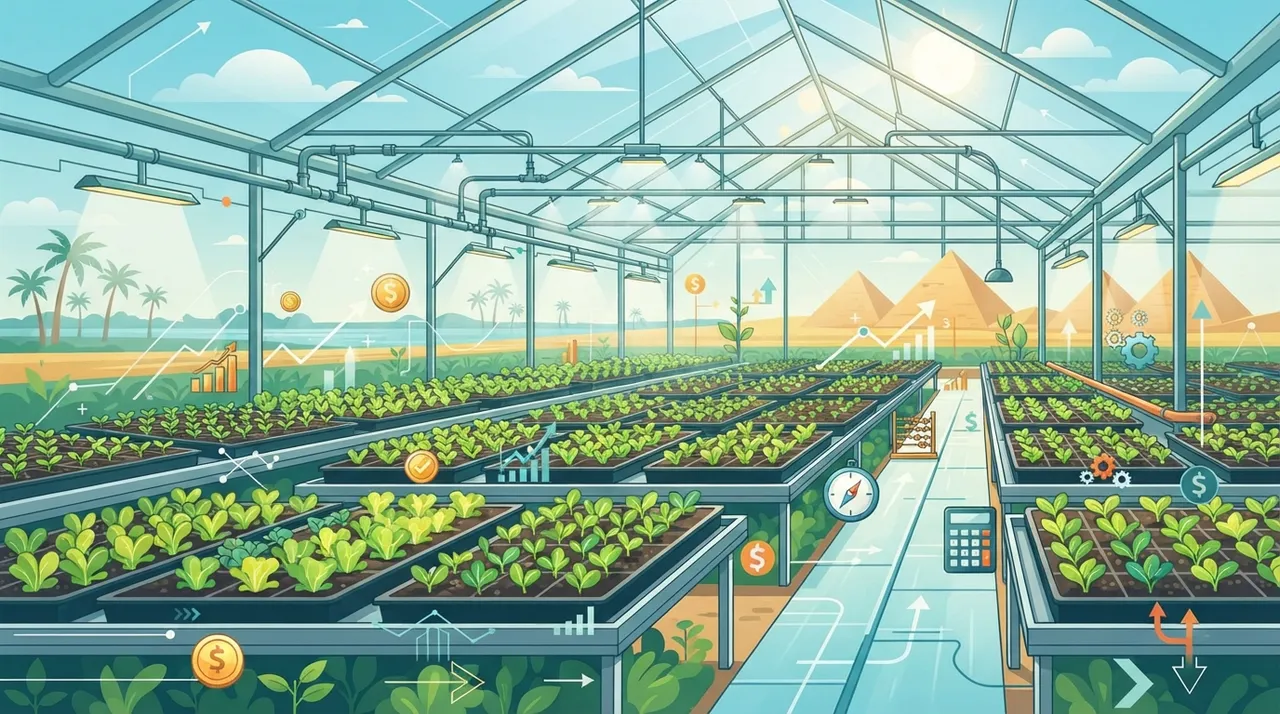
The project focuses on producing high-nutritional-value microalgae, such as spirulina and chlorella, for use in animal feed and nutritional supplements. The project is distinguished by its use of closed and controlled photobiological systems, ensuring an optimal growth environment, reducing environmental risks and contamination, and producing a high-quality product that meets international standards. The company targets the growing animal feed market in Qatar, in addition to the nutritional supplement sector, which is experiencing increasing demand for natural and organic products. The business model relies on direct sales to local manufacturers and wholesalers, with the possibility of expanding to regional markets later.
Market Study and Demand
The Qatari market is witnessing continuous growth in the livestock and agriculture sectors, creating increasing demand for high-quality animal feed and innovative nutritional supplements. Qatar lacks sufficient local sources for these components and relies heavily on imports. The Qatari government supports food security and economic diversification initiatives, providing a favorable environment for local production projects like this one. Growing awareness of the benefits of natural and healthy nutritional supplements drives demand in the end-consumer sector, in addition to livestock farms' pursuit of improving product quality through advanced feeds.
Market Sizing (TAM / SAM / SOM)
The Total Addressable Market (TAM) was estimated based on the total annual spending on imported animal feed and nutritional supplements in Qatar. The Serviceable Available Market (SAM) was then determined by estimating the share of products that can be replaced by microalgae components. Finally, the Serviceable Obtainable Market (SOM) was determined based on the project's initial production capacity and its expected market share in the early years, considering competition and the product's competitive advantage. These estimates are based on reports from the Qatari Ministry of Municipality and Environment and regional market reports.
| Level | Annual Size | Description |
|---|---|---|
| TAM — Total Market | 250.0 million QAR | Total addressable demand |
| SAM — Available Market | 75.0 million QAR | The portion your model reaches |
| SOM — Realistic Target | 15.0 million QAR | Your realistic early share |
Basis of Sizing: Estimating the total market size for imported feed and nutritional supplement products in Qatar, focusing on the portion related to high-value components such as microalgae.
Unit Economics
Measures the profitability of each sales unit/customer — the most accurate feasibility indicator:
| Unit Indicator | Value |
|---|---|
| Sales Unit | kilogram of dried algae |
| Average Price/Revenue per Unit | ٨٥ ر.ق |
| Customer Acquisition Cost (CAC) | ٥٠ ر.ق |
| Customer Lifetime Value (LTV) | ١٬٥٠٠ ر.ق |
| LTV/CAC Ratio | ٣٠× (healthy) |
| Contribution Margin | ٥٠٪ |
Competitive Analysis
The project faces competition from imported microalgae products and traditional feed and supplement products. The project's sustainable advantage lies in the high product quality ensured by closed and controlled production systems, which reduces the likelihood of contamination and increases product purity. The project also focuses on localization and local production, providing a competitive advantage in terms of supply speed and the ability to meet the specific requirements of the Qatari market, in addition to supporting food security initiatives. Strong relationships with local suppliers of carbon dioxide and fresh water will enhance the competitive advantage.
Market Entry and Pricing Plan
The market entry plan relies on building strong relationships with animal feed manufacturers and nutritional supplement companies in Qatar. Direct marketing channels will be used through specialized sales representatives and participation in specialized trade exhibitions in Qatar. The product's quality, purity, and health and environmental benefits will be highlighted. Competitive prices will be offered, considering the product's added value, with the possibility of offering special deals for large customers in the initial stages to ensure adoption. The focus will be on building brand awareness as a high-quality, sustainable Qatari product.
Capacity and Operations
The first phase will operate at 30% of design production capacity, gradually increasing to 80% within 3 years, with future expansion plans to increase the size of the photobioreactors.
Daily operations include precise monitoring of growth conditions in photobioreactors (temperature, pH, nutrient concentration, illumination), regular algae harvesting, separation and drying, then packaging and storage. Strict quality management systems (such as ISO 22000) will be applied to ensure product safety and effectiveness. Periodic laboratory analyses of final products will be conducted to ensure compliance with required specifications and standards. There will be specialized teams for operation and maintenance, in addition to a research and development team to improve strains and processes.
The project will be established in a designated industrial or agricultural area in Qatar to ensure easy access to the necessary infrastructure. Technical aspects include the design, supply, installation, and operation of closed tubular or panel photobioreactor systems, and separation, drying, and packaging units. The project will rely on specialized international suppliers of microalgae cultivation technologies, with an emphasis on training local personnel. Essential raw materials such as carbon dioxide will be sourced from local industrial sources, fresh water from desalination plants, and nutrients from specialized suppliers.
Projected Income Statement (5 Years)
| Item \ Year | Y1 | Y2 | Y3 | Y4 | Y5 |
|---|---|---|---|---|---|
| Revenue | ٨٬٥٠٠٬٠٠٠ ر.ق | ١٠٬٠٣٠٬٠٠٠ ر.ق | ١١٬٨٣٥٬٤٠٠ ر.ق | ١٣٬٩٦٥٬٧٧٢ ر.ق | ١٦٬٤٧٩٬٦١١ ر.ق |
| Cost of Sales | (٣٬٨٢٥٬٠٠٠ ر.ق) | (٤٬٥١٣٬٥٠٠ ر.ق) | (٥٬٣٢٥٬٩٣٠ ر.ق) | (٦٬٢٨٤٬٥٩٧ ر.ق) | (٧٬٤١٥٬٨٢٥ ر.ق) |
| Gross Profit | ٤٬٦٧٥٬٠٠٠ ر.ق | ٥٬٥١٦٬٥٠٠ ر.ق | ٦٬٥٠٩٬٤٧٠ ر.ق | ٧٬٦٨١٬١٧٥ ر.ق | ٩٬٠٦٣٬٧٨٦ ر.ق |
| Operating Expenses | (٢٬٩٧٥٬٠٠٠ ر.ق) | (٣٬٥١٠٬٥٠٠ ر.ق) | (٤٬١٤٢٬٣٩٠ ر.ق) | (٤٬٨٨٨٬٠٢٠ ر.ق) | (٥٬٧٦٧٬٨٦٤ ر.ق) |
| EBITDA | ١٬٧٠٠٬٠٠٠ ر.ق | ٢٬٠٠٦٬٠٠٠ ر.ق | ٢٬٣٦٧٬٠٨٠ ر.ق | ٢٬٧٩٣٬١٥٤ ر.ق | ٣٬٢٩٥٬٩٢٢ ر.ق |
| Tax | (٠ ر.ق) | (٠ ر.ق) | (٠ ر.ق) | (٠ ر.ق) | (٠ ر.ق) |
| Net Profit | -٣٬٣٠٠٬٠٠٠ ر.ق | -٢٬٩٩٤٬٠٠٠ ر.ق | -٢٬٦٣٢٬٩٢٠ ر.ق | -٢٬٢٠٦٬٨٤٦ ر.ق | -١٬٧٠٤٬٠٧٨ ر.ق |
| Net Margin | -٣٩٪ | -٣٠٪ | -٢٢٪ | -١٦٪ | -١٠٪ |
Investment Cost Structure
| Item | Cost | Percentage |
|---|---|---|
| Investment in Photobioreactor Systems and Processing Equipment | ١٠٬٠٠٠٬٠٠٠ ر.ق | ٤٠٪ |
| Infrastructure and Facilities | ٦٬٢٥٠٬٠٠٠ ر.ق | ٢٥٪ |
| Initial Working Capital (raw materials, wages) | ٣٬٧٥٠٬٠٠٠ ر.ق | ١٥٪ |
| R&D and Licensing Costs | ٢٬٥٠٠٬٠٠٠ ر.ق | ١٠٪ |
| Initial Marketing and Sales Expenses | ١٬٢٥٠٬٠٠٠ ر.ق | ٥٪ |
| Contingency and Unforeseen Expenses | ١٬٢٥٠٬٠٠٠ ر.ق | ٥٪ |
Cash Flow and Breakeven Point
| Year | Operating Cash Flow | Cumulative Cash Flow |
|---|---|---|
| Year 1 | ١٬٧٠٠٬٠٠٠ ر.ق | -٢٣٬٣٠٠٬٠٠٠ ر.ق |
| Year 2 | ٢٬٠٠٦٬٠٠٠ ر.ق | -٢١٬٢٩٤٬٠٠٠ ر.ق |
| Year 3 | ٢٬٣٦٧٬٠٨٠ ر.ق | -١٨٬٩٢٦٬٩٢٠ ر.ق |
| Year 4 | ٢٬٧٩٣٬١٥٤ ر.ق | -١٦٬١٣٣٬٧٦٦ ر.ق |
| Year 5 | ٣٬٢٩٥٬٩٢٢ ر.ق | -١٢٬٨٣٧٬٨٤٣ ر.ق |
Estimated breakeven point at annual revenue ≈ ١٤٬٥٠٠٬٠٠٠ ر.ق (~١٧١٪ of first-year revenue), with a contribution margin of ٥٥٪. Cumulative cash breakeven is beyond the study horizon.
Funding Structure
| Funding Source | Percentage | Amount |
|---|---|---|
| Equity | ٦٠٪ | ١٥٬٠٠٠٬٠٠٠ ر.ق |
| Debt Financing (6% interest) | ٤٠٪ | ١٠٬٠٠٠٬٠٠٠ ر.ق |
Sensitivity Analysis (Revenue × Operations)
The impact of changes in both revenue and costs on Net Present Value:
| Revenue \ Operations | −10٪ | −5٪ | Base | +5٪ | +10٪ |
|---|---|---|---|---|---|
| −20٪ | -١٤٬٢٧٦٬٨٠٢ ر.ق | -١٦٬٠٦٤٬٠٠٢ ر.ق | -١٧٬٨٥١٬٢٠١ ر.ق | -١٩٬٦٣٨٬٤٠١ ر.ق | -٢١٬٤٢٥٬٦٠١ ر.ق |
| −10٪ | -١٢٬٩٣٦٬٤٠٢ ر.ق | -١٤٬٩٤٧٬٠٠٢ ر.ق | -١٦٬٩٥٧٬٦٠١ ر.ق | -١٨٬٩٦٨٬٢٠١ ر.ق | -٢٠٬٩٧٨٬٨٠١ ر.ق |
| Base | -١١٬٥٩٦٬٠٠٢ ر.ق | -١٣٬٨٣٠٬٠٠٢ ر.ق | -١٦٬٠٦٤٬٠٠٢ ر.ق | -١٨٬٢٩٨٬٠٠١ ر.ق | -٢٠٬٥٣٢٬٠٠١ ر.ق |
| +10٪ | -١٠٬٢٥٥٬٦٠٣ ر.ق | -١٢٬٧١٣٬٠٠٢ ر.ق | -١٥٬١٧٠٬٤٠٢ ر.ق | -١٧٬٦٢٧٬٨٠١ ر.ق | -٢٠٬٠٨٥٬٢٠١ ر.ق |
| +20٪ | -٨٬٩١٥٬٢٠٣ ر.ق | -١١٬٥٩٦٬٠٠٢ ر.ق | -١٤٬٢٧٦٬٨٠٢ ر.ق | -١٦٬٩٥٧٬٦٠١ ر.ق | -١٩٬٦٣٨٬٤٠١ ر.ق |
Scenario Analysis
| Scenario | Probability | NPV | Assessment |
|---|---|---|---|
| Pessimistic | ٢٥٪ | -١٩٬١٠٢٬٢٤١ ر.ق | Not Feasible |
| Base | ٥٠٪ | -١٦٬٠٦٤٬٠٠٢ ر.ق | Not Feasible |
| Optimistic | ٢٥٪ | -١٢٬٤٠٠٬٢٤٢ ر.ق | Not Feasible |
Expected Present Value (Weighted): -١٥٬٩٠٧٬٦٢٢ ر.ق.
Risk Analysis and Management
| Risk | Probability | Impact | Mitigation |
|---|---|---|---|
| High operating and energy costs | Medium | High | Investing in energy-efficient technologies, negotiating favorable utility prices, exploring renewable energy sources. |
| Difficulty obtaining approvals and licenses | Medium | Medium | Collaborating with specialized local consultants, initiating procedures early, ensuring all requirements are met. |
| Competition from imported products | High | Medium | Focusing on high quality and reliable local products, building strong customer relationships, effective marketing of competitive advantages. |
| Technical and operational challenges in algae cultivation | Medium | High | Hiring a highly experienced team, continuous training, implementing industry best practices, having technical emergency plans. |
| Fluctuations in raw material prices (e.g., CO2 and nutrients) | Low | Medium | Entering long-term contracts with key suppliers, diversifying supply sources. |
Organizational Structure and Team
The organizational structure will consist of a General Manager, a Production Manager, a Quality and R&D Manager, and a Sales and Marketing Manager. Biochemical engineers, agricultural engineers, laboratory technicians, and production workers will be recruited. The focus will be on attracting local and international competencies with experience in microalgae cultivation and processing, and providing continuous training programs to enhance team skills.
Legal and Regulatory Aspects
The project requires obtaining several licenses and approvals from government entities in Qatar, such as the Ministry of Municipality and Environment (for agricultural and environmental licenses), the Ministry of Commerce and Industry (for commercial and industrial registration), and the Ministry of Public Health (for approvals related to food products and supplements). The project will adhere to all local and international laws and regulations related to agricultural and industrial production, food safety, and environmental protection standards.
Expansion and Sustainability Plan
The expansion plan involves gradually increasing the production capacity of photobioreactors, based on market demand growth. Vertical expansion can be achieved by developing derivative products from microalgae such as extracts and oils, or horizontal expansion by targeting new regional markets (e.g., GCC countries). Partnership opportunities with major feed or food companies can also be explored to accelerate expansion and market entry. The focus will be on continuous innovation in production technologies and product development.
Environmental, Social, and Governance (ESG) Impact
The project has a relatively positive environmental impact, as microalgae contribute to carbon dioxide absorption from the atmosphere. Closed production systems will reduce water consumption and waste. Best practices will be applied in managing and recycling waste generated from the production process wherever possible. Socially, the project will create employment opportunities for citizens and residents and contribute to enhancing food security in Qatar. The project will adhere to good governance standards and transparency in all its operations.
Conclusions and Recommendations
This project presents a promising investment opportunity in the Qatari market, supported by increasing demand for high-quality animal feed and nutritional supplements, and government support for food security projects. The use of advanced technologies ensures a high-quality product and a sustainable competitive advantage. Despite high initial costs, the expected returns and future expansion prospects make the project attractive to investors seeking opportunities in the sustainable and innovative agricultural sector.
Frequently Asked Questions
How much does it cost to set up a microalgae production project in Qatar?
The estimated initial cost for a medium-sized microalgae production project in Qatar is approximately QAR 25,000,000.
How profitable is a microalgae production project in Qatar?
The project is expected to generate revenues of approximately QAR 8,500,000 in the first year, with a contribution margin of 50%.
What licenses are required for a microalgae production project in Qatar?
The project requires licenses from the Ministry of Municipality and Environment, the Ministry of Commerce and Industry, and the Ministry of Public Health.
Is a microalgae production project profitable in Qatar?
Yes, a microalgae production project is considered profitable in Qatar due to the increasing demand for high-quality feed and nutritional supplements and government support for food security projects.
What are the main challenges for a microalgae project in Qatar?
Key challenges include high operating and energy costs, competition from imported products, and the need for specialized technical expertise.
Sources and Disclaimer
- Reports of the Qatari Ministry of Municipality and Environment (Agricultural and Animal Production Reports)
- Market studies for the feed and nutritional supplement sector in the Middle East and North Africa region
- Data on prices of similar products in the global and GCC markets
- Interviews with experts in the agriculture and food security sector in Qatar
- Websites of international companies specializing in microalgae production and technologies
Disclaimer: This is a guiding study that provides financial analysis according to approved sector standards; verify the figures locally according to your project's reality before any investment decision.