Executive Summary
The Dates Processing and Packaging Plant project in the industrial and manufacturing sector in France targets a promising market opportunity. With an investment of €1,200,000, it achieves a Net Present Value of €-827,432, an Internal Rate of Return of -23%, and a payback period of — years.
| Indicator | Value |
|---|---|
| Initial Investment | €1,200,000 |
| First Year Revenue | €850,000 |
| Annual Growth (CAGR) | 8% |
| Net Margin (Y1) | -18% |
| Return on Investment (Avg.) | -12% annually |
| Net Present Value (NPV) | €-827,432 |
| Internal Rate of Return (IRR) | -23% |
| Profitability Index (PI) | 0 |
| Payback Period | — |
| Break-even Year | — |
| Expected NPV (Probability-Weighted) | €-818,119 |
Assumptions and Basis
The figures in this study are based on project data, the nature of the industrial and manufacturing sector in France, and local market indicators, according to the following assumptions:
| Assumption | Value |
|---|---|
| Initial Capital | €1,200,000 |
| First Year Revenue | €850,000 |
| Annual Growth | 8% |
| Cost of Goods Sold (COGS) | 65% of Revenue |
| Operating Expenses | 25% of Revenue |
| Tax/Zakat | 25% |
| Discount Rate (WACC) | 10% |
| Study Horizon | 5 years |
Basis of Assumptions: These figures are based on average profit margins and operating costs in the food processing industry in France, taking into account the proposed project size and the increasing demand for dates in the European market.
Project Description and Opportunity
The project aims to establish a modern dates sorting and packaging plant in France, leveraging the country's strategic location as a gateway to the European market. The plant will import high-quality bulk dates from North African and Middle Eastern countries, then process and package them in various forms to meet the preferences of French and European consumers. The business model includes importing, sorting, cleaning, packaging, and distribution, with a focus on quality and compliance with European standards. The project targets retailers (supermarkets, specialty stores), the food service sector (hotels and restaurants), and food industries that use dates as an ingredient.
Market Study and Demand
The European dates market is a growing market, with European date imports increasing by 12% annually between 2021 and 2025, reaching a value of €780 million in 2025. France is the largest importer of dates in Europe, with imports reaching $127 million (approximately €122 million) in 2024, showing an annual growth of 4.5% since 2021. This high demand is partly due to a large diaspora from date-producing North African countries in France, as well as increasing consumer interest in natural and healthy products. Most dates in France (about 70%) are sold through retail channels, while the remaining 30% are sold to industry and the food service sector. Date varieties such as Deglet Noor and Medjool are very popular in the French market.
Market Sizing (TAM / SAM / SOM)
Market sizing was based on available data for date imports in France and Europe. The Total Addressable Market (TAM) includes the total value of date imports into Europe. The Serviceable Available Market (SAM) represents the total date imports into France. The Serviceable Obtainable Market (SOM) represents the realistic share the project can capture from the French market, considering competition and the plant's initial operational capacity. These percentages were estimated based on trade data and sector growth.
| Level | Annual Size | Description |
|---|---|---|
| TAM — Total Market | €780.0 million | Total addressable demand |
| SAM — Available Market | €122.0 million | The portion reachable by your model |
| SOM — Realistic Target | €12.0 million | Your realistic early share |
Basis of Sizing: Market size is based on the annual value of European date imports, which reached €780 million in 2025, and France's share, representing over 20% of the European market with imports of €122 million in 2025.
Unit Economics
Measures the profitability of each sales unit/customer — the most accurate feasibility indicator:
| Unit Indicator | Value |
|---|---|
| Sales Unit | kg pack |
| Avg. Price/Revenue per Unit | €9 |
| Customer Acquisition Cost (CAC) | €2 |
| Customer Lifetime Value (LTV) | €40 |
| LTV/CAC Ratio | 20x (healthy) |
| Contribution Margin | 10% |
Competitive Analysis
The dates market in France faces competition from several entities, including large importers of bulk and packaged dates from countries like Tunisia, Algeria, and Israel, as well as European packaging companies that handle dates. The project's sustainable advantage lies in focusing on high quality, innovative packaging that meets French and European standards, certifications (such as organic and halal if targeted), and offering a diverse range of date products (e.g., pitted, chopped, and date paste). Additionally, strong relationships can be built with key date suppliers to ensure access to the best quality and competitive prices.
Market Entry and Pricing Strategy
The market entry plan includes multi-channel marketing, such as direct sales to large retailers (supermarket chains), wholesalers, and distributors specializing in premium and healthy food products. Digital marketing and e-commerce channels will be used to reach consumers directly and smaller retailers. Specialty food stores and halal food stores will also be targeted. Products will be priced competitively, considering high quality and operational costs. Participation in specialized food trade shows in France and Europe can also be pursued.
Capacity and Operations
Phase one: Production capacity of 1000 tons annually, with gradual utilization starting at 50% in the first year and reaching 80% in the third year. Production capacity can be expanded gradually to meet increasing demand.
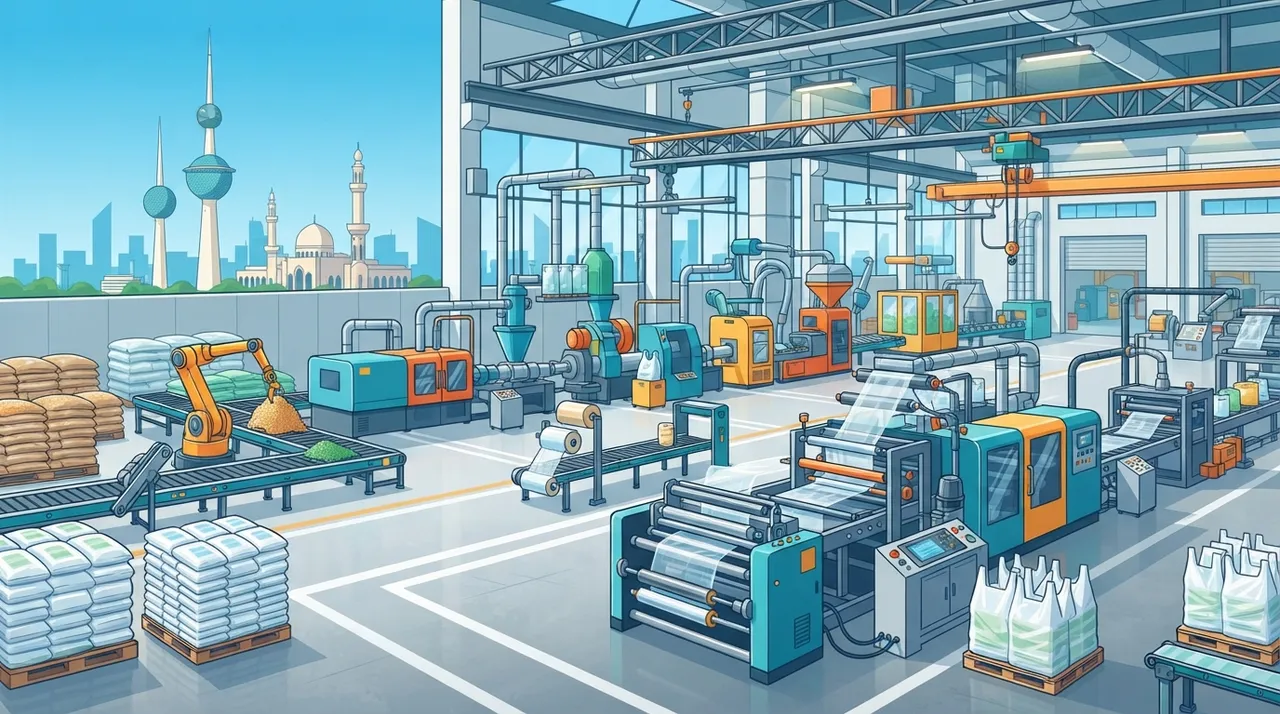
Daily operations include receiving raw dates, quality inspection, automated sorting by size, color, and external quality, washing and cleaning, drying, pitting (depending on the product), packaging in various sizes and forms, and storage in a suitable environment. Strict quality control standards will be applied at all production stages to ensure compliance with French and European food safety regulations. This includes periodic testing of final products and raw materials.
The project will require an industrial site in an area with good infrastructure in France, with easy access to major ports for importing dates. Technical aspects include purchasing and installing production lines for sorting, washing, initial drying, pitting (if necessary), chopping, and packaging. All equipment must be made of stainless steel and comply with European food safety standards. Key date suppliers will be selected from countries such as Tunisia, Algeria, and Israel, with a focus on obtaining necessary quality certifications.
Projected Income Statement (5 Years)
| Item \ Year | Y1 | Y2 | Y3 | Y4 | Y5 |
|---|---|---|---|---|---|
| Revenue | €850,000 | €918,000 | €991,440 | €1,070,755 | €1,156,416 |
| Cost of Sales | (€552,500) | (€596,700) | (€644,436) | (€695,991) | (€751,670) |
| Gross Profit | €297,500 | €321,300 | €347,004 | €374,764 | €404,745 |
| Operating Expenses | (€212,500) | (€229,500) | (€247,860) | (€267,689) | (€289,104) |
| EBITDA | €85,000 | €91,800 | €99,144 | €107,076 | €115,642 |
| Tax | (€0) | (€0) | (€0) | (€0) | (€0) |
| Net Profit | €-155,000 | €-148,200 | €-140,856 | €-132,924 | €-124,358 |
| Net Margin | -18% | -16% | -14% | -12% | -11% |
Investment Cost Structure
| Item | Cost | Percentage |
|---|---|---|
| Production Machinery and Equipment | €480,000 | 40% |
| Factory Construction and Furnishing | €360,000 | 30% |
| Initial Working Capital | €180,000 | 15% |
| Licensing and Establishment Costs | €60,000 | 5% |
| Initial Marketing and Launch Costs | €120,000 | 10% |
Cash Flow and Break-even Point
| Year | Operating Cash Flow | Cumulative Cash Flow |
|---|---|---|
| Year 1 | €85,000 | €-1,115,000 |
| Year 2 | €91,800 | €-1,023,200 |
| Year 3 | €99,144 | €-924,056 |
| Year 4 | €107,076 | €-816,980 |
| Year 5 | €115,642 | €-701,339 |
Estimated break-even point at annual revenue ≈ €1,292,857 (~152% of first-year revenue), with a contribution margin of 35%. Cumulative cash break-even is beyond the study horizon.
Funding Structure
| Funding Source | Percentage | Amount |
|---|---|---|
| Equity | 60% | €720,000 |
| Debt Financing (6% interest) | 40% | €480,000 |
Sensitivity Analysis (Revenue × Operations)
Impact of simultaneous changes in revenue and costs on Net Present Value:
| Revenue \ Operations | −10% | −5% | Base | +5% | +10% |
|---|---|---|---|---|---|
| −20% | €-603,892 | €-752,919 | €-901,946 | €-1,050,973 | €-1,200,000 |
| −10% | €-529,379 | €-697,034 | €-864,690 | €-1,032,345 | €-1,200,000 |
| Base | €-454,866 | €-641,149 | €-827,433 | €-1,013,716 | €-1,200,000 |
| +10% | €-382,589 | €-585,264 | €-790,176 | €-995,088 | €-1,200,000 |
| +20% | €-314,566 | €-529,379 | €-752,919 | €-976,460 | €-1,200,000 |
Scenario Analysis
| Scenario | Probability | NPV | Assessment |
|---|---|---|---|
| Pessimistic | 25% | €-976,460 | Not feasible |
| Base | 50% | €-827,433 | Not feasible |
| Optimistic | 25% | €-641,149 | Not feasible |
Expected Present Value (Weighted): €-818,119.
Risk Analysis and Management
| Risk | Probability | Impact | Mitigation |
|---|---|---|---|
| Fluctuations in raw material (dates) prices | Medium | High | Long-term supply contracts with multiple suppliers, diversification of supply sources. |
| Changes in European food regulations and standards | Medium | Medium | Continuous monitoring of legislative updates, investment in operational flexibility. |
| Intense market competition | Medium | High | Focus on differentiation in quality, packaging, and targeted marketing, building strong relationships with distribution channels. |
| Logistical and import challenges | Medium | Medium | Working with experienced shipping and customs clearance companies, developing contingency plans for the supply chain. |
| Difficulty in acquiring new customers and product distribution | Medium | High | Strong marketing and sales plan, building a specialized sales team, targeting diverse distribution channels. |
Organizational Structure and Team
The organizational structure will consist of a General Manager, Operations Manager, Sales and Marketing Manager, Financial Manager, and a production team including line workers and quality supervisors. The project will require experienced personnel in the food industry, preferably with knowledge of the dates market and European regulations. Experts in export and import will be utilized to ensure smooth logistical operations.
Legal and Regulatory Aspects
The project requires obtaining all necessary licenses for establishing and operating a food factory in France, including building permits, industrial operating licenses, and health permits. Compliance with European and French regulations related to food safety and environmental labeling of food products is essential. Additionally, compliance with France's anti-food waste law, which mandates large stores to donate edible unsold food, must be ensured.
Expansion and Sustainability Plan
Expansion can be achieved by increasing the plant's production capacity, offering additional date products such as date paste or date syrup, and targeting new European markets. Opportunities for collaboration with French food companies to produce joint date-containing products can also be explored. To maintain sustainability, focus will be placed on environmentally friendly practices in packaging, such as using recyclable or biodegradable materials, and adhering to sustainability standards in the supply chain.
Environmental, Social, and Governance (ESG) Impact
The project aims to reduce environmental impact by improving energy and water efficiency in production processes. Emphasis will be placed on using sustainable and recyclable packaging materials and complying with French regulations related to waste reduction and recycling (AGEC law). Socially, the project will create local employment opportunities and contribute to the local economy. Regarding governance, best practices in corporate management and transparency will be applied.
Conclusions and Recommendations
The dates processing and packaging plant project in France has high economic viability due to the increasing demand for dates in the European market, especially in France. With investment in modern technology and adherence to European quality and standards, the project can achieve rewarding returns and establish a strong brand in the processed food sector. The regulatory and legislative environment in France, along with government support for food industries, provides a solid foundation for the project's success.
Frequently Asked Questions
What is the cost of establishing a dates processing and packaging plant in France?
The proposed initial capital is approximately €1,200,000, which includes machinery and equipment, factory outfitting, initial working capital, licensing costs, and marketing expenses.
Is the dates plant project profitable in France?
Yes, the French market has strong demand for dates, with France's imports reaching €122 million in 2025, and there is continuous growth in this sector, indicating good profitability opportunities for the project.
What licenses are required for a food factory in France?
The project requires building and industrial operating licenses and health permits from French authorities, in addition to compliance with European and French regulations for food safety and environmental labeling.
Where can raw dates for the factory in France be sourced from?
France primarily imports dates from Tunisia, Algeria, and Israel. The factory can build relationships with suppliers from these countries to ensure access to high-quality dates.
What are the main distribution channels for packaged dates in France?
Most dates in France are sold through retail channels (supermarkets and specialty stores) at 70%, with the remaining percentage distributed to food industries and the food service sector.
Is there government support for food industrial projects in France?
Yes, the French government launches strategic funding plans to boost food industries, with the possibility of obtaining co-financing covering 20% to 40% of eligible investments for new projects.
Sources and Disclaimer
- World Trade Organization (OEC) Reports
- Centre for the Promotion of Imports from Developing Countries (CBI) Reports
- French Ministry of Agriculture Reports
- Eurostat Statistics
- Market analyses from Mordor Intelligence and Expert Market Research
Disclaimer: This is a guiding study that provides financial analysis according to approved industry standards; verify the figures locally according to your project's reality before any investment decision.