
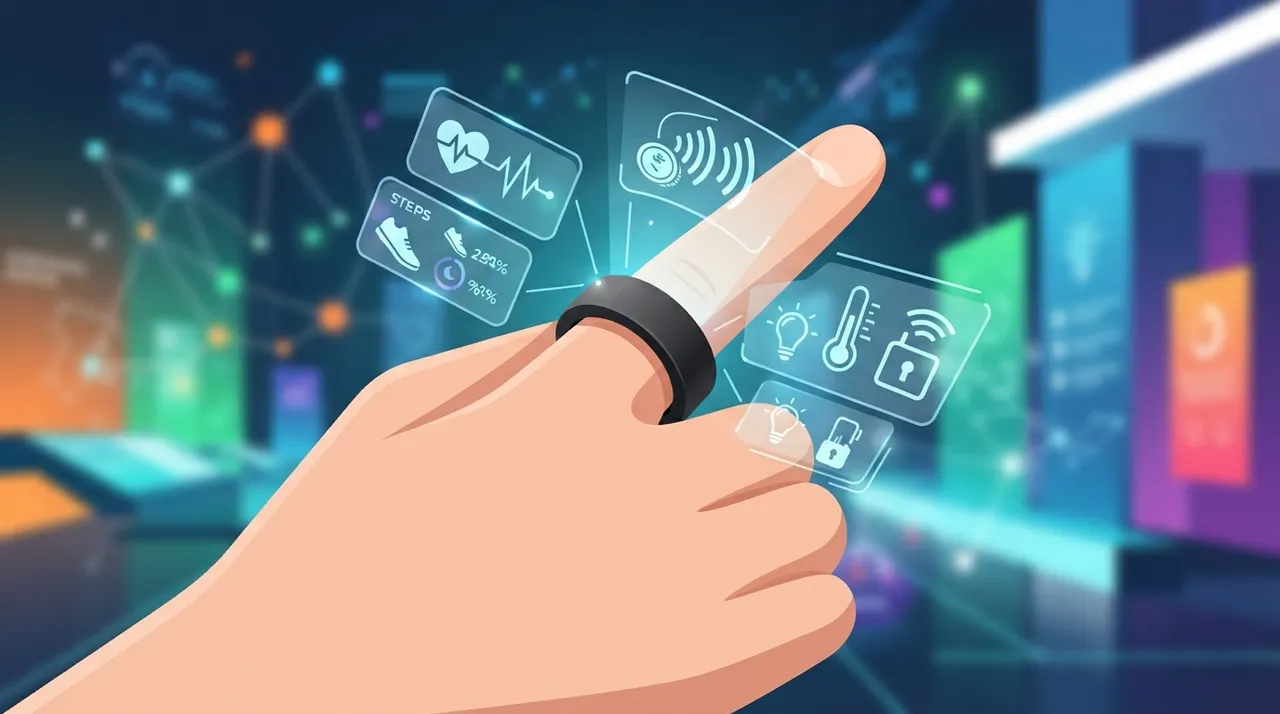
With the rapid advancement in wearable technology, smart rings are emerging as a new paradigm for seamless integration between technology and daily life. They are no longer mere decorative accessories but have become miniature data centers offering immense capabilities to users, from tracking health and fitness to controlling surrounding smart devices, opening new horizons for a smarter interactive experience.
What's New
Current innovations in smart rings focus on increasing sensor accuracy and reducing their size, while significantly improving battery life. Rings are now capable of monitoring heart rate, blood oxygen saturation, sleep patterns, and even body temperature with high precision, providing users with comprehensive insights into their health. Some modern models also include contactless payment (NFC) and gesture control technologies, allowing users to make payments or control music or smart home devices with a simple touch or hand gesture. The latest generation of smart rings also features more elegant designs and durable, water-resistant materials, making them suitable for daily use in various conditions.
Why it Matters
The importance of smart rings lies in their ability to provide a non-intrusive technological experience naturally integrated into the user's lifestyle. Unlike smartwatches or other devices that may be noticeable or require direct interaction, smart rings work in the background to collect data and provide alerts without the need for constant attention. This 'invisible technology' approach enhances user awareness of their health and activity without feeling pressured or distracted. Furthermore, smart rings are a powerful tool for individuals looking to simplify their daily interactions, whether through quick payments, controlling smart devices at home, or even using them as a smart key for access. They also offer practical solutions for athletes and health monitors who need accurate tracking of their vital data without having to carry additional devices.
To practically benefit from smart rings, readers can start by researching rings that align with their primary needs, whether it's health monitoring, contactless payments, or device control. After acquiring the ring, it can be linked to a dedicated smartphone app to adjust settings, customize alerts, and view data. Helpful tools include fitness apps and digital payment wallets that integrate with the ring. Practical steps include: first, identifying the most important features. Second, comparing available rings in the market in terms of accuracy, battery life, and design. Third, beginning to use them to track daily activities or make payments to experience the direct benefits of this advanced technology.






Comments 0
No comments yet — be the first to share your thoughts.
Share your thoughts
To comment, sign in first — we email you a one-time code (no password). This keeps the discussion clean.
Sign in to comment →