
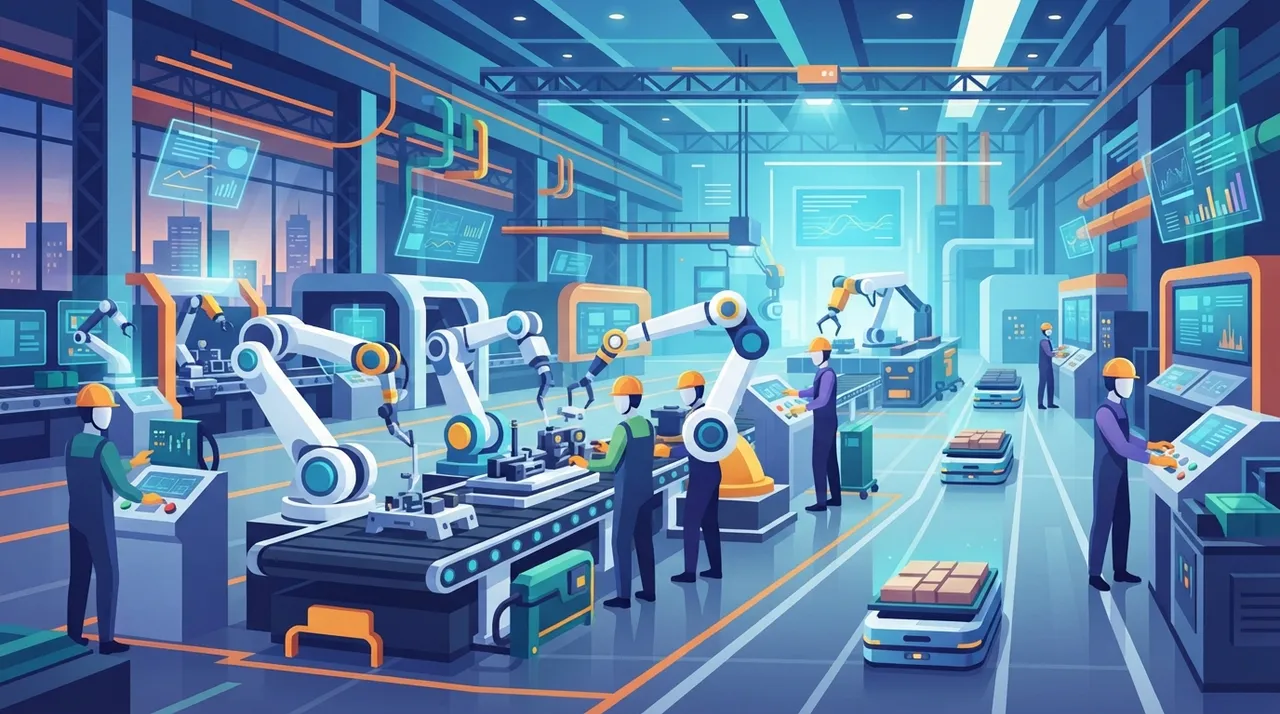
Over the past years, we have witnessed tremendous advancements in artificial intelligence, from large language models to advanced computer vision systems. However, these developments have mostly been confined to the digital world, where algorithms process data and make decisions without direct interaction with the physical environment. Today, we stand on the cusp of a new era, as AI begins to emerge from our screens and integrate into tangible physical entities, revolutionizing how we interact with technology and the world around us. This is the essence of what is known as 'Embodied AI.'
What's New: Digital Minds with Physical Bodies
Embodied AI is a concept that combines artificial intelligence with robotics, equipping intelligent systems with the ability to perceive, make decisions, and act within a physical environment. Unlike traditional AI, which operates in abstract digital environments, embodied AI enables robots to learn by doing, connecting perception, cognition, and action through direct physical interaction with the world. These systems use sensors to gather information about their surroundings, then analyze data to choose the best course of action to achieve their goals.
In 2026, this field is reaching a critical inflection point, with companies and investments shifting towards developing robots capable of thinking, learning, and making decisions independently. The embodied AI market has surpassed $3.8 billion in 2026 and is projected to reach over $7.24 billion by 2030, with a compound annual growth rate (CAGR) of 17.5%. This surge is driven by advancements in AI, robotics, sensors, and edge computing.
Real-world examples of these developments include autonomous warehouse robots that navigate complex spaces and optimize delivery routes, self-driving vehicles that interact with traffic, and industrial robots that adapt to variable manufacturing tasks. Even humanoid robots like Boston Dynamics' 'Atlas' and Sanctuary AI's 'Phoenix' demonstrate advanced capabilities in handling dynamic environments. Vision-Language-Action (VLA) models are also contributing significantly, with research submissions in this area increasing 18-fold in 2026 compared to the previous year.
Why It Matters: Unlocking Automation and Enhancing Human-Machine Interaction
The significance of embodied AI lies in its ability to transform automation from rigid, rule-based systems into flexible, intelligent systems that adapt to changing environments. This means robots will not be limited to performing repetitive tasks in structured environments but will be capable of responding to unexpected challenges and working alongside humans more effectively.
In industry, embodied AI is fundamentally changing manufacturing by enabling robots to perform more complex and diverse tasks, reducing errors and improving the efficiency of production lines. In fields like healthcare, embodied AI-equipped robots can assist in elder care, patient monitoring, and mobility support, addressing staff shortages and enhancing care quality. It can also lead to shifts in the job market, as the workforce will need to adapt to these changes, similar to the impact of digital AI on white-collar jobs.
For the reader, understanding this trend offers an opportunity to leverage these emerging technologies. Developers and engineers can focus on building systems that interact with the physical world and learn from experience. Practical tools and steps include: training in accurate simulation environments, collecting high-quality real-world physical data, and developing reinforcement learning models to enable robots to quickly master complex tasks and adapt to different situations. Furthermore, focusing on multi-sensor fusion and improving human-robot interaction (HRI) using natural language and physical cues will be crucial.
This transformation is not just about technological innovation; it represents a redefinition of the relationship between humans and machines. As embodied AI continues to evolve, machines will become trusted partners in work, healthcare, and daily life, opening doors to a future where technology seamlessly integrates with the fabric of our physical reality.





Comments 0
No comments yet — be the first to share your thoughts.
Share your thoughts
To comment, sign in first — we email you a one-time code (no password). This keeps the discussion clean.
Sign in to comment →