

In the race for quantum computing to realize its full potential, a key challenge stands out: developing specialized materials that can support these advanced technologies. This is where artificial intelligence steps in, offering a qualitative leap in accelerating the discovery and design of quantum computing materials, paving the way for a new generation of unprecedented innovations.
What's New
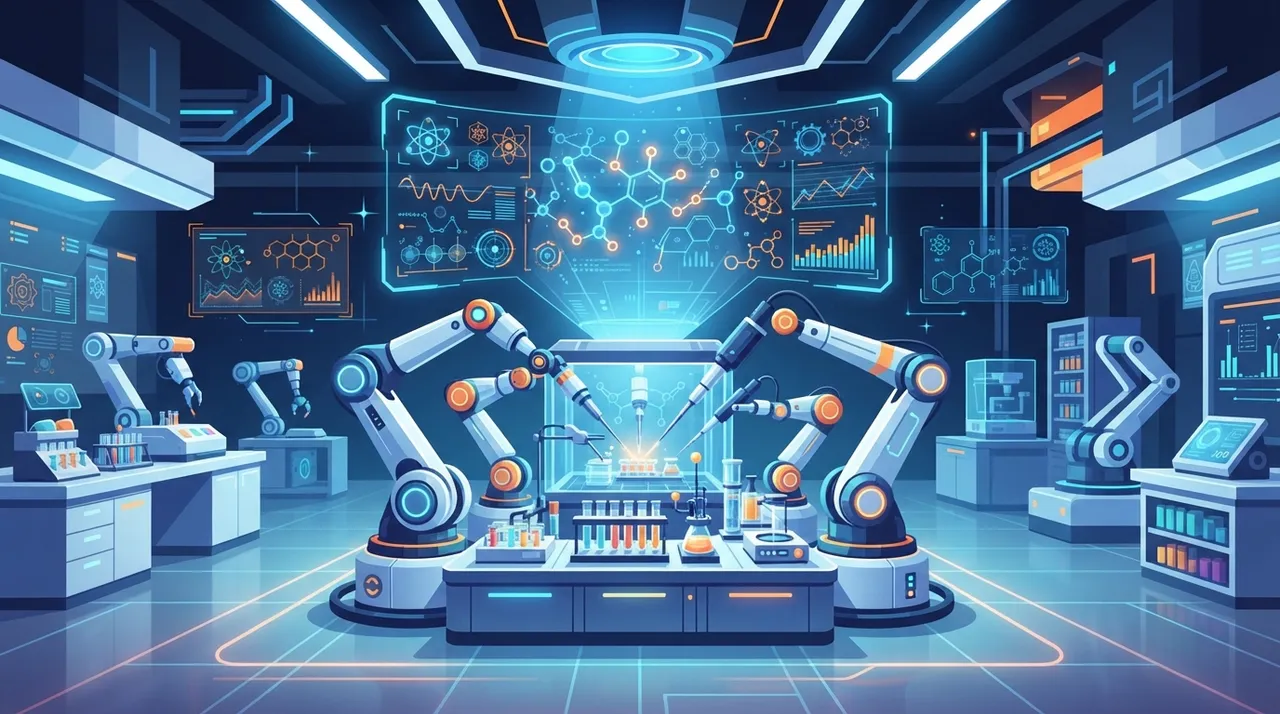
The field of materials discovery for quantum computing is experiencing a real boom thanks to AI. Research teams are now utilizing generative AI models, high-performance computing simulations, and quantum computing itself to create and test new materials at unprecedented rates. For instance, researchers at the University of Washington have successfully used AI to simulate dozens of stacked atomic sheets in intricate patterns, producing complex and potentially useful quantum behaviors that would have been impractical to model using traditional supercomputing. A Canadian startup, Meissner Technologies, has also developed an innovative approach using AI to discover new superconducting materials, which could significantly reduce cooling costs and help quantum computers achieve scalability. At the University of Arkansas, AI-enhanced robotic systems will create research infrastructure to accelerate the search for new materials that could improve quantum devices, aiming to reduce the time taken from months to minutes.
Major companies are also collaborating in this area; Microsoft, through its Azure Quantum Elements platform, combines AI models for material property prediction with high-performance computing calculations to screen millions of candidates for improved battery materials. MIT researchers have even developed a technique that allows popular generative materials models to create promising quantum materials by following specific design rules, which has helped them synthesize actual materials with exotic magnetic traits.
Why It Matters
Accelerating quantum material discovery is crucial for several reasons. Firstly, quantum materials are the backbone of quantum devices, such as qubits, which require unique properties to operate efficiently. The traditional process of material design and testing is expensive, slow, and relies on trial and error. AI drastically shortens this cycle, enabling researchers to explore much larger design spaces and rapidly identify promising candidates. This translates to faster development of more powerful and stable quantum computers, which in turn will unlock solutions to complex problems in areas like drug discovery, material design, cybersecurity, and energy.
These advancements also allow for overcoming current limitations in classical computing. AI models can act as a fast and relatively inexpensive surrogate for supercomputers, extrapolating the behavior of huge material systems from relatively small datasets. For example, quantum computers can create a self-improving design loop by discovering new materials that could themselves be components of future quantum computers. This synergy between AI and quantum computing is not only changing the types of problems we can solve but also how we conduct research.
In essence, AI is a fundamental catalyst in the advancement of quantum computing, not only by accelerating material discovery but also by making this research more efficient and accessible. As these technologies continue to evolve, we can expect to see transformative scientific and technological breakthroughs in the coming years.






Comments 0
No comments yet — be the first to share your thoughts.
Share your thoughts
To comment, sign in first — we email you a one-time code (no password). This keeps the discussion clean.
Sign in to comment →