
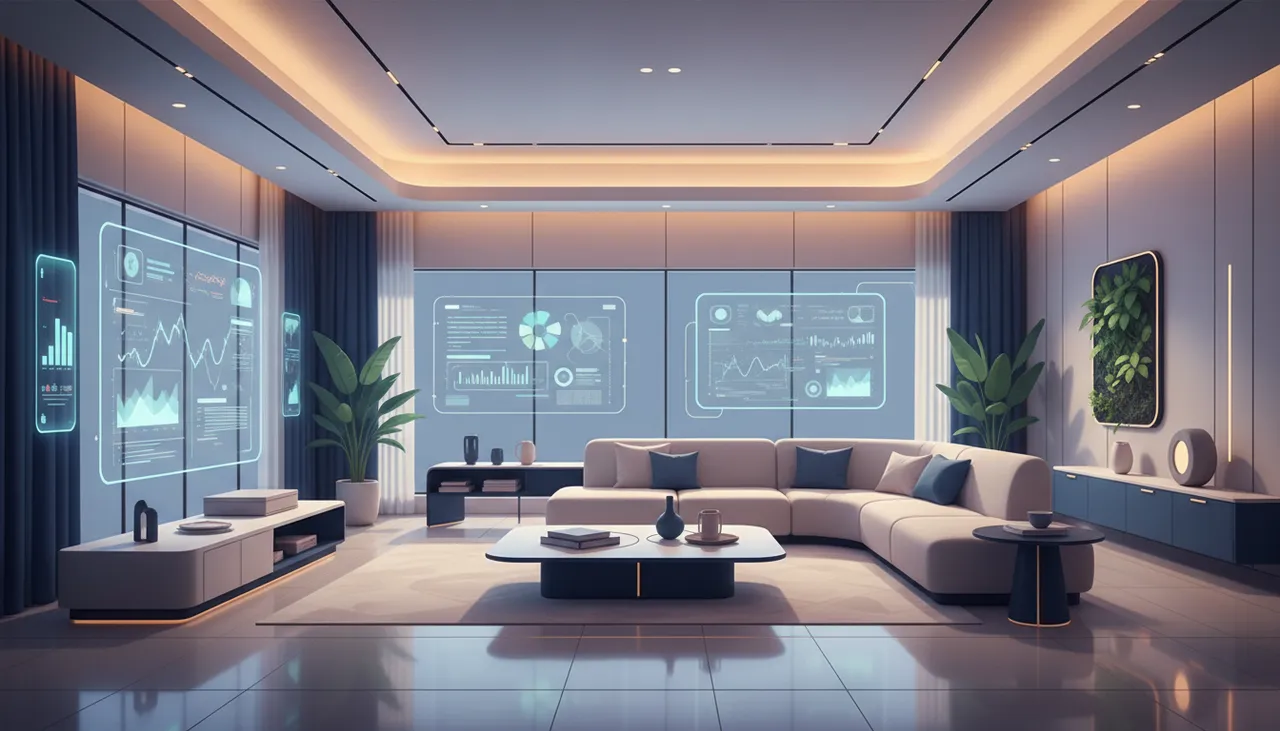
We are no longer adapting to technology; instead, technology is adapting to us. This is the essence of Ambient Computing, a concept reshaping our relationship with devices and systems around us, making them fade into the background to become an integral part of our environment, working quietly and intelligently to meet our needs without us even realizing their presence.
What's New
Technology is moving towards becoming less visible and more helpful, which is what defines Ambient Computing. Instead of requiring us to constantly interact with screens and apps, ambient systems understand context, anticipate needs, and provide assistance in the background. This vision relies on an interconnected network of devices and services that work harmoniously to anticipate and fulfill our needs, all without requiring explicit commands.
In smart homes, for example, automated lighting arrays have evolved to dynamically adjust their color temperature based on the time of day to preserve circadian rhythms. Advanced security networks analyze macro-behavioral patterns to detect unusual activity and optimize household energy consumption when rooms are vacant. Visible smart speakers or tangled cables are no longer necessary; components are now embedded directly into the home's walls, ceilings, or furniture. This invisible integration focuses on aesthetics and design, as homeowners increasingly prioritize reducing visual clutter while maintaining full functionality.
Why It Matters
Ambient computing fundamentally transforms how we interact with technology, reducing the need for manual input and making interactions more natural and effortless. One of the most immediate benefits is convenience. By automating repetitive tasks and reducing our dependence on smartphones, ambient technologies allow users to interact with digital services more naturally and with far less effort. Simultaneously, these systems become deeply personalized, learning from individual preferences and behavioral patterns to adapt experiences to each user's unique needs.
Ambient computing also improves efficiency by delivering relevant information at precisely the right moment instead of overwhelming users with a constant stream of updates and alerts. For instance, an ambient system might simply flash a subtle light pattern near the doorway or give a brief voice cue indicating it will rain before the user steps outside.
Furthermore, it has the potential to make technology more inclusive. Voice-based interactions, gesture controls, and context-aware assistance can help people with physical or visual impairments navigate their environments with greater independence and confidence. These systems support smart homes, workplaces, and public spaces by enabling systems to automatically adapt to individual preferences and situational contexts.
How Readers Can Practically Benefit (Tools/Steps)
To leverage this trend, readers can begin by integrating ambient technologies into their own environments. Here are some practical steps and tools:
- Integrated Planning and Design: If you are renovating or building a new home, consider integrating technology invisibly from the outset. This includes concealing wires and cables within walls or under floors, and installing speakers, sensors, and lighting systems within walls or ceilings. Smart system integrators can help you achieve this.
- Compatible Smart Devices: Look for devices that support open protocols like Matter, which allows devices from different brands to work together seamlessly. This ensures you won't be locked into a single ecosystem, giving you greater flexibility in device selection.
- Voice and Gesture Control: Invest in voice assistants and devices that support gesture control to minimize the need for manual interaction. These natural interfaces allow you to control your home without touching anything.
- Adaptive Smart Systems: Choose lighting and temperature control systems (smart thermostats) that learn from your patterns and preferences. These systems can automatically adjust lighting and heating/cooling to optimize comfort and energy efficiency.
- Automate Routine Tasks: Set up rules and automations for daily tasks. For example, your home can be programmed to open curtains in the morning, brew coffee, and set the temperature before you wake up. Sensors can assist by detecting motion, temperature, and light.
- Privacy and Security: While ambient computing offers significant convenience, it's important to pay attention to privacy and security settings. Ensure that the devices and systems you use provide robust options for data control and access.
Ambient computing is not just a passing trend; it is a fundamental shift towards a future where technology serves us without imposing its presence. It enables us to focus on our lives, while devices work intelligently and quietly in the background, creating a more comfortable, efficient, and personalized environment.






Comments 0
No comments yet — be the first to share your thoughts.
Share your thoughts
To comment, sign in first — we email you a one-time code (no password). This keeps the discussion clean.
Sign in to comment →