
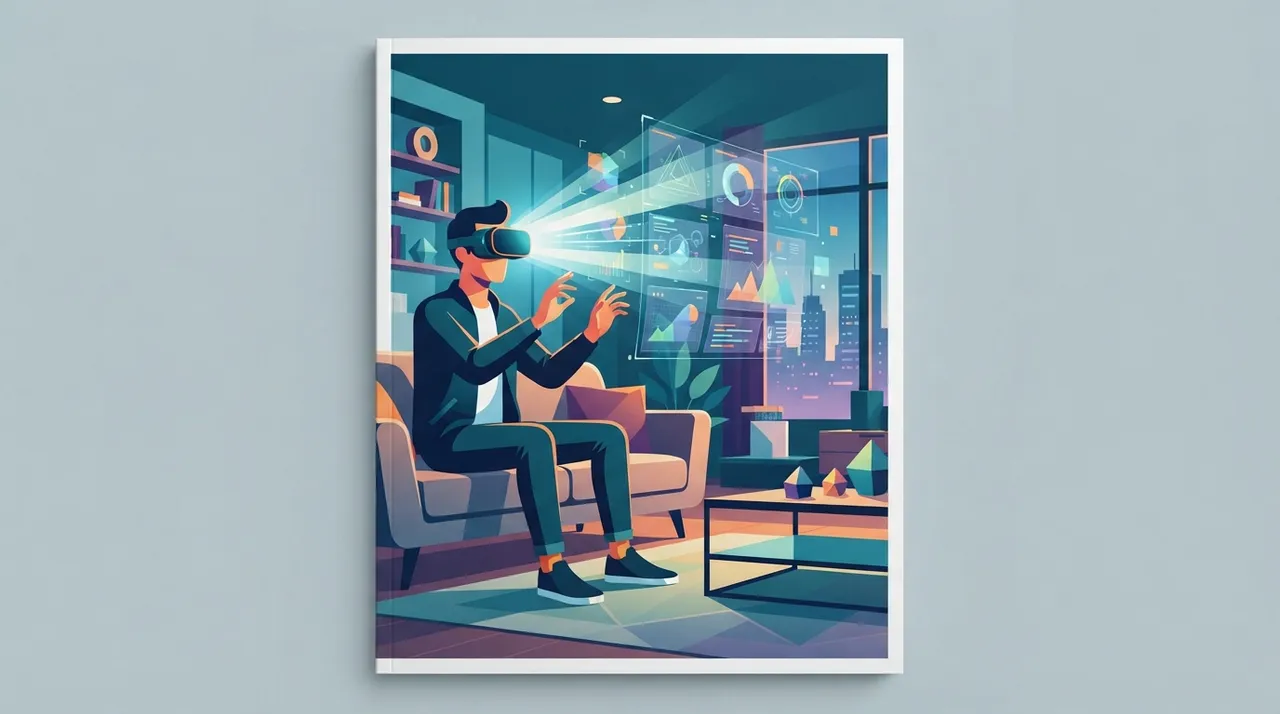
As digital technologies become increasingly integrated into our daily lives, Mixed Reality (MR) emerges as a revolutionary step towards a future that transcends the boundaries of traditional screens. It's no longer just about viewing digital content, but interacting with it as an integral part of our physical environment. This development not only changes how we use our devices but redefines our concept of digital interaction.
What's New
Mixed Reality is experiencing rapid developments, most notably the enhanced integration of computer vision and real-time data processing. Devices like Meta Quest 3 and Apple Vision Pro, launched in late 2023 and early 2024 respectively, offer a more seamless and immersive mixed reality experience. These devices feature high-precision eye and head tracking, providing intuitive interactions sometimes without the need for manual controllers. There is also an increasing focus on developing software platforms that make it easier for developers to create rich mixed reality applications, accelerating the adoption of these technologies in various fields from education to entertainment and work.
Why it Matters
The importance of Mixed Reality lies in its ability to overcome the limitations imposed by traditional user interfaces. Instead of interacting with a 2D screen, users can manipulate 3D digital objects that appear to be part of the real world. This opens the door to countless practical applications: in education, students can explore complex 3D models of the human body or architectural structures. In industry, engineers can visualize and modify designs in their real environment before manufacturing begins. In healthcare, surgeons can practice complex procedures using accurate virtual models. Entertainment experiences are also completely transformed, as players can immerse themselves in virtual worlds that interact with their physical spaces. This ability to seamlessly blend physical and digital realities increases productivity, deepens understanding, and makes experiences more engaging and interactive.
To practically benefit from this trend, interested readers can explore the following tools and steps: First, try available devices like Meta Quest 3 or Apple Vision Pro to understand the basic capabilities. Second, follow platforms and communities dedicated to mixed reality application development, such as Unity and Unreal Engine, which provide SDKs and tools for creating immersive experiences. Third, look for online courses and educational resources to learn the basics of mixed reality design and development. Understanding how to build and design these experiences will put you at the forefront of this growing field and open up new career opportunities in the future.


Comments 0
No comments yet — be the first to share your thoughts.
Share your thoughts
To comment, sign in first — we email you a one-time code (no password). This keeps the discussion clean.
Sign in to comment →