
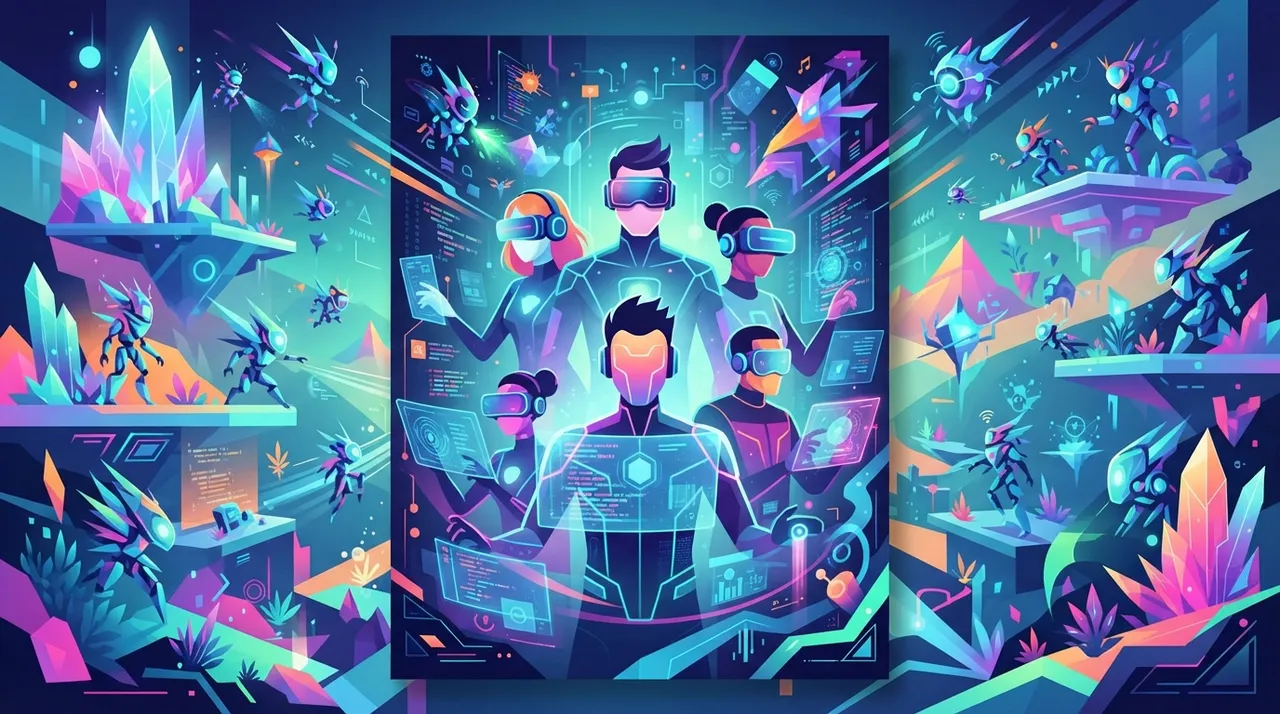
The gaming industry has witnessed a tremendous surge in recent years, largely due to advancements in artificial intelligence technologies. AI is no longer limited to merely adding random opponents or pre-programmed behaviors; it has become a fundamental driver for deeper and more realistic gaming experiences. By integrating AI into game design, players find themselves in more vibrant and interactive worlds, where characters and challenges evolve in unexpected ways, enhancing immersion and making each gameplay session unique.
What's New
The novelty in this field lies in the remarkable development of using generative AI and reinforcement learning to create more complex and adaptable non-player characters (NPCs). These characters no longer follow predefined paths; instead, they can now learn from player behavior, adapt their strategies, and even exhibit what appears to be "personality" or "memory" within the game. For instance, in some modern games, AI characters might remember previous interactions with the player, influencing their future behavior towards them. AI also enables the creation of dynamic challenges that change based on player performance, ensuring the game remains engaging and stimulating regardless of skill level.
A notable development is the use of AI in procedural content generation to automatically create levels, quests, and even entire worlds. This reduces the workload for developers and increases replayability, as players can explore new environments each time. There is also growing interest in applying AI to analyze player data to improve the overall gaming experience, by providing personalized recommendations and adjusting game difficulty to ensure optimal balance.
Why It Matters
This development is crucial for several reasons. Firstly, AI raises the bar for innovation in game design, allowing developers to create richer and deeper experiences that transcend traditional limitations. Secondly, it enhances the value of games for consumers, as games that adapt and learn become more engaging and maintain player interest for longer periods. Imagine a game where enemies learn from their mistakes and develop counter-strategies, or allies interact in more realistic and context-appropriate ways. This not only makes the game more challenging but also more enjoyable and interactive.
Furthermore, AI opens the door to new types of games and experiences, such as games focused on adaptive narratives where the story changes based on player decisions, or games that use AI to generate dynamic musical or visual art that reacts to gameplay. For developers, AI can automate tedious and repetitive tasks, freeing them to focus on more critical creative and design aspects. It also contributes to making games more accessible through intelligent assistance systems and adaptive adjustments that cater to the needs of diverse players.
In conclusion, AI represents an indispensable driving force in the evolution of the gaming industry, promising a future where games transcend mere entertainment to become immersive, personalized, and continuously evolving experiences.




Comments 0
No comments yet — be the first to share your thoughts.
Share your thoughts
To comment, sign in first — we email you a one-time code (no password). This keeps the discussion clean.
Sign in to comment →