
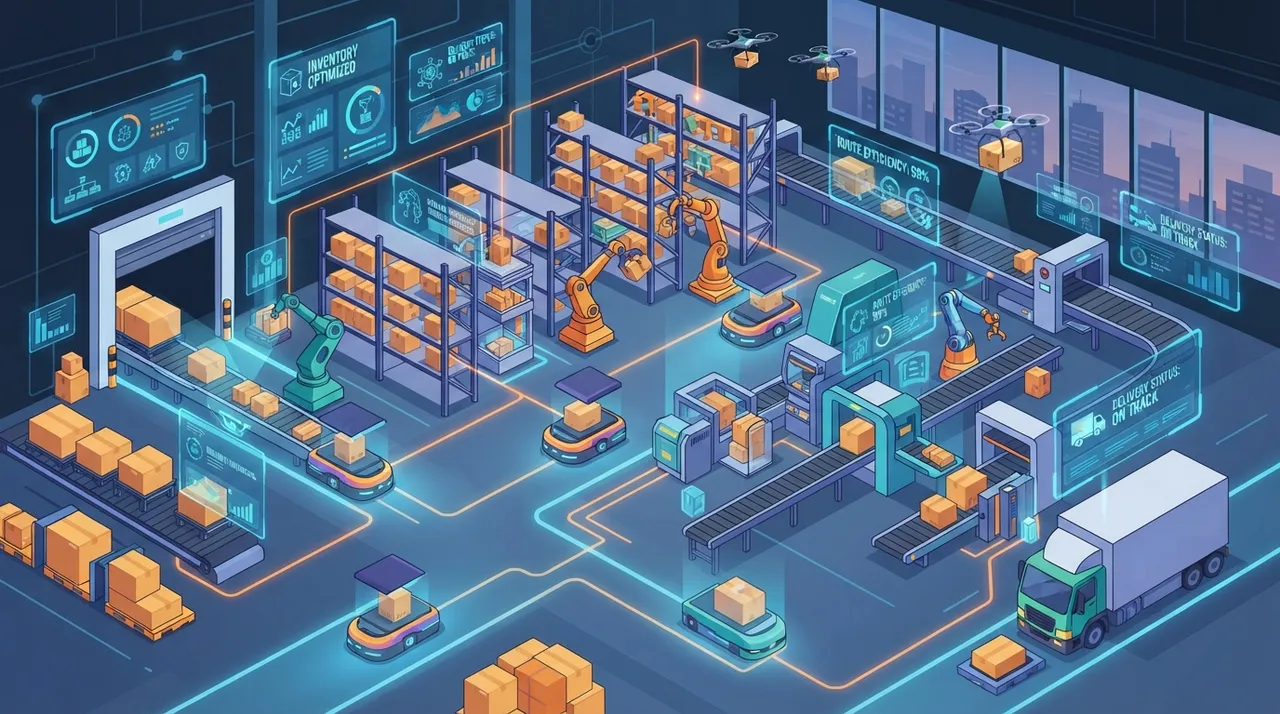
In the face of continuous economic fluctuations and escalating customer expectations, inventory management has evolved beyond simple tracking into a strategic driver of growth and profitability. This is where AI steps in, no longer a luxury but an imperative for companies aiming to stay ahead. In 2026, we are witnessing a fundamental shift towards smarter, more responsive supply chains, with AI acting as the driving force behind optimized inventory decisions, eliminating guesswork and providing precise, data-driven insights.
What's New
2026 marks the deep integration of AI into supply chain management, with an increasing focus on achieving maximum operational value. Companies are no longer asking, 'Should we use AI?', but rather, 'Where should we point it first?'. AI has moved beyond the pilot phase, with forecasts indicating that spending on supply chain software with agentic AI capabilities will grow from less than $2 billion in 2025 to $53 billion by 2030.
AI-powered forecasting is the most prominent innovation. While traditional methods relied solely on historical data, AI goes further by analyzing multiple patterns, such as seasonality, market trends, and even external factors like economic shifts and weather conditions. Research shows that AI-driven demand forecasting can reduce forecast errors by 20% to 50% and cut losses from stockouts and product unavailability by up to 65%. This improvement in accuracy directly translates into fewer stockouts, reduced overstock, and enhanced operational performance.
In addition to forecasting, AI enables businesses to achieve real-time inventory visibility across multiple locations using Internet of Things (IoT) devices and cloud-based systems. It is also used to automate repetitive tasks, such as document processing, data extraction, and shipment booking, reducing manual effort and freeing teams to focus on higher-value activities.
Why it Matters
AI-enhanced inventory management is crucial because it addresses persistent and costly challenges faced by businesses. Stockouts and overstock issues cost retailers approximately $1.77 trillion annually. With AI, companies can transition from a reactive approach to proactive inventory planning. This means making smarter purchasing decisions, reducing manual errors, and improving warehouse control, ultimately leading to increased profits and reduced costs.
Furthermore, this technology significantly enhances customer satisfaction. With more accurate forecasts, companies can ensure product availability when needed, avoid delivery delays, and provide a better customer experience. It also strengthens supply chains' ability to respond to unexpected fluctuations, such as geopolitical changes or market volatility, by monitoring and predicting disruptions and suggesting real-time alternatives.
For the reader, whether a small business owner, supply chain manager, or entrepreneur, understanding this trend offers an opportunity to enhance operational efficiency and competitiveness. Companies adopting AI in their supply chains are 23% more profitable than their peers.
How to Practically Benefit (Tools/Steps):
- Assess Current Data: Before starting, ensure the quality and integrity of your current inventory data. AI heavily relies on clean and structured data. Standardize product records, inventory movements, and purchasing processes.
- Select AI-Powered Demand Forecasting Tools: Numerous solutions are available in the market. Look for tools that offer multiple forecasting models and consider external variables. Examples include Optiply for online retail and wholesale, Netstock AI for mid-market distributors, and Peak AI for retailers and manufacturers.
- Start Gradually: You don't need to overhaul your entire system at once. Begin by applying AI to high-volume or high-signal products to evaluate its performance and compare its forecasts with your current ones.
- Automate Purchase Orders and Inventory: Once confidence in AI forecasts is established, the system can suggest reorder quantities and timings, gradually moving towards full automation for low-risk decisions.
- Integrate AI with Existing Planning Systems: AI forecasts should be integrated into demand planning meetings as a 'second opinion' to enhance decision-making. This phase aims to build trust in AI systems and demonstrate their tangible benefits.
- Invest in Training and Qualification: AI does not replace human teams; it assists them. Invest in training your team to understand how AI works and how to use new tools to improve their performance.
Adopting AI in inventory management is a strategic step towards a more efficient, flexible, and profitable future. It's an opportunity to transform from traditional inventory management to a smart, proactive approach that empowers businesses to thrive in today's complex business environment.





Comments 0
No comments yet — be the first to share your thoughts.
Share your thoughts
To comment, sign in first — we email you a one-time code (no password). This keeps the discussion clean.
Sign in to comment →