
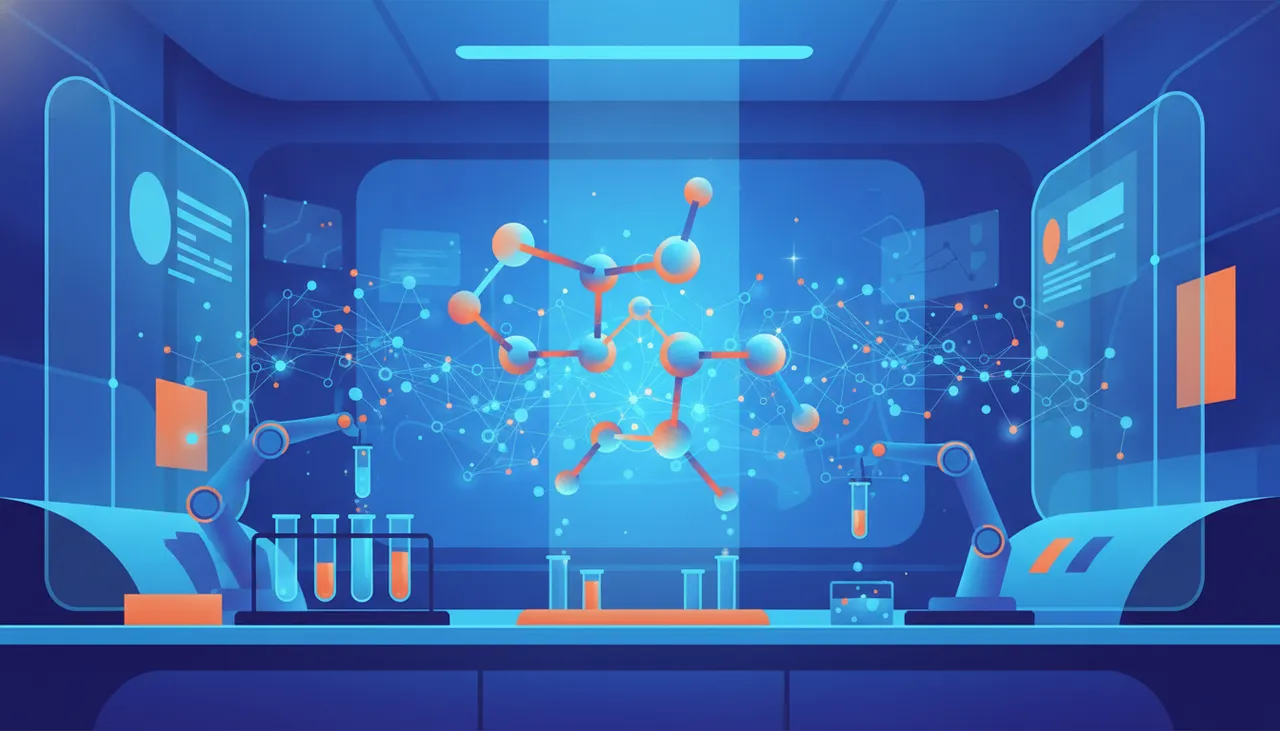
In a relentless race against intractable diseases and emerging health threats, generative AI stands out as a key driving force in drug discovery. While traditional drug development has historically taken decades and required immense investments, these innovative technologies offer unprecedented solutions to accelerate this cycle, promising a future where new treatments become available faster and more efficiently.
What's New
Generative AI, with its ability to create novel data and structures never before seen, represents a paradigm shift in drug design. Instead of manually screening millions of compounds in laboratories, generative AI models can now design new drug molecules with specific, targeted properties to treat particular diseases. This is achieved by training these models on vast datasets of known compounds and their biological interactions, then using this understanding to generate potential drug candidates with optimized chemical structures and improved binding affinity to target proteins.
For instance, Convolutional Neural Networks (CNNs), Generative Adversarial Networks (GANs), and Transformer-based models are being employed to generate new peptide sequences or small molecules with desired pharmacological properties. These models allow researchers to efficiently explore a vast chemical space, increasing the chances of discovering effective and safer compounds.
Why it Matters
The most significant impact of generative AI lies in its ability to reduce the exorbitant time and cost associated with the drug discovery and development process. Instead of conducting costly, years-long experiments to identify potential drug candidates, generative AI can pinpoint these compounds within a few months. This not only accelerates the pace at which new drugs become available to patients but also opens the door for developing treatments for rare or neglected diseases that might not be economically viable with traditional methods.
Furthermore, generative AI contributes to designing drugs with lower toxicity and higher efficacy by predicting compound interactions with the human body before clinical trials begin. This reduces failure rates in late-stage drug development, saving significant resources and improving the chances of treatment success.
To leverage this technology, researchers and pharmaceutical companies can adopt specialized generative AI tools and platforms for drug design. Examples of such tools include platforms like DeepMind's AlphaFold, which uses AI to predict the 3D structure of proteins with high accuracy, aiding in understanding how drugs work. There are also open-source tools and software libraries like RDKit and DeepChem that enable scientists to build their own generative models for molecule design. This also requires investment in computational capabilities and developing expertise in data science and machine learning to empower research teams to fully exploit the potential of this promising technology.
In conclusion, generative AI is reshaping the landscape of drug discovery, offering a glimpse into a future where treatment development is faster, more efficient, and less costly. As this technology continues to evolve, we anticipate a surge in innovative medicines that will make a real difference in the lives of millions worldwide.







Comments 0
No comments yet — be the first to share your thoughts.
Share your thoughts
To comment, sign in first — we email you a one-time code (no password). This keeps the discussion clean.
Sign in to comment →