
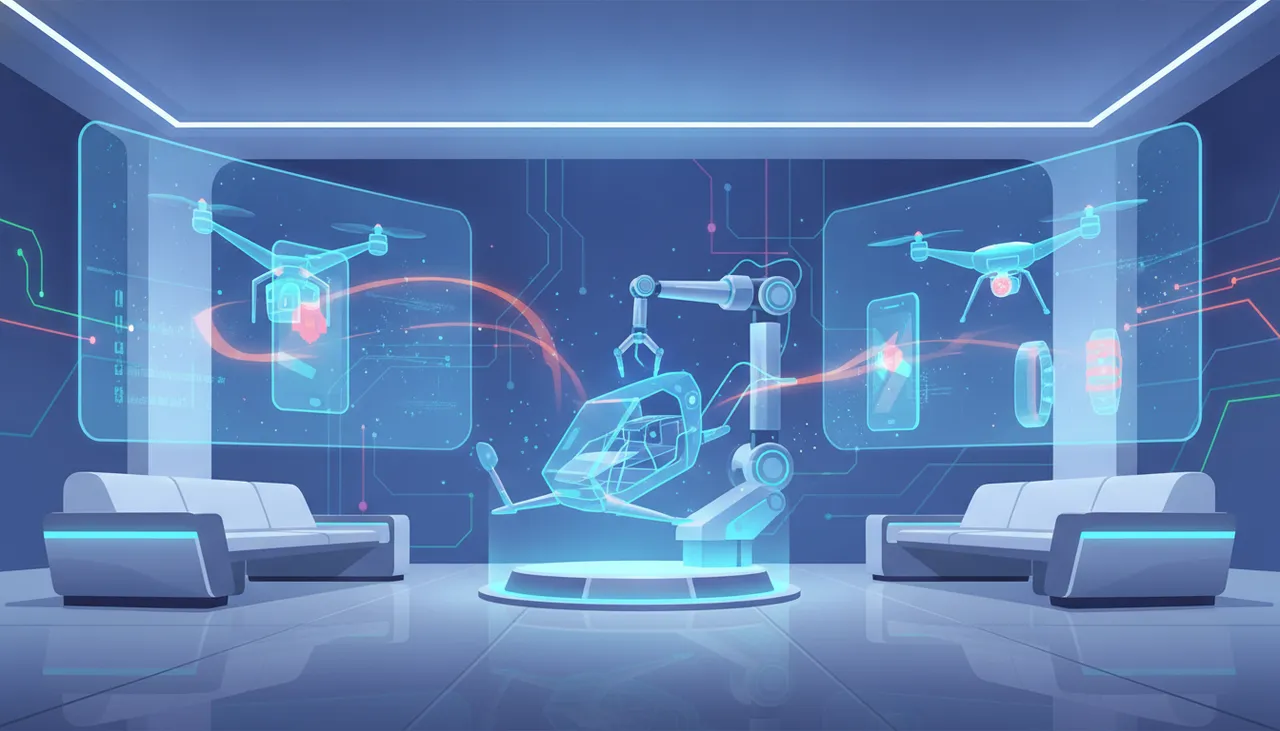
The year 2026 is witnessing a remarkable acceleration in the adoption of generative AI, especially in fields requiring high creative capabilities and innovative design solutions. After these technologies were confined to prototypes or specialized applications, they have now become an integral part of product development cycles, signaling a new era of machine-aided innovation.
What's New
The new development is the shift from merely using AI to automate repetitive tasks to relying on it as a creative partner. For example, tools like Midjourney and DALL-E 3, though known for image generation, are now being used as starting points for initial product design visualizations. More importantly, specialized platforms like Autodesk's Generative Design and Ansys Discovery offer advanced capabilities for engineers and designers to create functionally optimized designs based on specific criteria such as weight, strength, cost, or even sustainability. These tools not only generate designs but also suggest improvements and modifications to achieve desired goals. Generative AI has become capable of analyzing vast amounts of data, from user preferences to product performance data, to provide unique and practical design solutions.
Why it Matters
This development is crucial for several reasons. Firstly, it significantly accelerates the design and development process. Instead of spending weeks or months creating and testing multiple prototypes, generative AI can provide a wide range of optimized options within minutes or hours. Secondly, it fosters unprecedented innovation. By exploring design spaces that humans might not have considered on their own, companies can discover more efficient, aesthetic, or practical solutions. This opens doors to creating more sustainable, user-friendly, and distinctive products in the market. Thirdly, it reduces costs and improves the quality of final products by helping to identify the best materials and manufacturing processes early in the design cycle. For the reader, understanding this trend allows them to keep pace with changes in the job market, explore new opportunities in product design and manufacturing, and even consider how to apply these technologies in their own projects.
In conclusion, the integration of generative AI into product design is not just a passing trend, but a fundamental shift that redefines how we innovate. As these technologies continue to evolve, we will witness smarter, more efficient, and more adaptable products to our changing needs.






Comments 0
No comments yet — be the first to share your thoughts.
Share your thoughts
To comment, sign in first — we email you a one-time code (no password). This keeps the discussion clean.
Sign in to comment →