
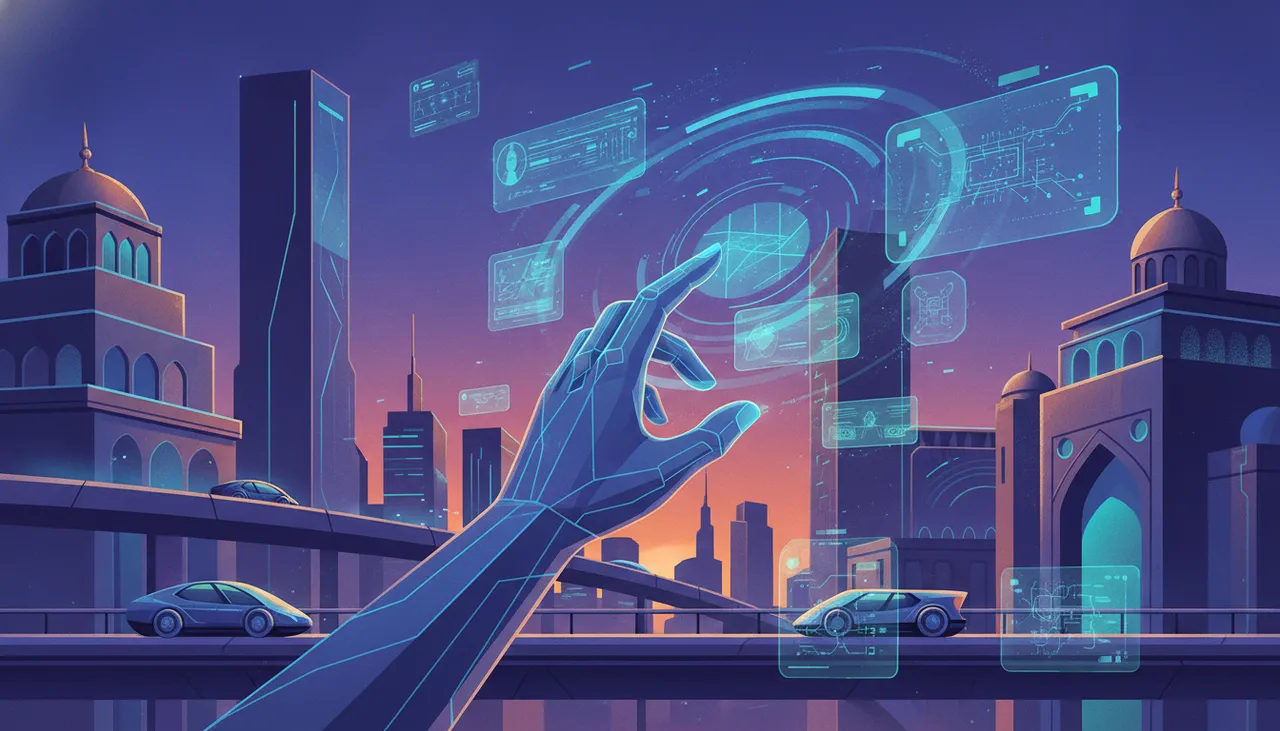
The technological landscape is witnessing a rapid convergence between two of the most powerful emerging technologies: Generative Artificial Intelligence (Generative AI) and Augmented Reality (AR). This integration is not just an evolutionary step but paves the way for a qualitative leap in how humans interact with both the digital and physical worlds, promising richer, smarter, and more personalized experiences.
What's New
The novelty here is not merely the existence of both technologies, but their deep synergy. Generative AI, with its ability to create new content (text, images, video, 3D models) based on specific inputs, has begun to integrate with AR systems. For instance, generative AI can create dynamic 3D objects displayed in real-time through AR glasses, generate personalized visual instructions for someone performing a repair, or even create interactive narrative experiences that adapt to the user's location and context. Applications like Apple Vision Pro and its large language models have shown glimpses of this future, where users can interact with digital interfaces that appear to be part of the physical world, with AI capable of understanding context and providing relevant information or interactive content in real-time. There are also efforts to build AR systems capable of analyzing the surrounding environment via AI and providing interpretations or interactions based on what the cameras see, such as identifying objects or guiding users in complex environments.
Why It Matters
This development has far-reaching implications across numerous sectors and how we live and work.
- For Consumers: It means richer shopping experiences where products can be virtually tried on at home, immersive games that interact with the surrounding environment, or instant assistance in daily tasks through visual guidance.
- For Industry and Education: It enables more effective training for workers in realistic simulated environments, maintenance of complex equipment with AI-guided visual assistance, and interactive learning experiences that transform textbooks into living environments.
- For Design and Creativity: Designers and engineers can create and modify prototypes in real-time within AR environments, accelerating the design cycle and opening new avenues for collaborative creativity.
- For Human-Computer Interaction: This integration represents a paradigm shift from two-dimensional screens to three-dimensional interfaces that interact with the real world, making technology less intrusive and more intuitive.
To practically benefit from this trend, developers can explore Augmented Reality SDKs like Apple's ARKit and Google's ARCore, and start integrating available generative AI models via APIs such as OpenAI's GPT and DALL-E or Stability AI. Understanding the design principles for immersive AR experiences and how to use AI to create dynamic, interactive content is the first step. For users, following developments in AR devices like smart glasses and new applications leveraging this integration will allow them to benefit from these experiences as soon as they become available.
In essence, the convergence of generative AI and augmented reality is not just about incremental improvements; it's a redefinition of the nature of human interaction with technology. It's an invitation to think about how to build digital worlds that seamlessly harmonize with our physical reality, opening doors to innovations we haven't yet imagined.



Comments 0
No comments yet — be the first to share your thoughts.
Share your thoughts
To comment, sign in first — we email you a one-time code (no password). This keeps the discussion clean.
Sign in to comment →