
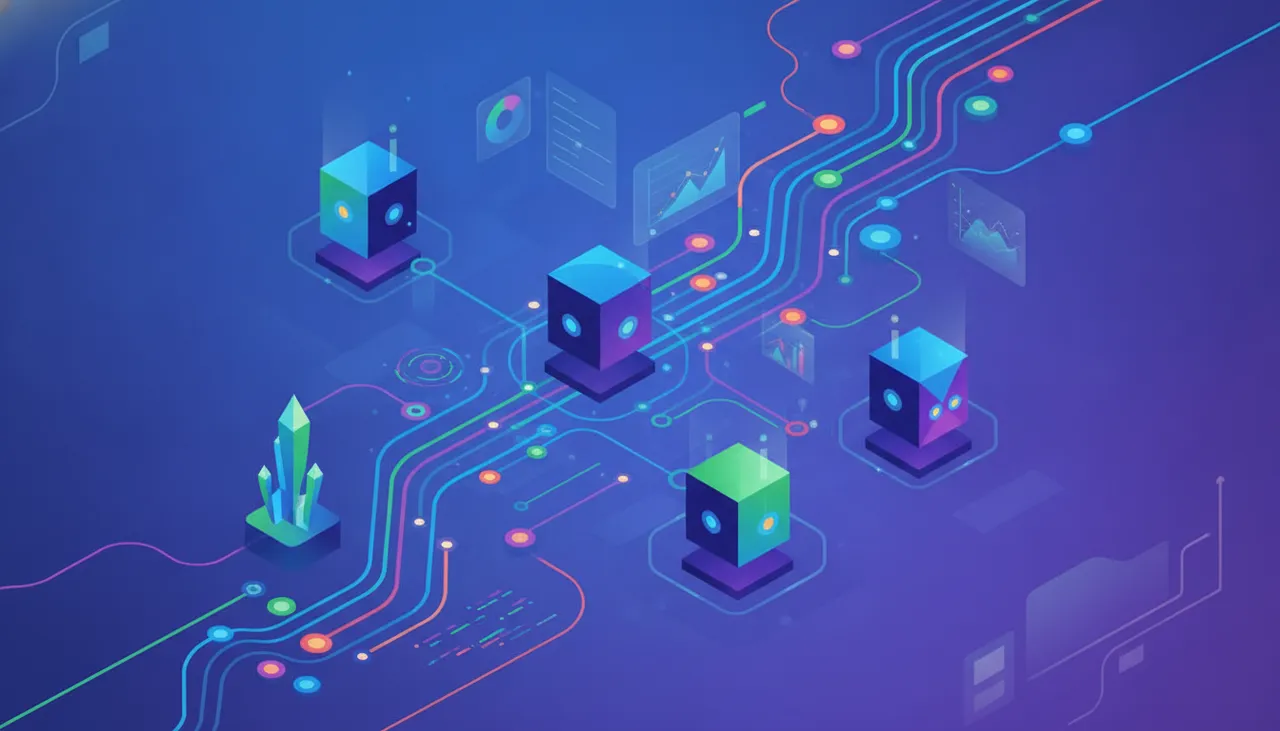
2026 is witnessing a pivotal shift in the AI landscape, as its applications move beyond simple automation into the realm of Agentic AI. This new development is not limited to mere assistance; it empowers intelligent systems with the ability to plan, make decisions, and execute complex tasks autonomously, redefining how businesses operate and grow.
What's New
Agentic AI is an evolution of generative AI, where it is no longer confined to creating content in response to prompts, but has become capable of understanding context, making plans, using tools, and calling APIs to execute multi-step tasks independently. This means agentic systems can now perform actions such as retrieving data, generating reports, updating tickets, executing code changes, or orchestrating processes across various software systems.
In 2026, agentic systems have transitioned from demo phases to real production environments. 97% of executives deployed AI agents in the past year, with 52% of employees already using them. This shift is making AI an integral part of companies' operational infrastructure, rather than just an add-on tool.
Another prominent trend is multimodal AI becoming the new default, with leading models capable of processing text, image, audio, and video inputs simultaneously. This reduces workflow complexity, as a single multimodal model can efficiently handle tasks that previously required stitching together multiple tools for different data types.
Why It Matters
Agentic AI is a key driver of economic growth, with McKinsey estimating it could add up to $4.4 trillion annually to the global economy through productivity gains, cost reductions, and new revenue streams. In 2026, 88% of businesses reported an impact of AI on increasing annual revenue, with 30% stating the increase was significant (greater than 10%). Additionally, 66% of organizations reported gains in productivity and efficiency from enterprise AI adoption.
The real-world applications of Agentic AI span across various industries. In HR, AI agents can generate comprehensive job descriptions, screen resumes, and develop personalized training materials. In supply chain and operations, data analysis agents can instantly track global fluctuations in raw material prices. For sales and marketing, generative AI assists in preparing highly personalized sales proposals and presentations tailored to each prospect. In software development, AI-powered coding assistants can analyze code blocks, find security vulnerabilities, write test scenarios, and even generate architectural code from scratch, increasing production speed by 40% to 60%. In healthcare, it can accelerate drug discovery, generate synthetic clinical data, and enhance patient engagement.
Despite the significant benefits, businesses face challenges in integrating Agentic AI. In 2026, 79% of organizations face challenges in AI adoption, and 54% of C-suite executives admit that AI adoption is tearing their company apart. This is because many companies still treat AI as isolated tools rather than an integrated enterprise platform. The solution lies in focusing on integrating AI within existing systems, establishing robust governance frameworks, and training employees to work effectively with these systems.
How to Benefit Practically
To leverage Agentic AI, readers can follow these steps and utilize the following tools:
- Identify Repetitive and Complex Tasks: Start by pinpointing time-consuming processes that require sequential decision-making. These can include customer service management, data analysis, periodic report generation, or even automating parts of sales and marketing operations.
- Explore Agentic AI Tools: Research platforms that offer Agentic AI capabilities. Some examples include:
- ChatGPT Enterprise: For automating content creation, research, internal documentation, and automation scripting.
- HubSpot AI: For integrating AI into CRM systems to automate lead scoring, sales forecasting, and email personalization.
- Zapier AI: For automating workflows across different applications.
- GitHub Copilot: To assist developers with code writing, security analysis, and test scenario generation.
- Jasper AI: For creating marketing content with a consistent brand voice.
- Notion AI: For improving productivity and internal knowledge management.
- UiPath: For automating repetitive robotic tasks such as data entry and invoice processing.
- Gradual Integration: Instead of radical changes, integrate Agentic AI into your existing workflows step-by-step. Start with small projects to measure impact and identify best practices.
- Focus on Governance and Security: Ensure robust governance and security frameworks are in place to guarantee responsible AI use, data protection, and risk mitigation.
- Develop Team Skills: Invest in training employees to understand and utilize Agentic AI tools, empowering them to work more effectively and focus on value-added tasks.
Agentic AI represents a tremendous opportunity for businesses to enhance efficiency, reduce costs, and drive innovation. Through strategic adoption and thoughtful integration, companies can transform their operations and achieve a sustainable competitive advantage in the market.



Comments 0
No comments yet — be the first to share your thoughts.
Share your thoughts
To comment, sign in first — we email you a one-time code (no password). This keeps the discussion clean.
Sign in to comment →