
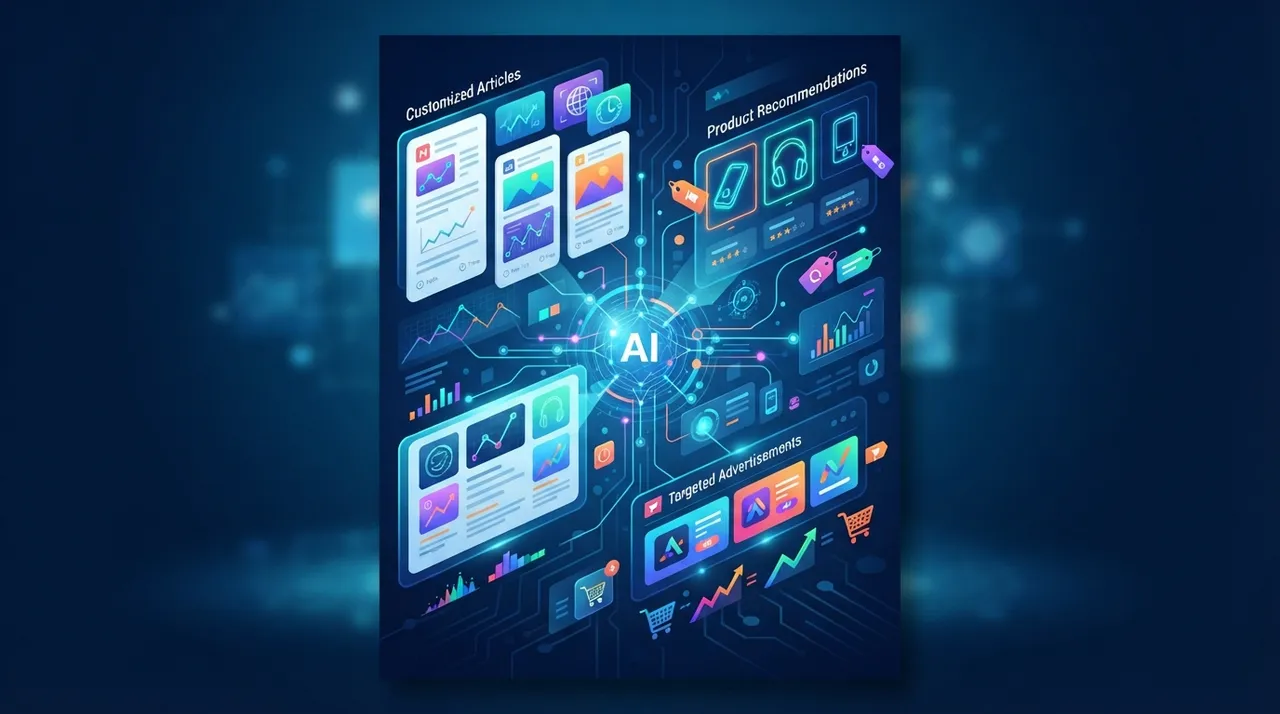
In an increasingly saturated digital world, the ability to capture and retain user attention has become a significant challenge. This is where AI-powered content personalization comes in, a revolutionary trend redefining how we interact with information, products, and services. By analyzing vast amounts of data, content is no longer presented uniformly but is shaped to suit each individual, offering a unique and highly personalized experience.
What's New: Personalization Beyond Expectations
AI personalization in content creation involves using AI to generate, adapt, and deliver content tailored to individual user preferences and behaviors. This approach relies on analyzing user data, such as browsing history, demographics, and engagement patterns, to create dynamic content that resonates with specific audiences.
What sets this development apart is AI's ability to go beyond traditional personalization, which relied on simple rules and limited data points. AI systems can analyze vast amounts of information across multiple dimensions, allowing them to develop a sophisticated understanding of individual preferences. This includes the capability for predictive personalization, anticipating user needs before they are explicitly expressed by analyzing historical data and similar user profiles.
Why It Matters: Multiple Benefits for Businesses and Users
AI-powered content personalization is transforming customer experiences and enhancing the effectiveness of marketing strategies. In 2026, 71% of consumers expect companies to deliver personalized content, and 67% express frustration when their interactions with businesses are not tailored to their needs. Companies like Amazon, Netflix, and Starbucks are already using AI to provide personalized product and content recommendations, boosting sales and improving customer satisfaction.
- Increased Engagement and Loyalty: Personalized content resonates more deeply with users, increasing the likelihood of interaction and conversion. When users feel understood, their trust and loyalty to the brand increase.
- Enhanced User Experience: AI algorithms analyze user data to provide a seamless experience, including personalized recommendations, customized product or service offerings, and more intuitive navigation.
- Marketing Efficiency: AI enables marketers to move beyond basic demographic segmentation to truly individualized experiences. AI can also generate marketing copy, articles, and creative assets based on user preferences and behavior, increasing content production efficiency.
- Time-Saving and Convenience: AI personalization anticipates user needs, saving time and making interactions more convenient.
To practically leverage this trend, readers can follow these steps and utilize the following tools:
Practical Tools and Steps to Leverage AI Content Personalization
- Define Your Audience Personas and Content Objectives: Start by clearly defining who you are trying to reach with your content and what action you want them to take. This will help you use AI to create personalized content that speaks directly to your target audience.
- Leverage Existing Data: Analyze data from your website, social media channels, and other sources to identify trends and patterns that can help you create more effective content.
- Choose the Right AI Personalization Tools: Several platforms offer robust solutions in this area:
- Insider One: Known for its AI-native approach to omnichannel engagement, predictive segmentation, and hyper-personalized recommendations.
- Adobe Target: Renowned for advanced segmentation, A/B testing, and real-time content personalization.
- Braze: Excels in omnichannel messaging and predictive targeting with AI-driven journey orchestration.
- CleverTap: An AI-powered customer engagement platform that combines a built-in Customer Data Platform (CDP), real-time analytics, and omnichannel messaging to deliver personalized experiences across the entire customer lifecycle.
- Tofu: An all-in-one AI marketing platform that combines deep content personalization with multi-channel campaign automation.
- ChatGPT: Can help craft personalized copy for various use cases at little to no cost, useful for brainstorming and one-off content needs.
- Implement Continuous Feedback Loops: Continuously evaluate AI-generated content through human reviews. Reinforcement learning techniques can help AI models improve over time by prioritizing high-quality outputs.
- Balance Automation with a Human Touch: Use AI for data-driven personalization, but maintain a human touch in content to foster deeper engagement.
AI-powered content personalization represents a crucial step towards building stronger, more effective relationships with audiences, opening new avenues for growth and innovation in the ever-evolving digital landscape.




Comments 0
No comments yet — be the first to share your thoughts.
Share your thoughts
To comment, sign in first — we email you a one-time code (no password). This keeps the discussion clean.
Sign in to comment →