
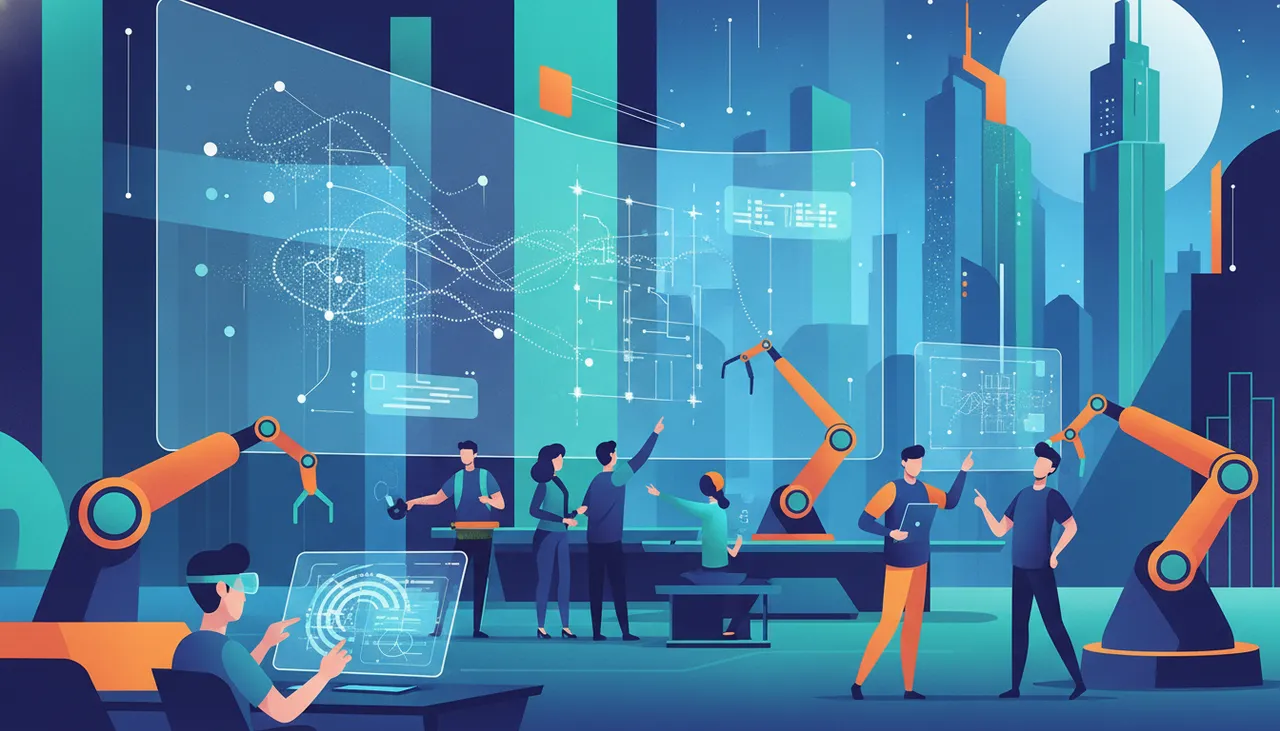
The last decade has witnessed radical transformations thanks to artificial intelligence, but what we are seeing today in the generative AI boom goes beyond expectations, placing an unprecedented tool for creativity and efficiency in the hands of organizations. It's no longer just about automating routine tasks, but about creating original and valuable content, from text to images and audio clips, with speed and accuracy never before possible.
What's New
The new aspect of the current landscape is the increasing maturity of generative models that are transitioning from experimental tools to commercially viable solutions. We are seeing an expansion in the capabilities of these models to cover much broader areas than just text and image generation. For instance, companies have begun using generative AI to design new products, develop complex software code, and even create digital prototypes at lightning speed. Today's available tools, such as advanced Large Language Models (LLMs) from companies like OpenAI, Google, and Anthropic, in addition to image generation tools like Midjourney and DALL-E, have become more powerful and flexible, allowing organizations to customize them to their unique requirements.
Why It Matters
Generative AI is crucial because it redefines the concept of productivity and creativity in the business environment. Instead of consuming human resources for repetitive tasks or those requiring significant creative effort, companies can now dramatically accelerate these processes. This leads to:
- Increased Operational Efficiency: Automating report generation, email drafts, or even marketing content saves valuable working hours.
- Enhanced Innovation: The ability to generate new ideas rapidly, whether for product design or a marketing campaign, opens unprecedented avenues for innovation and solution experimentation.
- Cost Reduction: Reducing the need for large teams for creative or operational tasks can lead to significant budget savings.
- Large-scale Content Personalization: It's now possible to produce personalized content for each customer individually, enhancing user experience and increasing loyalty.
- Decision Support: Generative models can analyze vast amounts of data and provide insights and conclusions that aid in making better strategic decisions.
To leverage these opportunities, organizations can start by evaluating internal needs that could benefit from generative AI, such as marketing content creation, customer support, or product development. The next step is to choose the appropriate tools, whether open-source models or commercial solutions, and train teams on how to use them effectively. Partnering with AI experts or specialized companies can accelerate the adoption process and ensure optimal results. The most important thing is to start with small projects with clear impact to build experience and gradually scale up usage.






Comments 0
No comments yet — be the first to share your thoughts.
Share your thoughts
To comment, sign in first — we email you a one-time code (no password). This keeps the discussion clean.
Sign in to comment →