
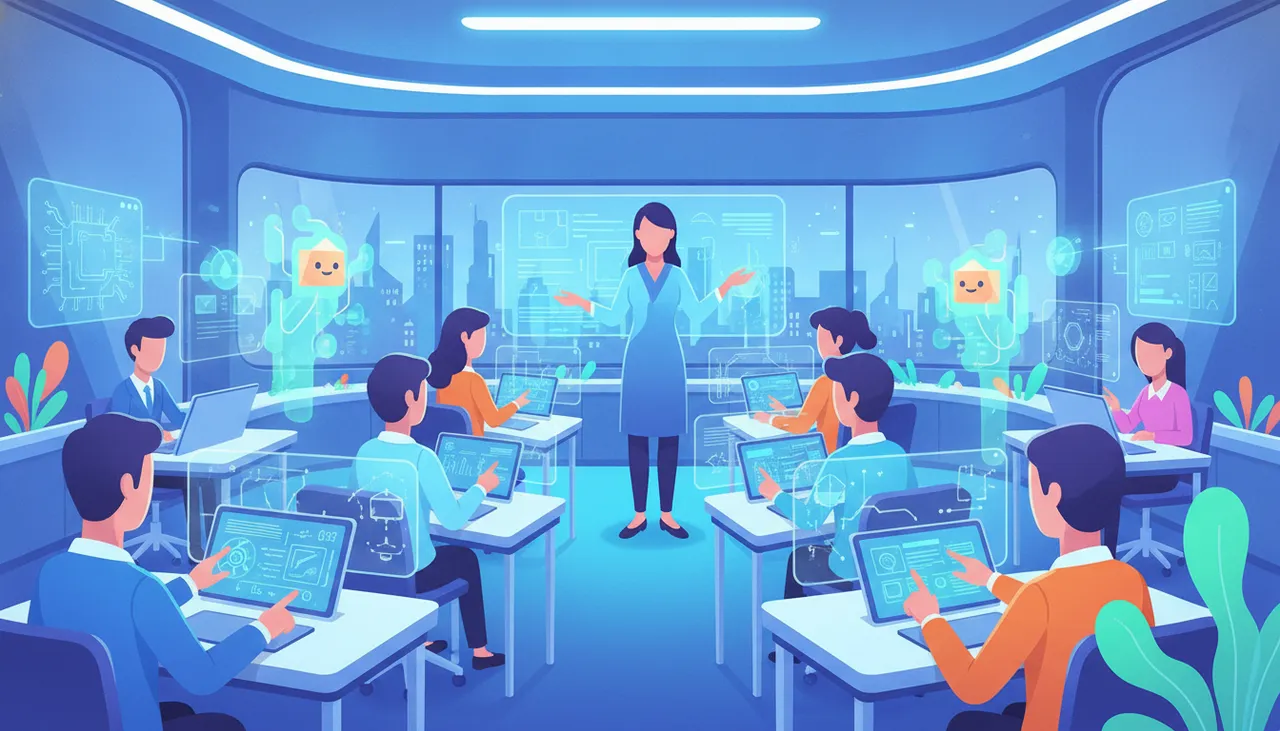
The biggest challenge in education has always been meeting the diverse needs of students within classrooms, where each learner has a different learning style, varying absorption rates, and unique strengths and weaknesses. Today, thanks to the immense progress in artificial intelligence, this challenge has become a real opportunity. Educators can now deliver instruction tailored to each student on a large scale, enhancing learning effectiveness and increasing teaching precision.
What's New
In 2026, AI is no longer just an auxiliary tool in education; it has become a fundamental engine driving progress in this field. Statistics show that 85% of teachers and 86% of students used AI tools during the 2024-2025 academic year, underscoring the widespread adoption and value these tools bring to the learning experience [4, 23]. AI has transitioned from an experimental tool to an essential component of the educational process [4].
The most significant shift is in personalized learning, where AI systems analyze students' interactions with educational content, their comprehension of concepts, and the time they spend on each section. The curriculum is then dynamically adjusted to match each student's individual pace and learning style [7]. This goes beyond merely adjusting quiz difficulty, extending to analyzing interaction patterns, such as how long a student pauses on a specific sentence, which parts of a video they rewatch, or the types of errors they make in coding exercises [22].
AI has also become a powerful tool in assisting teachers, significantly reducing administrative burden and saving them approximately 5.9 hours per week, equivalent to six weeks per school year, which can be spent on direct student interaction and strategic planning [1, 4, 22].
Why It Matters
AI is revolutionizing education for several fundamental reasons:
- Enhanced Personalization and Effectiveness: AI enables adaptive learning paths, educational content tailored to students' interests and preferences, and instant, interactive feedback that motivates learners [2, 10]. Research shows that students in AI-enhanced learning environments achieve 54% higher test scores and 70% better completion rates, with ten times more engagement than traditional methods [1].
- Reduced Teacher Workload: AI helps automate routine administrative tasks such as lesson planning, assessment creation, and identifying students who need additional support [1, 3, 22]. This frees up teachers to focus on more critical aspects of instruction, such as mentoring, coaching, and building relationships with students [16, 22].
- Improved Engagement and Motivation: By connecting learning to students' interests and experiences, AI helps bring the learning process to life. AI tools can contribute to engaging lessons through simulations or role-playing activities, and provide alternative formats for students who are less comfortable speaking aloud [2].
- Support for Equity and Accessibility: AI removes barriers that have historically excluded learners. Students with disabilities, language barriers, or limited access to quality instruction can now access personalized learning that adapts to their needs [11]. Tools like text-to-speech and vice versa, and real-time translation, help make educational content accessible to everyone [11, 12].
- Predictive Analytics: AI systems can analyze patterns in student behavior and performance to identify potential issues before they become serious problems. This early intervention model means students get help faster, dropout rates can be reduced, and teachers can make data-backed decisions [7].
Real-World Examples:
- Khanmigo by Khan Academy: Serves as a sophisticated AI-powered tutoring assistant, providing personalized learning support for students tackling complex subjects. Instead of simply providing answers, the AI guides learners through the problem-solving process, encouraging critical thinking and deeper comprehension [4].
- Duolingo Max: Utilizes deep learning to analyze user performance in real-time, creating highly adaptive lesson paths. The AI provides conversational practice and detailed explanations for mistakes, making language learning more intuitive and effective [4].
- Sourcebook (by TRT): An AI-powered learning platform that transforms any document (such as a textbook chapter or a PDF) into interactive, personalized learning experiences through AI content generation [11].
- Georgia State University: A predictive analytics system monitoring over 800 student risk indicators daily has triggered over 250,000 targeted support interventions and contributed to a 7-percentage-point increase in four-year graduation rates [1].
- HMH Programs: Programs such as HMH Personalized Path, Waggle, and Writable use adaptive models to personalize instruction while keeping teachers firmly in control [6].
How Readers Can Practically Benefit (Tools/Steps):
Readers, whether they are teachers, students, or parents, can leverage AI in education by following these steps and using these tools:
- For Teachers:
- Lesson Planning and Content Creation: Use generative AI tools like ChatGPT Edu [4] or Google Gemini [19, 21] to create engaging lesson plans, study materials, and assessment questions in minutes [21]. These tools can also analyze assessment results and summarize student work to inform instructional decisions [2].
- Assessment and Feedback: Utilize AI-powered assessment systems to provide instant and accurate feedback on student assignments, especially in math, coding, and writing [6, 22]. Tools like Gradescope [11] and Eklavvya [19] can significantly reduce manual grading time.
- Personalization and Differentiation: Employ adaptive learning platforms such as D2L Brightspace [20] or CYPHER Learning [20] to create personalized learning paths for each student based on their strengths, weaknesses, and learning style [10].
- Identifying At-Risk Students: Benefit from predictive analytics offered by some platforms to identify students who may be experiencing academic difficulties early on, allowing for timely intervention and targeted support [7].
- For Students:
- Study and Research Assistance: Use large language models like ChatGPT [14] or Claude [19] as personal study assistants. They can answer questions, explain complex concepts, and even help in drafting research papers [4, 8].
- Language Learning: Platforms like Duolingo Max [4] use AI to provide personalized language lessons, conversational practice, and instant feedback to improve pronunciation and grammar [4, 12].
- Interactive Learning: Engage in immersive AI-powered learning environments, especially in STEM fields, that allow you to conduct experiments and simulations with real-time feedback [22].
- Receive Instant Feedback: Use tools that provide immediate feedback on your work, helping you understand and correct your mistakes quickly, and maintain an active learning cycle [7].
- For Decision-Makers and Parents:
- Understand the Impact: Stay informed about recent research and reports on the impact of AI in education [18]. It is crucial to understand both the benefits and challenges, such as the risks of over-reliance on AI, potential biases in systems, and academic integrity issues [2, 8, 15].
- Support Professional Development: Advocate for and support teachers in receiving the necessary training to use AI tools effectively and responsibly [3].
- Engage in Dialogue: Participate in discussions on how to integrate AI ethically and effectively into educational environments to ensure its maximum benefit [18].
The future of AI in education is not about replacing human judgment but about continuing to explore and refine how strategic automation can be thoughtfully used to amplify teacher expertise and create learning experiences that adapt to the evolving needs and strengths of each child [2].





Comments 0
No comments yet — be the first to share your thoughts.
Share your thoughts
To comment, sign in first — we email you a one-time code (no password). This keeps the discussion clean.
Sign in to comment →