
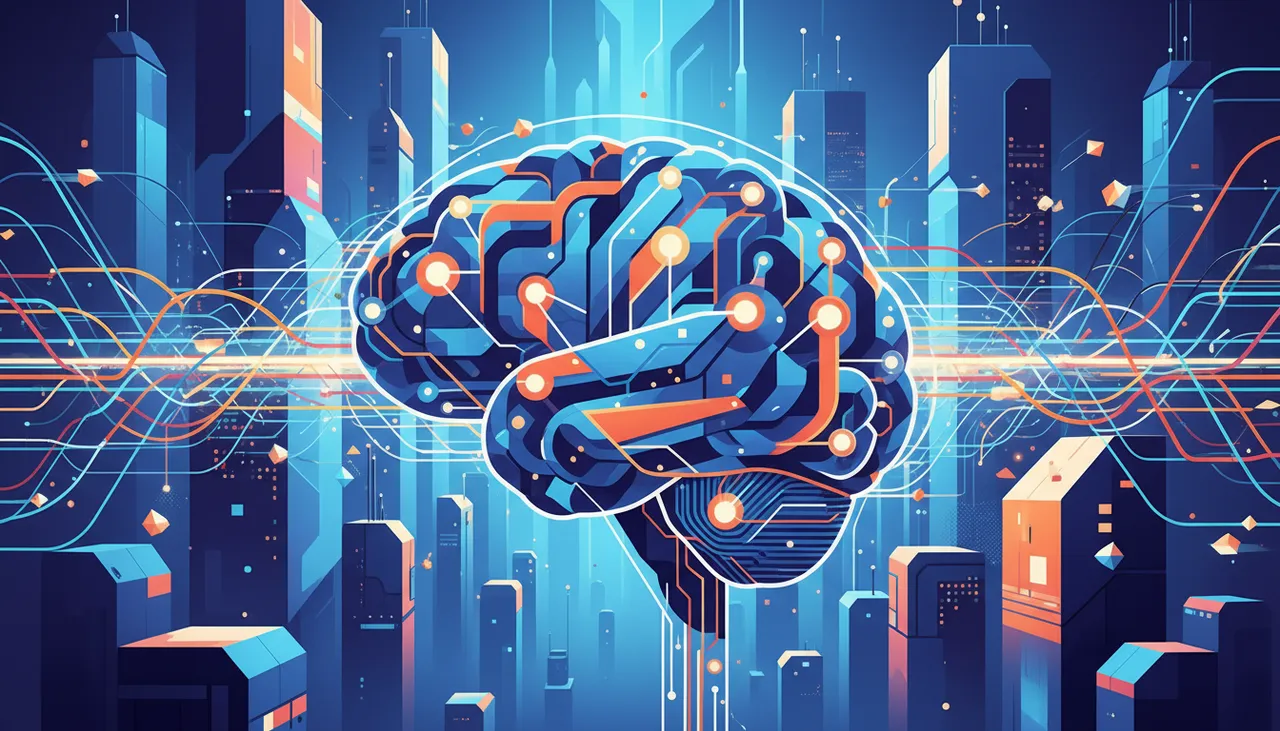
The past few years have witnessed qualitative leaps in artificial intelligence, but the latest development that is drawing significant attention and marks a true turning point is the rise of "Autonomous AI Agents." These agents are not merely executive tools for specific tasks, but rather software entities capable of understanding goals, planning, making decisions, executing actions, and even learning and adapting to achieve those goals with minimal human intervention. They represent the next generation of AI, where the ability to process language or generate content extends to the ability to accomplish actual and independent tasks.
What's New
The novelty lies in these agents' ability to break down complex tasks into smaller steps, identify the necessary tools for each step (such as searching the internet, using APIs, or even interacting with other software), and then execute these steps sequentially and logically. For example, instead of merely generating text when asked to create a marketing plan, an intelligent agent can research market data, analyze competitors, identify the target audience, formulate a detailed strategy, and even begin drafting initial advertising content—all autonomously based on a single initial instruction. Projects like Auto-GPT and BabyAGI are early examples of this category, having shown promising capabilities in executing multi-step tasks such as writing and debugging code, or managing virtual marketing campaigns.
Why It Matters
The increasing proliferation of intelligent agents is due to several key factors: first, the evolution of large language models (LLMs), which have become more capable of understanding, reasoning, and planning. Second, the availability of powerful computational infrastructures that support the operation of these models. Third, the growing need to automate complex tasks that require more than simple responses, especially in business and software development environments. This development is of utmost importance because it allows individuals and businesses to transform complex ideas into tangible results at a faster pace and with higher efficiency. For developers, agents can assist in writing and debugging code and even designing complex software architectures. For marketers, they can analyze data, formulate campaigns, and manage interactions. As for entrepreneurs, they can use agents to accelerate research and development phases, market analysis, and even manage the initial operations of their startups. This means freeing humans to focus on strategic and creative tasks, leaving repetitive or data-intensive tasks to intelligent agents.
How to Benefit Practically:
To benefit from this trend, readers can follow these steps:
- Understand the Core Concept: Start by researching "Autonomous AI Agents" and "LLM Orchestration" to grasp how these systems work.
- Experiment with Available Tools: Try out some open-source tools like Auto-GPT or BabyAGI (though they might require some initial technical knowledge). Simplified user interfaces (UIs) are now available to facilitate interaction.
- Identify Potential Tasks: Think about repetitive or complex tasks in your work where an intelligent agent could be helpful. Is it market research? Data analysis? Content drafting?
- Build or Customize an Agent: If you are a developer, you can start building your own agent using frameworks like LangChain or LlamaIndex, which provide ready-made components for agent construction. If you are not a developer, look out for platforms that offer ready-made agents for specialized tasks.
- Focus on the 'Task' not the 'Tool': Instead of focusing on the technology itself, focus on the problem you are trying to solve. An intelligent agent is a means to an end, not an end in itself.
- Stay Informed: This field is rapidly evolving. Follow tech blogs and conferences to stay updated on the latest developments and tools.
In conclusion, the rise of autonomous AI agents marks a pivotal turning point in the trajectory of artificial intelligence. They promise to radically transform how we work and interact with technology, opening new horizons for innovation and efficiency. The key is to understand these technologies and their potential applications, and to be prepared to integrate them into daily workflows to maximize their potential.




Comments 0
No comments yet — be the first to share your thoughts.
Share your thoughts
To comment, sign in first — we email you a one-time code (no password). This keeps the discussion clean.
Sign in to comment →