
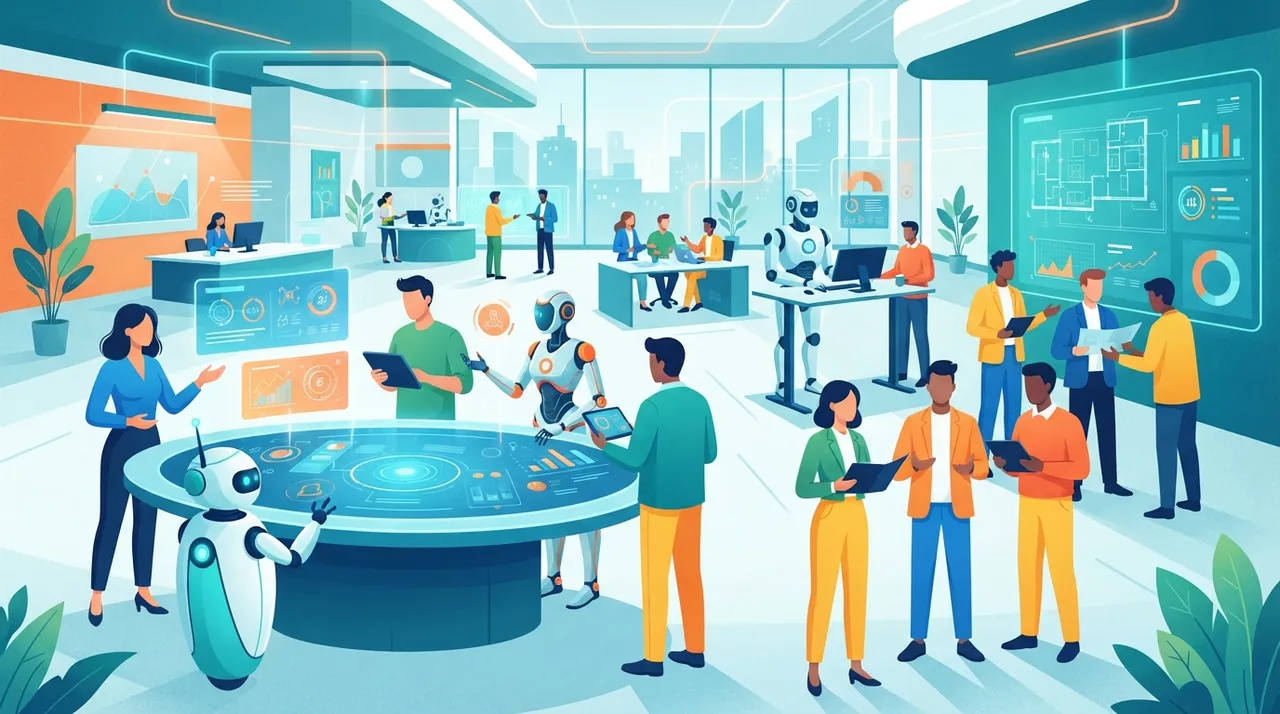
The rapid advancement of artificial intelligence (AI) has sparked widespread debate about its impact on the future of work. Many fear that AI will automate tasks currently performed by humans, leading to widespread job losses. However, a closer look reveals a more nuanced picture: AI is not just displacing jobs, but also creating new ones and fundamentally changing existing roles. The key to navigating this transformation lies in understanding these shifts and adapting proactively.
Understanding AI's Impact on the Job Market
AI's influence extends across various sectors, from manufacturing and customer service to healthcare and creative industries. Its primary impact is in automating repetitive, data-driven, and rule-based tasks. This automation can streamline processes, increase efficiency, and reduce operational costs for businesses. However, it also means that roles heavily reliant on such tasks are most susceptible to disruption.
- Automation of Repetitive Tasks: Jobs involving data entry, basic customer support, and assembly line work are increasingly being handled by AI and robotics.
- Augmentation of Human Capabilities: In many professional fields, AI acts as a powerful assistant, enhancing human productivity rather than replacing it. For example, AI tools can help doctors analyze medical images faster or assist lawyers in reviewing vast amounts of legal documents.
- Creation of New Roles: The development and deployment of AI technologies require new skill sets, leading to the emergence of roles such as AI engineers, data scientists, machine learning specialists, and AI ethics consultants.
Identifying High-Risk and High-Opportunity Sectors
Certain industries and job functions are more vulnerable to AI-driven automation than others. Conversely, some sectors are poised for significant growth due to AI integration.
Sectors at Higher Risk:
- Manufacturing and Production (repetitive physical tasks)
- Customer Service (basic query handling, chatbots)
- Data Entry and Administrative Support (data processing, scheduling)
- Transportation (autonomous vehicles)
Sectors with New Opportunities:
- Technology Development: AI research, software engineering, machine learning.
- Data Science and Analytics: Interpreting AI outputs, managing large datasets.
- Creative and Content Creation: AI assists in generating ideas, editing, and content optimization, but human creativity remains central.
- Healthcare: AI for diagnostics, drug discovery, personalized treatment plans, with human oversight.
- Education: Personalized learning platforms, administrative automation.
- AI Ethics and Governance: Ensuring responsible and fair AI development and deployment.
Adapting Your Skill Set for the AI Era
Proactive skill development is paramount to thrive in an AI-driven job market. Focus on acquiring skills that complement AI capabilities rather than competing with them.
- Critical Thinking and Problem Solving: AI can process data, but humans are needed to define problems, interpret complex results, and make strategic decisions.
- Creativity and Innovation: AI can generate content, but original ideas, artistic vision, and innovative solutions still require human ingenuity.
- Emotional Intelligence and Communication: Roles requiring empathy, negotiation, and complex interpersonal communication are difficult for AI to replicate.
- Digital Literacy and AI Proficiency: Understanding how to use AI tools effectively, even without deep technical knowledge, is becoming a fundamental skill. This includes prompt engineering for generative AI models.
- Adaptability and Lifelong Learning: The pace of technological change demands a commitment to continuous learning and a willingness to embrace new tools and methodologies.
Practical Steps for Career Resilience
- Assess Your Current Role: Identify tasks that are repetitive and potentially automatable. Think about how AI could assist you in your current duties.
- Learn AI Fundamentals: Take online courses or workshops to understand basic AI concepts and tools. Platforms like Coursera, edX, and Google AI offer accessible learning paths.
- Master Prompt Engineering: For generative AI tools, learning how to write effective prompts can significantly boost your productivity and value.
- Focus on Human-Centric Skills: Cultivate soft skills like leadership, teamwork, communication, and emotional intelligence.
- Network and Stay Informed: Engage with industry professionals, attend webinars, and follow reputable sources on AI trends to stay ahead.
- Explore AI-Powered Tools: Integrate relevant AI tools into your workflow to enhance efficiency and demonstrate your adaptability.
While the prospect of AI transforming the workforce can seem daunting, it also presents an unprecedented opportunity for individuals to reskill, upskill, and redefine their careers. By understanding the evolving landscape and strategically investing in relevant skills, you can not only safeguard your career but also position yourself for future success in the AI era.





Comments 0
No comments yet — be the first to share your thoughts.
Share your thoughts
To comment, sign in first — we email you a one-time code (no password). This keeps the discussion clean.
Sign in to comment →