
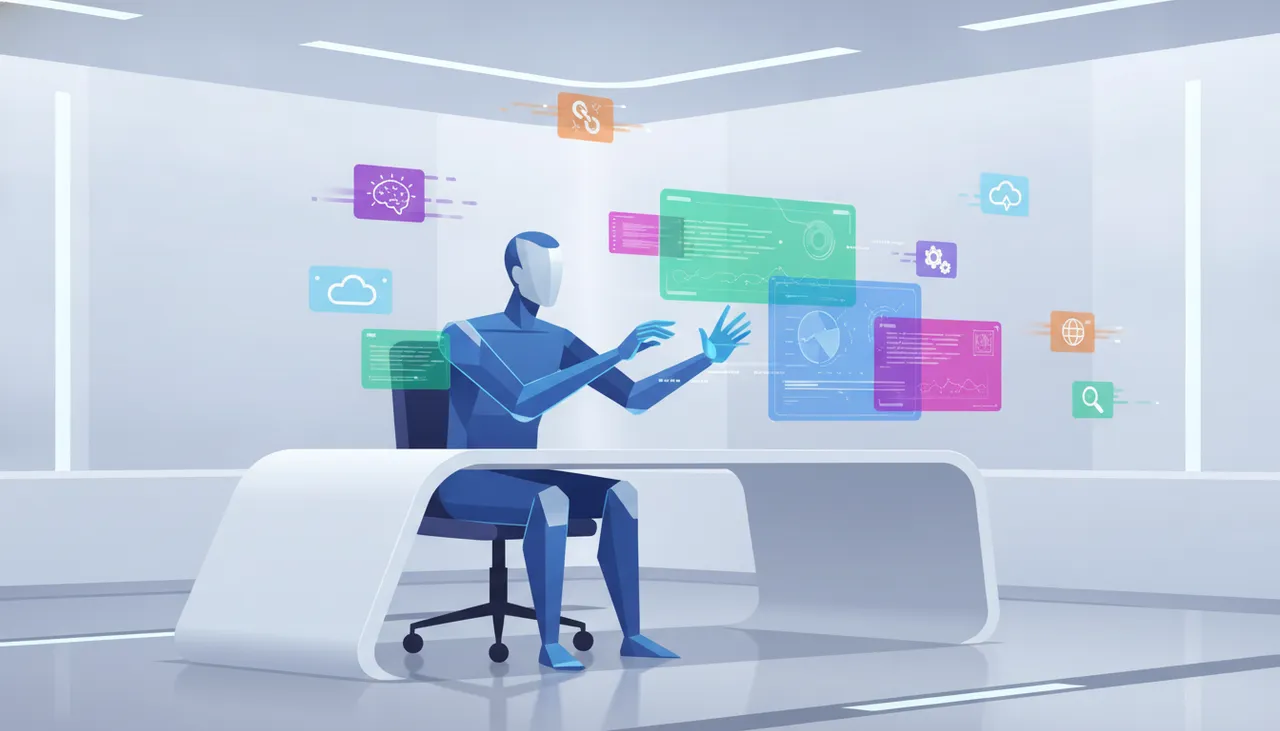
The past few years have witnessed an unprecedented surge in AI development, and by 2026, AI is no longer just a tool for answering questions or generating content. It has transformed into an 'autonomous agent' capable of executing complex tasks and taking actions on behalf of users. This evolution represents a paradigm shift in how we interact with technology, with profound implications for personal and professional productivity.
What's New
Autonomous AI agents are AI systems that don't just respond to commands; they take real actions in the digital world. These actions include browsing the web, using desktop software, sending emails, filling spreadsheets, and chaining multi-step workflows together without continuous human oversight for every click. We have moved past simple chatbots and are now seeing tools with persistent memory, distinct personalities, and the ability to initiate contact before being asked.
Key examples of this development in 2026 include:
- Pokee AI: Best for getting work done, it integrates with over 90 business tools, has persistent memory, scheduled automation, and content creation capabilities. It's an AI agent that acts, rather than just talks.
- Vellum: A personal AI assistant with persistent memory, its own identity, and proactive outreach across macOS, Telegram, and Slack.
- Notion AI: Adds an AI layer built directly into the Notion workspace, allowing users to draft content, summarize databases, answer questions across their documents, and automate repetitive formatting tasks.
- Microsoft Copilot: Deeply integrated with Microsoft 365, it can summarize long email threads, draft replies, and prioritize inboxes based on urgency signals.
- Google Gemini Advanced: Integrates directly with Gmail, Google Docs, Sheets, Slides, Calendar, and Drive, making it powerful for users whose professional lives run on the Google ecosystem.
Reports indicate that 80% of employees use AI tools at work, a 52% increase from two years ago, with the average time spent in AI tools increasing eightfold. The number of AI tools used by companies has also doubled from two in 2023 to seven in 2025.
Why It Matters
The importance of autonomous agents lies in their ability to significantly boost productivity and save users time. Instead of spending hours on routine and repetitive tasks, these tools can accomplish them efficiently and quickly, allowing individuals to focus on value-added and creative work. Studies show that AI drives 40% higher productivity growth in companies most exposed to it, compared to those least exposed. Over half of respondents (53%) in 2026 surveys stated that improved employee productivity was one of the biggest impacts of AI on business operations.
This shift is not limited to automation; it extends to redefining job roles and future skills. Human skills such as critical thinking, quality control of AI output, creativity, and empathy are becoming more crucial as AI takes over routine tasks. This means individuals who adopt these tools and learn how to direct and leverage them will be at the forefront of the future workforce. Companies investing in these technologies are also seeing an 88% increase in revenue and a reduction in costs.
To practically benefit from this trend, readers can start with the following steps:
- Identify Repetitive Tasks: Begin by identifying daily or weekly tasks that are time-consuming and can be automated. These might include email management, report generation, meeting scheduling, or data processing.
- Choose the Right Tool: Many AI tools are available, each with different strengths. For example, if you need an assistant to coordinate your schedule and protect your focus time, tools like Reclaim.ai or Motion might be ideal. If you extensively create content, Jasper AI or Claude could be excellent choices. For data analysis, tools like Power BI Copilot or Google Looker Studio can provide quick insights.
- Start with Pilot Usage: Don't hesitate to try free or trial versions of different tools. Start with one tool and gradually integrate it into your workflow. For instance, you can begin with the free ChatGPT for daily task automation or brainstorming assistance.
- Customize and Train the Tool: Leverage the customization features offered by these tools. Some allow you to feed them with your style, company data, or personal preferences to deliver more accurate and relevant outputs.
- Focus on Human Skills: While tools handle routine tasks, focus on developing your unique human skills such as strategic thinking, complex problem-solving, creative interaction, and overseeing AI's work.
- Evaluate Performance and Adapt: Regularly assess the tool's effectiveness in achieving your goals. Does it genuinely save time? Does it improve the quality of your work? Be prepared to adjust your usage or try new tools as your needs evolve.
The era of autonomous agents is not just a technological advancement; it's an invitation to rethink how we work and utilize our time. By intelligently adopting these tools, individuals and businesses can achieve unprecedented levels of efficiency and innovation.




Comments 0
No comments yet — be the first to share your thoughts.
Share your thoughts
To comment, sign in first — we email you a one-time code (no password). This keeps the discussion clean.
Sign in to comment →