
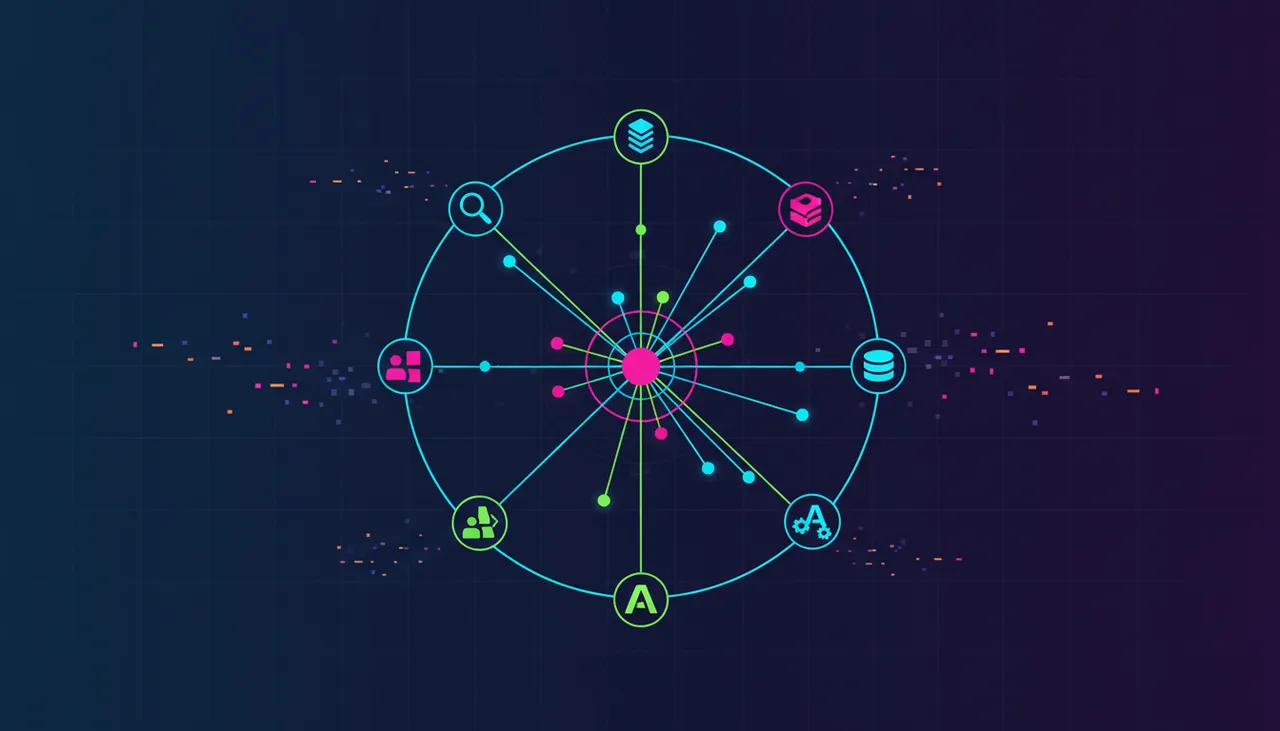
The world of artificial intelligence has witnessed a qualitative leap in recent years, surpassing the boundaries of Large Language Models (LLMs) focused on text generation and conversations. We are now on the verge of a new era, where these models are evolving into "AI Agents" capable of understanding goals, planning, using tools, and executing multi-step tasks autonomously. This development is not just an update; it's a fundamental shift in how we interact with software and data.
What's New
AI Agents are not just advanced chatbots. They are AI systems designed to operate semi-autonomously to achieve a specific objective. Unlike language models that await commands at each step, an AI agent can:
- Understand the overall goal: Instead of a specific question, it can grasp a general task like "Find the five best Italian restaurants in my city and compare their prices and reviews."
- Plan and execute: It breaks down the task into smaller steps, identifies appropriate tools (such as search engines, mapping apps, review sites), and then executes these steps.
- Interact with the environment: It can browse the internet, use Application Programming Interfaces (APIs) for other applications, and analyze the data it collects.
- Learn and adapt: Some advanced AI agents can learn from their mistakes and improve their performance over time.
Real-world examples are beginning to emerge, including AutoGPT, GPT-Engineer, and Devin. These tools, while still in their early stages and requiring some technical expertise to operate, offer powerful glimpses into the future. AutoGPT, for example, can be given a goal like "develop a marketing plan for a new product," after which it researches, analyzes, generates content, and even interacts with other tools to achieve the goal. Devin, recently announced, aims to be an autonomous AI software engineer, capable of writing, debugging code, and developing entire projects.
Why It Matters
This trend is gaining traction now for several key reasons:
- Maturity of Large Language Models: LLMs have become more powerful and capable of understanding context and inferential reasoning, giving AI agents a more sophisticated "brain."
- Availability of Tools and Platforms: Frameworks and libraries (such as LangChain and LlamaIndex) are now available, making it easier for developers to build and run these agents.
- Growing Demand for Automation: Businesses and individuals constantly seek to automate repetitive and complex tasks, and AI agents offer unprecedented solutions in this area.
- Overcoming Traditional UI Limitations: Instead of navigating multiple applications or interfaces, an AI agent can do so on behalf of the user, saving time and effort.
How the reader can benefit practically:
For anyone looking to explore and benefit from this field, here are some practical steps and tools:
- Basic AI Learning: Understanding how LLMs work and basic programming (like Python) will open many doors. Many free and paid online courses are available (Coursera, edX, Udacity).
- Explore Frameworks: Start by getting acquainted with frameworks like LangChain or LlamaIndex. These frameworks provide tools for building AI agents and connecting them to various data sources and external tools.
- Experiment with Open-Source AI Agents: Try tools like AutoGPT or GPT-Engineer. These tools often require technical setup but offer a direct experience of their capabilities.
- Identify Automatable Tasks: Think about repetitive tasks in your work or personal life that involve searching, comparing, or interacting with multiple tools. These are ideal tasks for AI agents to handle.
- Start Small: Don't try to build a complex system all at once. Begin with a simple AI agent that performs one specific task, then gradually expand it.
- Stay Updated: This field is evolving rapidly. Follow tech blogs, conferences, and social media platforms to stay informed about the latest tools and techniques.
The rise of AI agents represents a pivotal moment in our journey with artificial intelligence. By understanding and embracing this technology, we can unlock new horizons for productivity and innovation, transforming the way we work and interact with the digital world.






Comments 0
No comments yet — be the first to share your thoughts.
Share your thoughts
To comment, sign in first — we email you a one-time code (no password). This keeps the discussion clean.
Sign in to comment →