
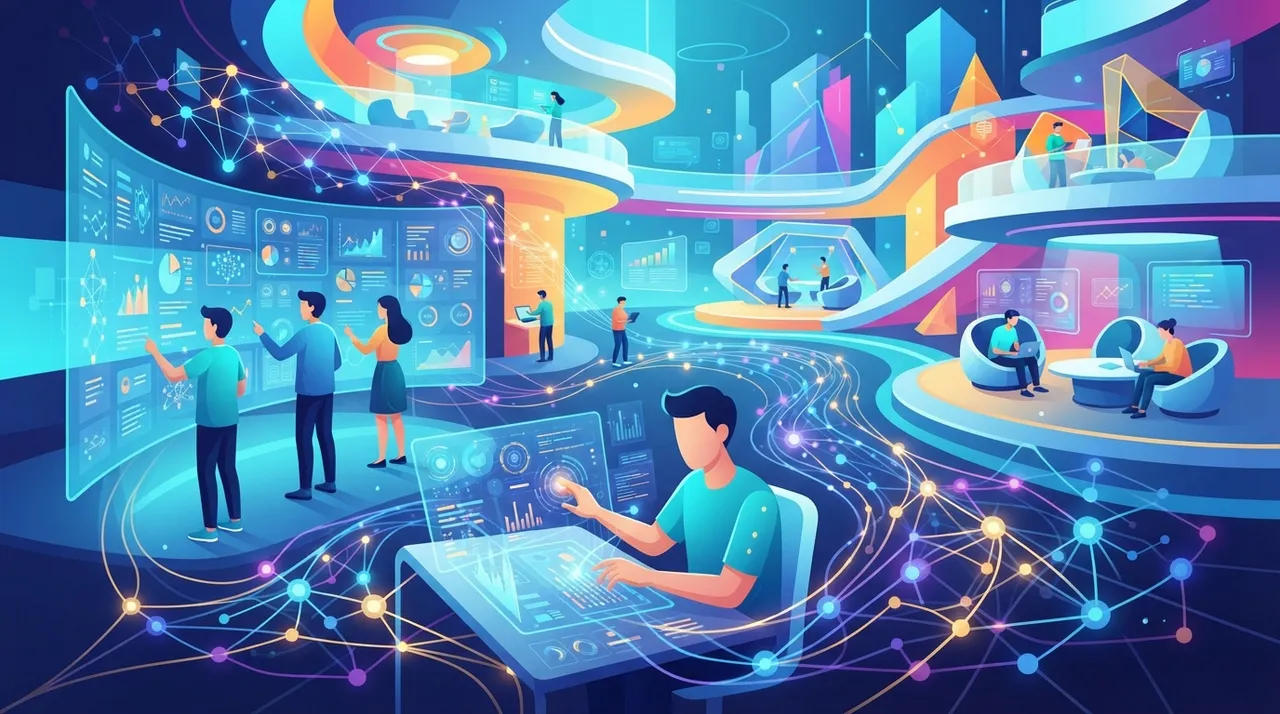
The landscape of professional development is constantly evolving, and in 2026, Artificial Intelligence (AI) stands as a pivotal force reshaping how we acquire knowledge and skills. No longer just a futuristic concept, AI is now an indispensable partner in personalized education, offering tools that adapt to individual learning styles, accelerate comprehension, and provide targeted feedback. For professionals aiming to stay competitive and drive growth, understanding how to harness AI in their learning journey isn't just an advantage—it's a necessity.
The AI Revolution in Personalized Learning
Traditional learning methods often follow a one-size-fits-all approach, which can be inefficient for individuals with diverse backgrounds and learning paces. AI changes this by enabling hyper-personalization. Think of it as having a dedicated tutor, curriculum designer, and knowledge manager, all powered by algorithms.
- Adaptive Learning Paths: AI platforms can analyze your current knowledge, identify gaps, and then recommend specific content, exercises, or projects that address those weaknesses directly. This ensures you spend time on what you actually need to learn, not what you already know.
- Intelligent Content Curation: AI sifts through vast amounts of information—articles, videos, research papers—to present you with the most relevant and high-quality resources tailored to your learning objectives. This saves immense time otherwise spent searching.
- Real-time Feedback and Assessment: AI tools can provide immediate feedback on your performance, whether it's coding, writing, or problem-solving. This instant validation or correction loop dramatically shortens the time it takes to grasp new concepts and correct errors.
Practical AI Tools for Enhanced Learning
Integrating AI into your learning routine doesn't require advanced technical skills. Many user-friendly platforms are available today that can significantly boost your learning efficiency.
- AI-Powered Language Learning Apps: Tools like Duolingo (though not the focus, it's an example of AI in language learning) or more advanced professional language platforms use AI to adapt lessons, practice pronunciation, and simulate real conversations, making language acquisition faster and more contextual.
- Generative AI for Content Summarization and Explanation: Large Language Models (LLMs) can summarize lengthy articles, textbooks, or research papers into concise points. They can also explain complex topics in simpler terms or from different perspectives, making difficult concepts more accessible.
- Code Assistants and Debuggers: For those in tech fields, AI tools integrated into Integrated Development Environments (IDEs) can suggest code snippets, identify bugs, and even explain complex algorithms, drastically speeding up the learning curve for new programming languages or frameworks.
- Virtual Lab Environments and Simulations: AI drives realistic simulations in fields like engineering, medicine, or finance, allowing professionals to practice complex procedures or test theories in a risk-free virtual environment.
Strategies to Maximize Your Learning with AI
Leveraging AI effectively in your learning journey requires a strategic approach. It's not just about using the tools, but integrating them intelligently into your workflow.
- Define Clear Learning Objectives: Before diving into AI tools, clearly articulate what you want to learn and why. This helps AI tools narrow down relevant content and paths.
- Combine AI with Active Learning: Don't just consume content passively. Use AI to generate practice questions, create flashcards, or simulate scenarios that require active problem-solving.
- Utilize AI for Knowledge Retention: Employ AI-powered spaced repetition systems to review information at optimal intervals, ensuring long-term memory retention.
- Seek AI-Generated Feedback: Actively look for platforms that offer constructive criticism on your work, be it a written report, a presentation, or a coding project.
- Stay Updated on AI Advancements: The AI landscape is dynamic. Regularly explore new AI tools and features that emerge, as they can offer even more efficient learning opportunities.
The role of AI in education is transforming how professionals approach skill development and knowledge acquisition. By strategically adopting AI-powered tools and methodologies, you can not only accelerate your learning process but also achieve a deeper, more personalized, and highly effective educational experience. This ultimately translates into tangible career advantages and sustained professional growth in the competitive market of 2026 and beyond.



Comments 0
No comments yet — be the first to share your thoughts.
Share your thoughts
To comment, sign in first — we email you a one-time code (no password). This keeps the discussion clean.
Sign in to comment →