
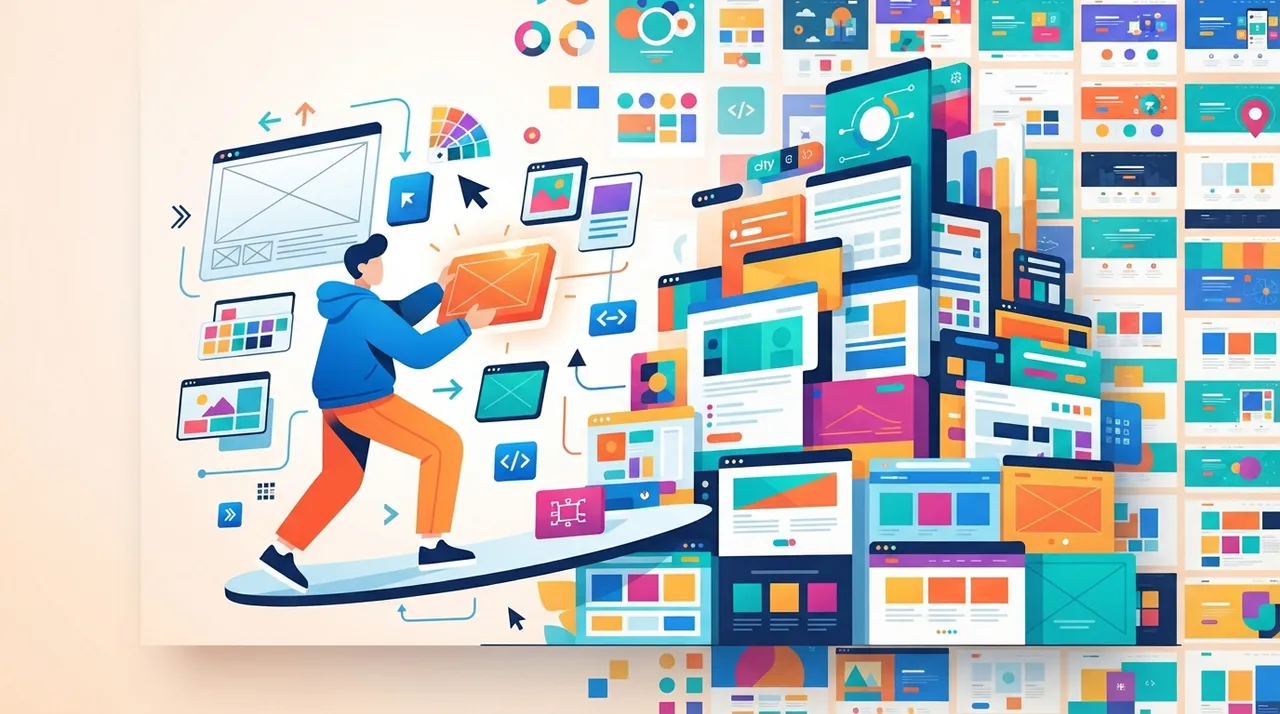
What it is
The phrase “I gave 170 websites their 2019 design” refers to a project or initiative that involved redesigning or updating 170 websites to align with the aesthetic and functional trends prevalent in 2019. In the context of web design, 2019 was a significant year that saw notable developments in user interfaces (UI) and user experience (UX), where concepts such as Minimalism, Bold Typography, the use of Micro-animations, Grid Layouts, and Responsive Design became established as core standards. This project is essentially an extensive gallery or case study showcasing how these principles were applied to a diverse range of websites, providing a rich source of inspiration and analysis for designers, developers, and entrepreneurs alike.
The goal of this initiative extends beyond merely changing the visual appearance; it also encompasses improving user interaction, enhancing content clarity, and elevating the digital professionalism of the websites. For example, in 2019, there was a strong emphasis on fast website performance, full compatibility with mobile devices, the use of subdued and gradient colors, and the integration of interactive elements that made browsing more enjoyable and seamless. Therefore, looking at 2019 designs means exploring a specific period of web design innovation, many principles of which remain relevant even in 2026, especially concerning the fundamentals of good user experience.
Key benefits
- Rich Source of Inspiration: The project provides a vast bank of design ideas and concepts applied to various scenarios, helping designers overcome creative blocks and explore new solutions for their projects. It allows for the analysis of how different types of content and audiences are addressed.
- Understanding Design Trends: It clearly illustrates the prevailing trends of 2019, such as the use of white space, clean lines, flexible layouts, and multimedia integration. This helps in understanding how aesthetic and functional standards evolve over time.
- Analysis of Best Practices: The project allows for the study of how user experience (UX) and user interface (UI) principles are effectively applied in real-world contexts, offering valuable insights into what succeeds and what fails in attracting and retaining users.
- Benchmark for Comparison: Website owners can use this collection as a benchmark to compare their current website designs and assess their modernity and effectiveness, aiding in informed decisions regarding future updates.
- Time and Effort Saving: Instead of starting from scratch, designers and developers can leverage these examples as mental templates or starting points, reducing the time spent on the initial research and planning phase of a project.
How to use it
For a freelancer or entrepreneur, this project can be a valuable tool to increase productivity and income by enhancing web design offerings and services. Let’s assume you are an independent web designer or the owner of a small design agency. You can leverage this collection of designs in several practical ways:
- Update Your Portfolio and Offerings: Review these designs to integrate 2019 design elements and techniques into your current portfolio. If your portfolio reflects older designs, updating it with these styles can make it more appealing to new clients seeking a modern and reliable aesthetic. You can also formulate new service packages focusing on "updating websites to 2019 standards and beyond."
- Inspiration for Client Projects: When working with a new client, you can use these designs as inspiration for creating mood boards or prototypes. Instead of trying to imagine what the client wants from scratch, you can ask them to point out elements or styles they like from this collection, which simplifies the requirements definition process and reduces review time. This increases your work efficiency.
- Identify Marketing Opportunities: Look for businesses whose websites still appear outdated or unresponsive. You can use examples from the 2019 project to show them how modern design can improve their digital presence and user experience. You can offer design consultations that highlight the importance of staying current with the latest trends to increase conversions and sales.
- Improve Your Own Website: If you have a personal website or a website for your startup, use these designs as a guide to update its appearance. A website with a modern, attractive design reflects your professionalism and attracts more potential clients, increasing your chances of securing new projects or expanding your business scope.
- Develop Your Skills: Analyze the different designs to understand the decisions made by the designers. What color palette was used? How was the content organized? Which fonts were chosen? This analysis enhances your understanding of good design principles and helps you refine your own design skills.
Smart use tip
Don't just browse the designs; dissect and analyze them deeply. Choose 3-5 designs that you particularly like and take notes on their core elements: colors, fonts, layout, use of images/illustrations, and how users interact with them. Try to understand "why" each design is effective. Use these notes as mental templates or "frameworks" to apply to your future projects, always adapting to fit specific client requirements and brand identity. This way, you won't just be a consumer of inspiration, but a smart analyst and implementer of design concepts.

Comments 0
No comments yet — be the first to share your thoughts.
Share your thoughts
To comment, sign in first — we email you a one-time code (no password). This keeps the discussion clean.
Sign in to comment →