
What it is
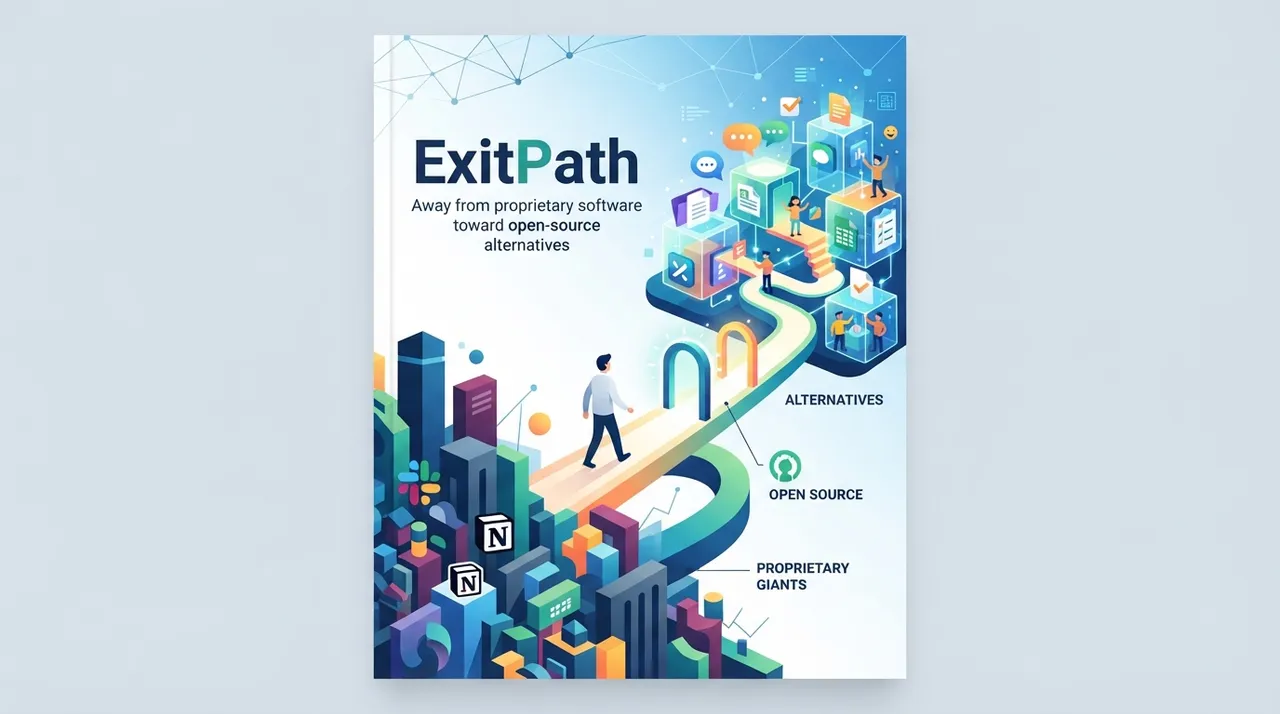
ExitPath is an open-source initiative designed to empower individuals and businesses to transition smoothly from proprietary commercial platforms – such as Slack for communication, Notion for knowledge and project management, and Microsoft 365 for office productivity – to open-source alternatives. The project goes beyond merely listing alternatives; it provides detailed guides and action plans to help you assess your needs, select appropriate tools, and execute the migration process efficiently. ExitPath focuses on delivering sustainable solutions that give you full control over your data and infrastructure, while maintaining high levels of productivity and collaboration. It's a comprehensive strategy that allows you to break free from recurring subscription fees, security risks associated with third-party reliance, and limitations on customizing tools to fit your specific requirements.
ExitPath delves into various aspects, including data migration, best practices for team training, identifying essential features, and how to build an integrated work environment using a suite of open-source tools. For instance, instead of Slack, it might suggest moving to Matrix (with the Element interface) or Rocket.Chat. Notion could be replaced by Obsidian or Logseq for notes, Nextcloud Deck for task management, or even open-source Wiki solutions like MediaWiki or BookStack for complex documentation. For Microsoft 365, the Office suite can be replaced by LibreOffice or OnlyOffice, email by Postfix or Dovecot with a web interface like Roundcube, and cloud storage by Nextcloud. This process requires careful planning, and ExitPath provides the necessary framework for that planning.
Why it helps
- Complete Data Control and Privacy: By using open-source solutions, your data becomes entirely your own, and can be hosted on your private servers. This reduces security risks, ensures the privacy of your information, and frees you from data usage policies imposed by major corporations.
- Long-Term Cost Savings: While some open-source solutions may require an initial investment in setup and maintenance (especially if you opt for self-hosting), they eliminate recurring subscription fees, leading to significant cost savings for businesses and individuals in the long run.
- Flexibility and Customization: Open-source tools allow you to modify and adapt them to meet your specific needs precisely. You can add features, integrate them with other systems, or even change their interface to match your brand identity, which is not possible with proprietary software.
- Community and Support: Many open-source projects benefit from active and large communities of developers and users. This provides a valuable source of support and assistance, ensuring the continuous development and improvement of tools through collective contributions.
- Avoid Vendor Lock-in: By transitioning to open-source solutions, you avoid complete reliance on a single vendor, giving you greater freedom to choose and change tools and services without facing significant difficulties in data migration or compatibility.
How to get value
- Build a Cost-Free Operating Environment: Suppose you are an entrepreneur running a small startup or a freelancer offering consulting services. You can use ExitPath guidelines to create an integrated work environment using open-source tools. For instance, instead of paying monthly subscriptions for Slack, Notion, and Microsoft 365, you can set up Rocket.Chat for instant communication, Nextcloud for shared files and documents, and Joplin for note-taking and task management. This frees you from the burden of escalating subscriptions as your team grows, allowing you to reallocate those funds towards marketing or product development, thereby boosting your business's profitability.
- Full Control Over Client and Project Data: If you work in a field requiring high data privacy, such as legal or financial consulting, relying on open-source solutions allows you to host all client and project data on your private servers. This minimizes the risk of breaches or unauthorized access by third parties and enhances client trust in your ability to protect their sensitive information, potentially opening doors to business opportunities that demand the highest security and privacy standards.
- Customize Tools to Meet Unique Client Requirements: Imagine you are a web developer or graphic designer, and a client requests a custom content management system or dashboard. Instead of trying to adapt a limited commercial tool, you can use ExitPath guidelines to select open-source tools (like WordPress CMS or Baserow as an open-source database) and fully customize them to precisely meet the client's needs. This ability for complete customization gives you a competitive edge, allowing you to offer unique and unrestricted solutions, thus increasing the value of your services and consequently your income.
- Build Supportive Communities Around Your Products or Services: If you are building a product or service, using open-source tools for community and communication (like Discourse for forums or Matrix for chat) can help you build a strong community around your offerings. These platforms give you the freedom to control community rules and fully customize the user experience, fostering loyalty and creating a mutual support environment for customers, which is crucial for your business growth.
- Leverage Tool Flexibility to Offer New Services: As a technology expert or consultant, you can become specialized in helping other businesses transition to open-source solutions. Having gone through this process yourself thanks to ExitPath, you can offer valuable consulting services to help them assess their needs, select the right tools, and train their teams to use them. This adds a new and profitable income stream to your business, expanding your service offerings.
Smart Usage Tip:
Start small and gradually. Do not attempt to replace all your proprietary tools at once. Choose one tool (e.g., Slack) and find an open-source alternative that perfectly fits your needs. Test it with a small team or for a single project first. Once you master the alternative and ensure its effectiveness, you can gradually expand to other tools. This approach minimizes risks and ensures a smooth and successful transition without disrupting your workflow.




Comments 0
No comments yet — be the first to share your thoughts.
Share your thoughts
To comment, sign in first — we email you a one-time code (no password). This keeps the discussion clean.
Sign in to comment →