
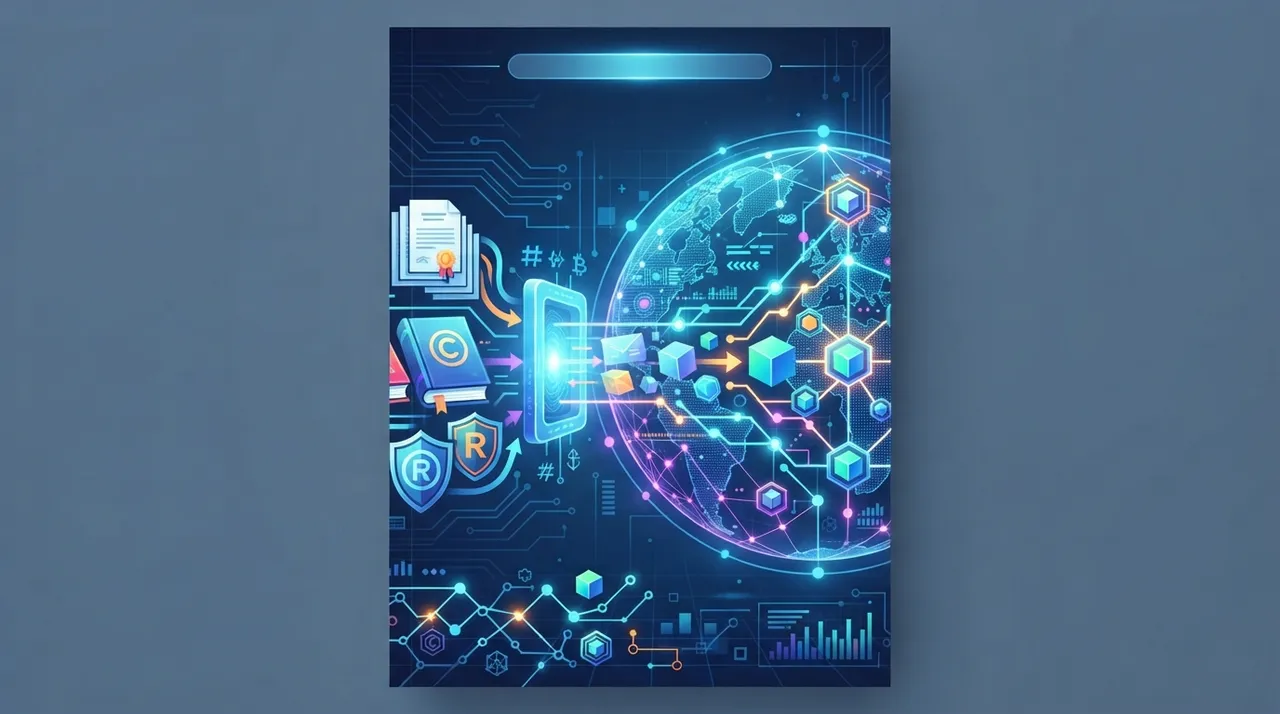
Intellectual property (IP)—including patents, copyrights, and trademarks—has historically been a multi-trillion-dollar asset class, yet highly illiquid. It has been locked within complex legal frameworks and accessible only to large corporations and specialized investors. However, this is changing with the emergence of “Intellectual Property Tokenization” as an innovative solution promising to bring liquidity and transparency to these valuable assets.
What's New: IP Becomes Digital Assets
IP tokenization refers to the process of representing intellectual property rights as unique digital tokens on a blockchain. These tokens, often structured as Non-Fungible Tokens (NFTs), act as programmable containers for the legal ownership and rights associated with the underlying IP asset. This model transforms IP from a static asset managed through fragmented and inaccessible offline paperwork into a dynamic financial instrument. Traditionally, transferring or licensing a patent can take months and involve significant legal fees. With tokenization, ownership can be transferred in minutes, and licensing is automated through smart contracts and oracle networks.
Why It Matters: Liquidity, Funding, and Transparency
This trend is gaining traction now for several key reasons:
- Increased Liquidity and Global Access: IP tokenization enables the fractional ownership of assets, allowing a broader pool of investors to participate in IP-backed securities. This transforms illiquid patents, copyrights, and trademarks into tradable digital assets. The market for tokenized real-world assets has grown from $5.42 billion in 2025 to $19.32 billion by Q1 2026, indicating significant growth.
- New Financing Models: Tokenized IP can be used as collateral for financing, unlocking new capital streams for innovation. For example, a small biotech firm with a promising patent but lacking the millions needed for clinical trials could tokenize the patent and sell fractional ownership to accredited investors.
- Streamlined and Automated Rights Management: Smart contracts ensure real-time, transparent royalty distribution to token holders. This reduces administrative effort and improves transparency in royalty management.
- Enhanced Transparency: Immutable blockchain records provide unalterable proof of IP creation and ownership, reducing disputes and increasing trust.
Real-World Examples:
- Patents & R&D Commercialization: Pharmaceutical and biotech firms can tokenize drug patents, allowing investors to participate in drug development financing. In 2021, IBM and IPwe announced a platform to represent corporate patents as NFTs using IBM's enterprise blockchain network, aiming to make patent marketplaces more efficient.
- Creative Rights & Royalties: Musicians, artists, and film studios can tokenize copyrights or revenue streams, enabling direct revenue sharing with investors. An example is TokenTraxx, which uses Polymesh for tokenizing music rights.
- Technology Licensing: Software developers can tokenize software licenses, allowing companies to purchase and resell access on-chain.
How Readers Can Benefit (Tools/Steps):
To leverage IP tokenization, consider the following steps:
- IP Assessment: Identify the IP assets you wish to tokenize (patents, copyrights, trademarks). Verify their ownership and potential commercial value.
- Legal Consultation: Ensure that the tokenized IP rights are clearly registered and protected under existing IP laws to guarantee authenticity, ownership, and legal protection.
- Blockchain Platform Selection: Choose a suitable blockchain network (e.g., Ethereum, Polygon) that supports the issuance of NFTs or security tokens.
- Smart Contract Creation: Develop smart contracts that explicitly outline IP rights, royalty shares, and licensing terms.
- Token Issuance and Distribution: Once tokens are designed and issued, they can be sold privately or publicly through regulated tokenization platforms.
- Post-Issuance Management: Manage the tokenized IP, including royalty distribution and ownership changes, through smart contracts.
IP tokenization represents a structural shift in how intangible assets are managed and commercialized. As technological and regulatory infrastructures continue to be built, tokenized IP is expected to become an essential part of investment portfolios, opening new markets for innovation and financing.



Comments 0
No comments yet — be the first to share your thoughts.
Share your thoughts
To comment, sign in first — we email you a one-time code (no password). This keeps the discussion clean.
Sign in to comment →