
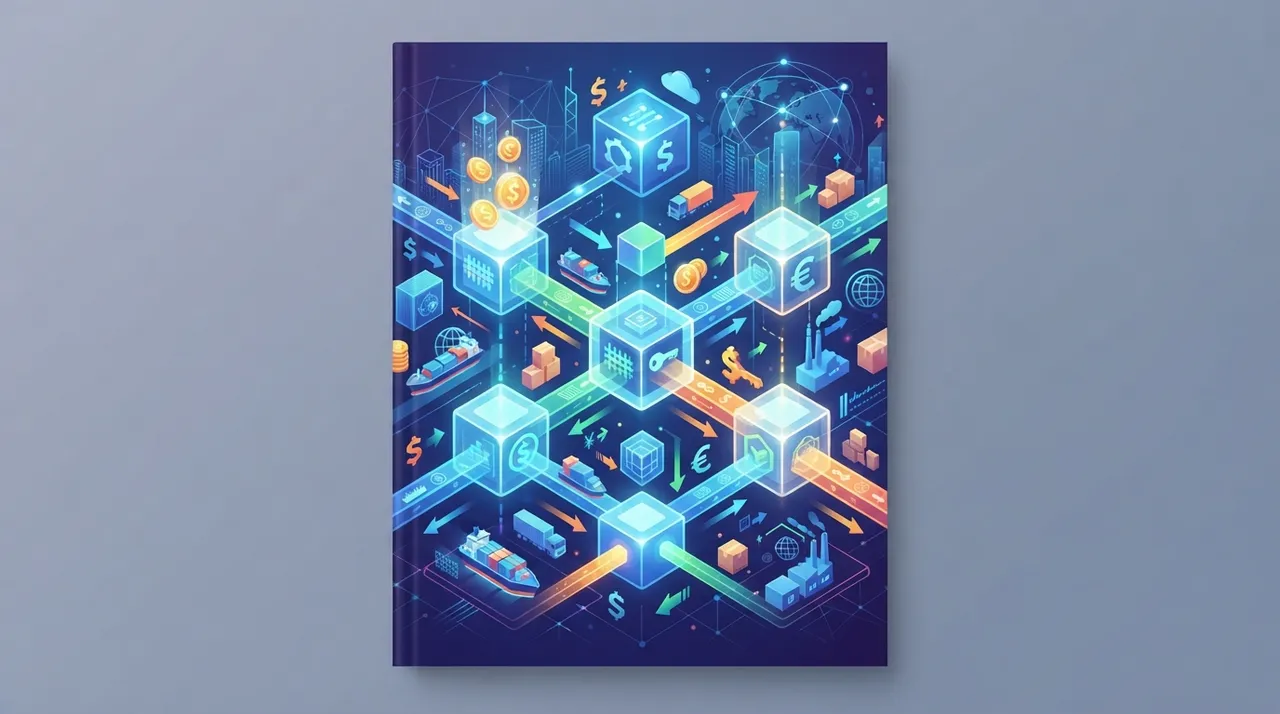
Blockchain technology has transcended its origins in cryptocurrencies to become a fundamental driver of digital transformation within major tech companies. In 2026, companies are no longer questioning the potential of this technology but rather how to effectively integrate it to achieve tangible business value. As global spending on enterprise blockchain grows, challenges highlight the importance of focusing on practical applications and measurable outcomes.
What's New
2026 has seen a significant shift in how big tech companies view blockchain; it's no longer just a promising technology, but an integral part of their service infrastructure. Projections estimate global spending on enterprise blockchain to reach $19.9 billion in 2026. This evolution focuses on integrating blockchain into existing systems rather than building entirely new networks.
A prominent development this year is the adoption of blockchain by major corporations and financial institutions in their core operations. For instance, the Depository Trust & Clearing Corporation (DTCC) settled real U.S. stock and bond trades using blockchain with over 30 financial firms in July 2026. JPMorgan's Onyx platform, now known as Kinexys, processes over $7 billion daily in institutional payments. SWIFT is also moving towards launching a blockchain-based cross-border payment framework, with over 25 banks participating in its first production phase by March 2026.
These examples illustrate blockchain's crucial role in areas like supply chain traceability, where it provides a tamper-proof ledger to track products from origin to final delivery, reducing risks of counterfeiting and mislabeling. The blockchain supply chain market is projected to reach $3.3 billion by 2026. Blockchain is also gaining importance in digital identity and the tokenization of real-world assets (RWA), which converts physical assets into tradable digital tokens.
Why it Matters
The significance of this trend lies in blockchain's ability to solve real problems faced by large corporations, such as enhancing transparency, improving operational efficiency, and mitigating risks. Previously, 77% of blockchain pilot projects failed to reach production. However, with major companies now adopting the technology in their core operations, we are witnessing a shift from theoretical promises to tangible business value.
For the reader, this means current innovations enable: streamlined cross-border financial transactions with instant settlement and reduced costs; guaranteed product authenticity and precise tracking, benefiting both consumers and businesses in combating fraud; and facilitated access to investment in large assets through tokenization, opening new markets for individual investors.
To practically leverage this trend, companies can start by assessing vulnerabilities in their supply chains or payment processes that can be improved with transparency and automation. They can then seek specialized blockchain development companies to build robust ledger systems that integrate with existing Enterprise Resource Planning (ERP) systems. Available tools include platforms like Hyperledger Fabric, which provides a strong infrastructure for enterprise blockchains, as well as tokenized payment solutions offered by companies like Mesh, which works to connect fragmented payment systems in the crypto world, enabling seamless transactions across different blockchains. Adopting standards such as ISO 20022 for financial data is also a crucial step towards enhancing interoperability between various networks.
Integrating blockchain is not just a technological upgrade, but a business strategy aimed at building more resilient, secure, and efficient systems, placing companies at the forefront of innovation in the competitive landscape of 2026.






Comments 0
No comments yet — be the first to share your thoughts.
Share your thoughts
To comment, sign in first — we email you a one-time code (no password). This keeps the discussion clean.
Sign in to comment →