
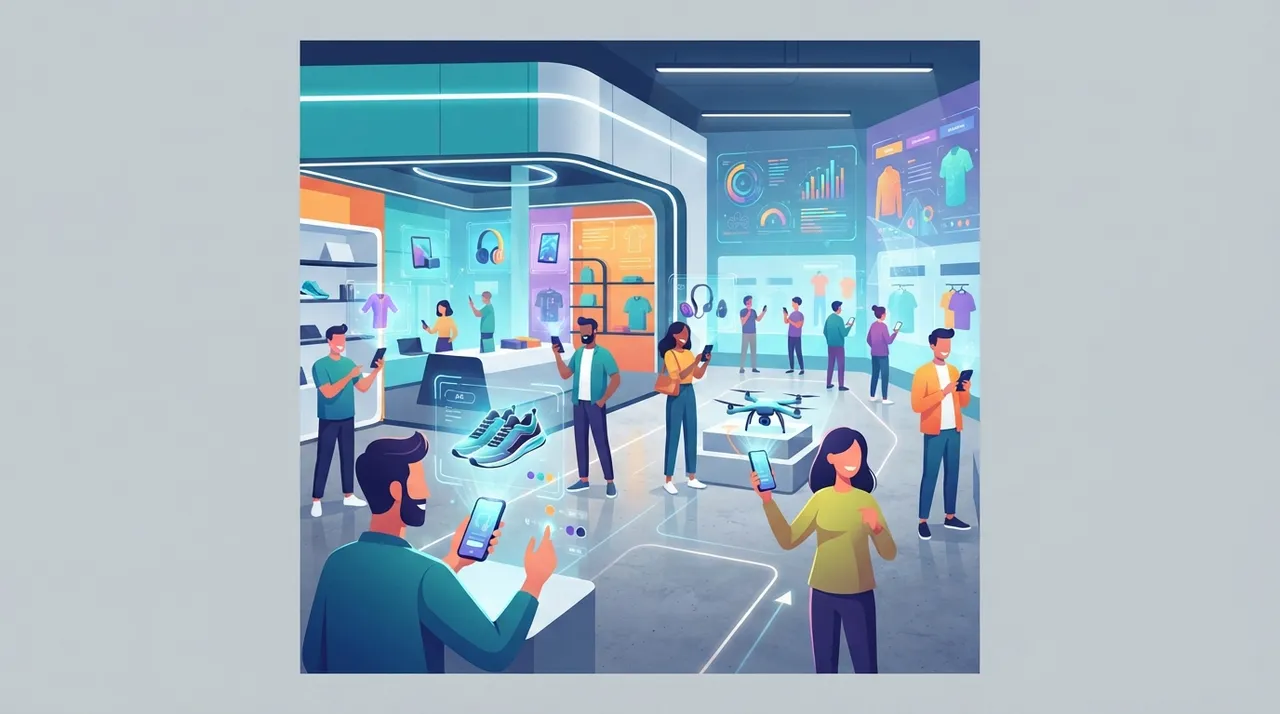
With the accelerating pace of digital transformation, tech companies are increasingly focusing on delivering immersive and personalized experiences to consumers. In 2026, augmented reality is no longer just an added feature, but a cornerstone of modern retail strategies that directly impact conversion rates, customer satisfaction, and return management.
What's New
Augmented Reality (AR) has undergone significant development, transforming from a niche experimental technology into a critical competitive advantage in e-commerce and the retail sector as a whole. In 2026, customers no longer need to imagine how a product will look in their home or on them; they can see it realistically in 3D. The AR in e-commerce market was valued at approximately USD 5.9 billion in 2024 and is projected to reach USD 8.3 billion by 2025, with expectations to climb to USD 38.5 billion by 2030, representing a compound annual growth rate (CAGR) of 35.8% from 2025 to 2030. This makes it one of the fastest-growing segments within the broader e-commerce and retail technology landscape. Global AR retail revenue is projected to reach $12 billion in 2026. Moreover, 86% of brands report that AR directly drives new sales channels.
Why it Matters
Augmented Reality is a powerful tool for retailers for several key reasons:
- Enhanced Engagement: AR can create an interactive and engaging shopping experience that keeps customers more invested in the purchasing process. This technology allows consumers to visualize products in their own environments, reducing uncertainty and increasing the likelihood of a purchase.
- Reduced Return Rates: One of the most compelling reasons retailers are prioritizing AR implementation is its dramatic impact on product returns. Shopify reports a 40% decrease in returns from 3D visualization, while SeekXR documents a 25% decrease in returns from AR-guided purchases. Build.com achieved a 22% lower return rate for shoppers using AR product visualization.
- Increased Sales and Conversions: AR contributes to increased customer confidence, leading to higher conversion rates. Some studies indicate that AR usage can boost sales by up to 40% in markets like Kuwait and the UK.
- Personalized Shopping Experience: AR can provide a personalized shopping experience, allowing customers to virtually try on products on themselves or in their own spaces. For instance, virtual try-on apps for clothing allow shoppers to try on garments on their bodies, or see how a piece of furniture would look in their room.
Real-World Examples:
- IKEA Place: The IKEA Place app allows users to scan their rooms with LiDAR technology to create a 3D replica, then place virtual furniture within it to visualize how it would look and fit the space.
- Google Shopping: Google Shopping has expanded its AI-powered virtual try-on feature to help shoppers see apparel on a wider range of models and improved the realism of how garments appear in a full look.
- Sephora: Sephora enables customers to virtually try on makeup using AR, helping them choose the right colors and products for their skin.
- Warby Parker: Warby Parker is a pioneer in virtual glasses try-on using face AR technology.
How to Implement it Practically (Tools/Steps):
To leverage AR in your business, you can follow these steps:
- Identify Benefiting Categories: Categories such as fashion and beauty, and furniture and home goods (including paint and wallpaper), are among the most beneficial for AR technology.
- Choose the Right Approach: You can choose between web-based AR (WebAR) which doesn't require an app download, or native apps which offer a more in-depth experience. WebAR is preferred for broader reach due to the no-download requirement.
- Utilize 3D Content Creation Tools: You will need 3D models of your products. There are specialized companies for creating these models, or you can use tools like Angle 3D AR to integrate them into your e-commerce store.
- Integrate with E-commerce Platforms: Many e-commerce platforms, such as Shopify, offer AR apps and features that make it easy for merchants to integrate this technology into their stores.
- Focus on User Experience: The AR experience should be user-friendly and provide clear instructions.
Augmented Reality is a true conversion engine in the retail sector, and companies that adopt this technology now can gain a significant competitive advantage and enhance customer loyalty in an ever-evolving market.







Comments 0
No comments yet — be the first to share your thoughts.
Share your thoughts
To comment, sign in first — we email you a one-time code (no password). This keeps the discussion clean.
Sign in to comment →