
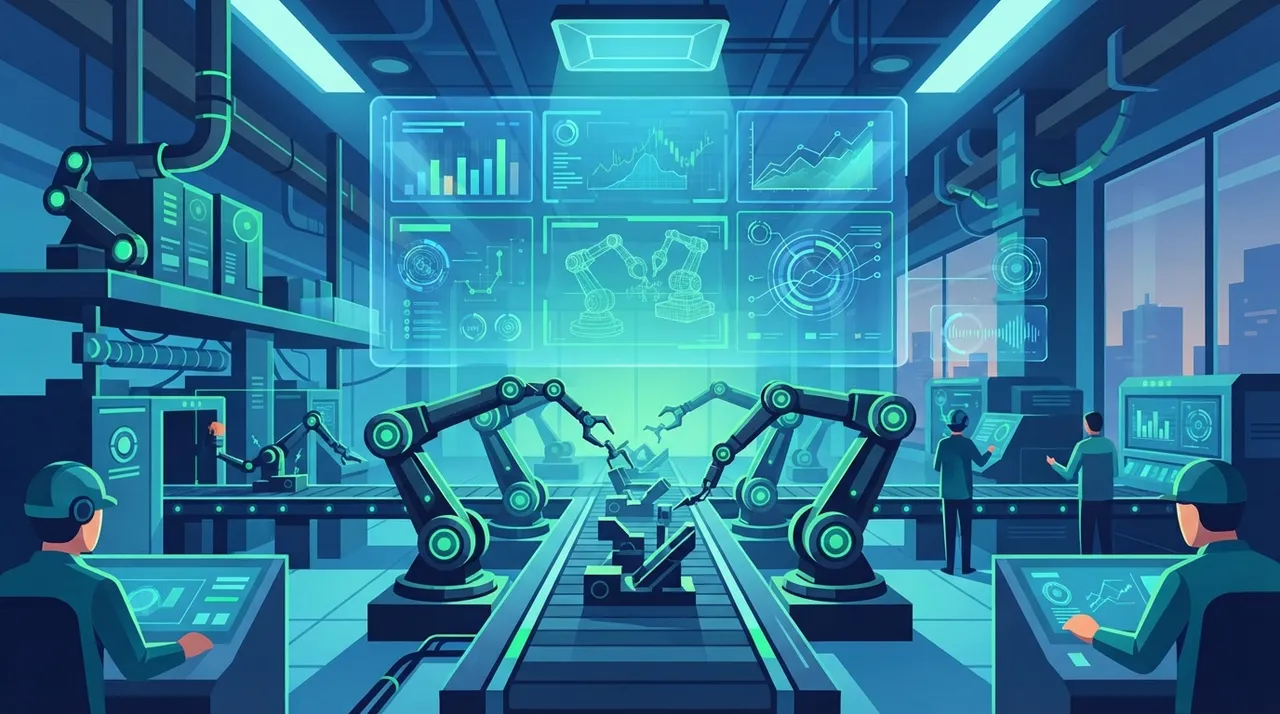
As of 2026, digital twins are no longer a mere scientific concept; they have become an essential tool for companies seeking to optimize their operations and make smarter decisions. These virtual models, which represent real-world systems, products, or processes, continuously receive data from connected sensors, enabling companies to simulate scenarios and predict problems before they occur in reality.
What's New
Digital twins have undergone significant evolution in 2026, transitioning from laboratory experiments to standard solutions across various industries. The digital twin market is growing rapidly, projected to reach approximately $180 billion by 2030, with a compound annual growth rate close to 38%. Industries heavily reliant on equipment, such as automotive, aerospace, electronics, and energy, are leading the adoption, with over 70% of manufacturers in these sectors either piloting or actively using digital twins.
Digital twins are now integrated with AI, IoT, and cloud computing to create dynamic virtual models capable of predicting failures, optimizing production, and testing changes virtually. This live connection transforms decision-making from reactive to predictive. For instance, smart factories can use these twins to monitor equipment health, identify bottlenecks, and improve operational efficiency.
A notable development in 2026 is the emergence of “Executable Digital Twins” (xDTs), which can run as standalone software outside traditional engineering tools. These xDTs allow engineers to monitor systems and predict future breakdowns, helping to plan downtime, identify bottlenecks, and make informed decisions about maintenance procedures.
Why It Matters
Digital twins offer practical and tangible benefits to businesses, making them a crucial investment in today's competitive landscape:
- Reduced Unplanned Downtime: Companies using digital twins can reduce unplanned downtime by up to 65%, saving substantial amounts of money in industries where a single hour of downtime can cost hundreds of thousands of dollars.
- Improved Operational Efficiency: Digital twins provide real-time visibility into production, identify bottlenecks, and run simulations to find optimal process parameters. This leads to better scheduling, reduced scrap rates, and increased throughput.
- Cost Savings: Digital twins significantly reduce costs through predictive maintenance, cutting repair and operational expenses. They also contribute to lower capital expenditures by extending the lifespan of existing equipment.
- Accelerated Innovation: Manufacturers can simulate production processes before launching new products, reducing waste and accelerating innovation. They can also be used to test various scenarios and train employees without risking actual operations.
- Enhanced Quality: Through continuous monitoring and analysis, digital twins help improve product quality and ensure compliance with specifications.
How Readers Can Practically Benefit (Tools/Steps):
To leverage digital twins, companies can follow these steps:
- Identify Critical Assets or Processes: Start by identifying the most critical components or complex processes in your operation that would benefit from continuous monitoring and optimization.
- Implement IoT Sensors: Equip these assets with IoT sensors to collect real-time data on performance, temperature, pressure, and other relevant variables.
- Choose a Digital Twin Platform: Several specialized digital twin platforms offer tools for simulation, analysis, and prediction. Look for a platform that integrates with your existing systems and supports your specific needs.
- Integrate AI and Machine Learning: Utilize AI algorithms to analyze the data collected from the digital twin, identify patterns, and provide accurate predictions about future behavior or potential failures.
- Develop Simulation Models: Create detailed virtual models that accurately reflect the behavior of your physical assets or processes, allowing you to test various scenarios and the impact of changes before implementing them in the real world.
- Continuous Monitoring and Proactive Decision-Making: Use the digital twin to monitor performance in real-time and receive alerts about any deviations. This enables you to make proactive decisions, such as scheduling predictive maintenance or adjusting processes to improve efficiency.
Digital twins are not just a new technology; they represent a new mindset for managing operations. By embracing this technology, companies can achieve unprecedented levels of efficiency, innovation, and resilience, ensuring they remain at the forefront of competition in 2026 and beyond.




Comments 0
No comments yet — be the first to share your thoughts.
Share your thoughts
To comment, sign in first — we email you a one-time code (no password). This keeps the discussion clean.
Sign in to comment →