
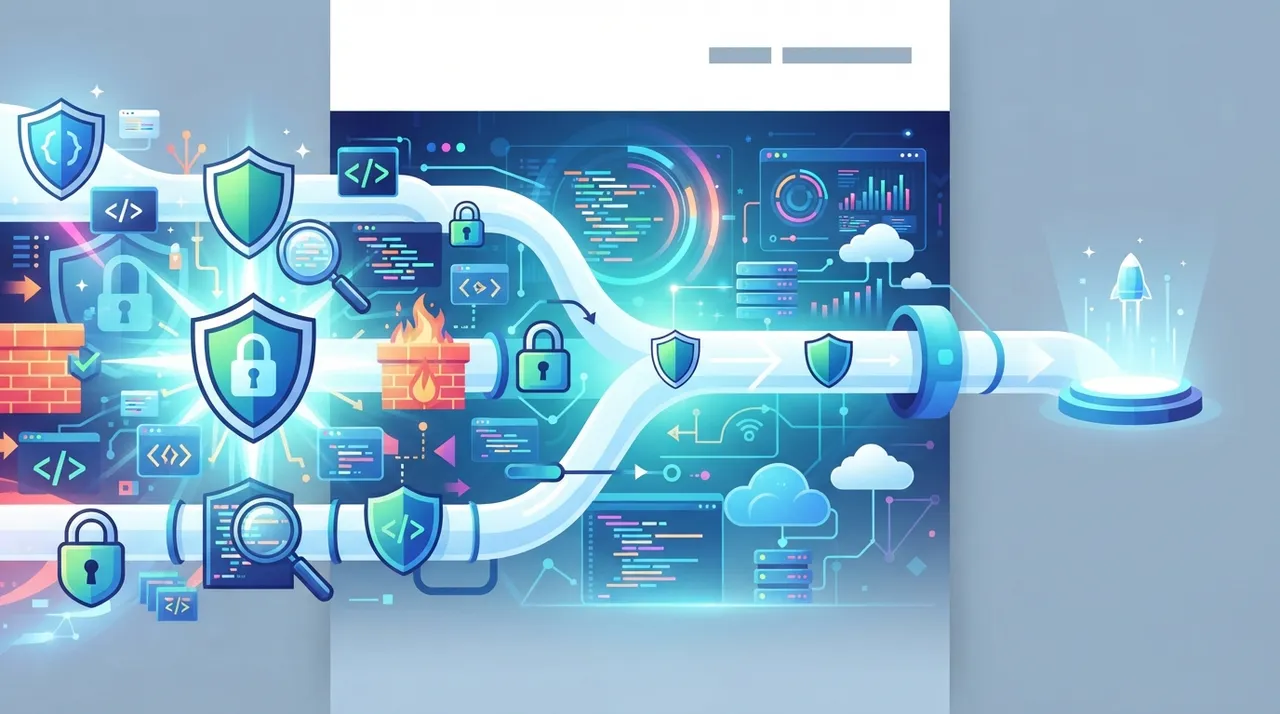
With the increasing complexity of applications and evolving cyber threats in 2026, traditional cybersecurity approaches are no longer sufficient. Relying on late-stage security checks meant discovering vulnerabilities in advanced stages, leading to costly remediation and delays in product launches. Today, integrating security from the outset is key to building more resilient and secure software.
What's New
“Shift Left Security” is an integrated approach that focuses on embedding security testing and controls into the earliest stages of the Software Development Lifecycle (SDLC). Instead of treating security as a final step before deployment, it is incorporated into the planning, coding, and building phases. This means developers take on a greater share of responsibility for security and are equipped with the necessary tools to identify and address issues early on.
Reports from 2026 indicate that 47% of organizations have implemented “Shift Left Security” strategies, but effective execution remains a challenge for many. The importance of this approach is growing with the proliferation of cloud platforms and AI-powered applications, which expand the attack surface and increase the complexity of threats.
Why It Matters
The importance of “Shift Left Security” lies in its ability to significantly reduce costs, improve software quality, and accelerate time-to-market. The earlier a security vulnerability is discovered, the easier and less expensive it is to fix. For example, fixing a vulnerability during the coding phase might take minutes, whereas fixing the same vulnerability in a production environment could take days, potentially leading to service outages and significant financial losses. This approach also fosters a culture of collaboration among development, operations, and security teams, leading to more secure and reliable products.
“Shift Left Security” practices contribute to reducing an organization's overall attack surface. They also help accelerate release cycles by avoiding bottlenecks that arise from late-stage vulnerability discovery.
Real-World Examples and Practical Benefits:
Real-world examples of applying “Shift Left Security” include:
- Static Application Security Testing (SAST): SAST tools are integrated into the development environment to analyze source code and configuration files in real-time, identifying security vulnerabilities as developers write code. This helps prevent vulnerabilities from progressing to later stages.
- Software Composition Analysis (SCA): SCA tools are used to identify and manage security risks associated with third-party libraries and dependencies, which are often sources of vulnerabilities.
- Threat Modeling: This process occurs during the design phase to identify and assess potential threats, allowing teams to design systems with security in mind from the outset.
- Integrating Security into CI/CD Pipelines: Security tools are run automatically whenever code is updated or deployed, including vulnerability scanning, container security analysis, and configuration validation. For instance, a tech company integrated SAST and dependency scanning into its Jenkins pipeline to receive immediate vulnerability alerts via Slack, resulting in a 40% reduction in security issues.
- Secret Scanning: Secret scanning tools help detect accidentally embedded access keys or sensitive credentials in code before deployment.
To maximize the benefits of “Shift Left Security,” readers can follow these steps:
- Define Security Policies: Establish clear security policies and protocols before starting any project.
- Developer Training: Provide extensive training to developers on secure coding practices and security tools.
- Automate Security Checks: Integrate SAST, SCA, and DAST (Dynamic Application Security Testing) tools into CI/CD pipelines to automate security checks.
- Enhance Collaboration: Encourage continuous collaboration among development, security, and operations teams.
- Continuous Monitoring: Implement continuous monitoring strategies to detect vulnerabilities and security incidents in deployed applications.
Despite challenges such as high false positive rates and integration issues, adopting “Shift Left Security” has become a strategic imperative. With the increasing reliance on AI in software development, a new trend is emerging toward an even deeper “Shift Left,” where security policies are applied even before code is written by AI agents. This evolution opens new horizons for proactively enhancing cybersecurity in the future.







Comments 0
No comments yet — be the first to share your thoughts.
Share your thoughts
To comment, sign in first — we email you a one-time code (no password). This keeps the discussion clean.
Sign in to comment →