
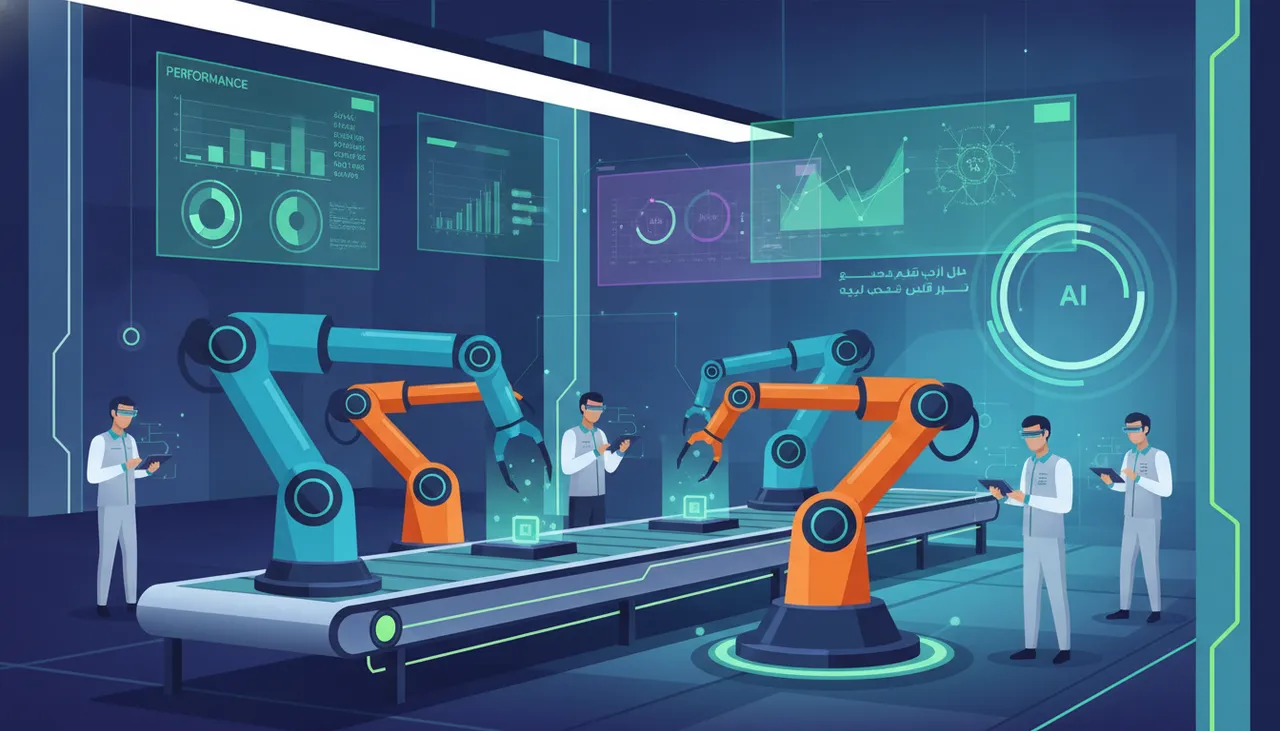
In the rapidly evolving landscape of Industry 5.0, artificial intelligence (AI) is emerging as a key driving force in reshaping the global manufacturing sector. AI applications have moved beyond the experimental phase, becoming an integral part of operational processes, offering practical solutions and tangible results in critical areas such as quality control and predictive maintenance.
What's New
2026 has seen a significant shift in the use of AI in manufacturing, with companies moving from pilot programs to full operational deployment of AI-powered systems. This is no longer just about assisting with planning; AI-driven production planning systems are now running entire plants. At the heart of this transformation is the integration of computer vision and machine learning into quality control processes, enabling precise and rapid product inspection that surpasses human capabilities. For instance, AI-powered computer vision systems can analyze thousands of images per second, identifying subtle defects that human inspectors might miss at the same speed. These systems are also used in the aerospace industry to identify microfractures and discolorations that may indicate structural issues with materials. In the pharmaceutical sector, AI-driven quality control systems monitor production lines for defects such as incorrect pill sizes or packaging errors.
In maintenance, AI has revolutionized predictive maintenance, with companies shifting from reactive or time-based maintenance to data-driven, predictive methodologies. AI algorithms analyze vast amounts of real-time data from sensors and IoT devices integrated into machinery, such as vibrations, temperature, and fluid levels, to accurately predict when potential failures are likely to occur. This allows companies to schedule maintenance at the opportune moment before breakdowns happen, significantly reducing unplanned downtime. For example, companies like Siemens use AI to enhance the precision of their manufacturing lines and reduce defect rates, while BMW uses AI to inspect welds on car bodies, ensuring strict safety standards are met.
Why It Matters
The significance of these developments lies in AI's ability to achieve unprecedented gains in efficiency, productivity, and overall quality. In quality control, the shift is from reactive detection to predictive defect prevention, and from statistical sampling to 100% inspection. This leads to significant reductions in material waste, rework costs, and warranty claims, directly impacting profitability and environmental sustainability. AI systems can maintain constant vigilance 24/7, analyzing hundreds of components per minute with superior precision, which is impossible for human inspectors who experience fatigue and distraction.
In predictive maintenance, AI enables companies to avoid unexpected production stoppages, which can cost manufacturers billions of dollars annually. By predicting failures more accurately and identifying root causes, manufacturers can proactively schedule maintenance, extending the lifespan of expensive equipment and keeping supply chains flowing. Estimates suggest that AI can reduce downtime by as much as 15% and boost labor productivity by 5% to 20%. This not only enhances operational efficiency but also contributes to sustainability goals by optimizing resource utilization and reducing waste.
Furthermore, these developments are part of a broader transition towards smart factories and Industry 5.0, which emphasizes human-machine collaboration, sustainability, resilience, and a human-centric approach. AI helps free up the workforce from repetitive and mundane tasks, allowing them to focus on innovation and complex problem-solving. It also supports improved supply chain management by more accurately forecasting demand, optimizing inventory levels, and enhancing transportation routes to reduce costs and environmental impact.
How the reader can practically benefit (tools/steps):
- Assess Current Infrastructure: Begin by evaluating your existing manufacturing systems and data collection capabilities. Do you have sufficient sensors on your machinery? Do you have a centralized system for data collection and analysis (e.g., MES or ERP)?
- Identify Pain Points: Pinpoint areas where your organization faces significant quality or maintenance challenges. Are there recurring defects? Do unexpected breakdowns cause costly downtime?
- Start Small with Pilot Projects: Instead of attempting a sweeping, comprehensive solution all at once, begin with small proof-of-concept projects in specific areas. For example, you could implement an AI-powered computer vision system to inspect a specific defect on a single production line, or use predictive maintenance for one critical machine.
- Collect and Analyze Data: The effectiveness of AI depends on the quality and quantity of data. Ensure you collect comprehensive and accurate data from sensors, maintenance logs, and production data. Utilize data analytics and machine learning tools to identify patterns and correlations that may indicate potential problems.
- Invest in the Right Systems and Tools: A variety of AI platforms and specialized tools are available for manufacturers, such as AI-powered machine vision systems, Industrial Internet of Things (IIoT) platforms, and predictive maintenance solutions. Look for solutions that integrate with your existing systems and meet your specific needs.
- Train Your Workforce: Integrating AI doesn't mean replacing humans; it means empowering them. Train your team to understand how AI systems work, how to interpret data, and how to interact with new technologies.
- Collaborate with Experts: If you lack sufficient in-house expertise, consider partnering with consulting firms or AI solution providers specializing in manufacturing.
Integrating AI into manufacturing operations is not a luxury option; it is a strategic investment to ensure competitiveness and resilience in a rapidly changing world. By focusing on practical and targeted implementation, manufacturers can reap the benefits of this technological revolution and achieve new levels of efficiency and quality.







Comments 0
No comments yet — be the first to share your thoughts.
Share your thoughts
To comment, sign in first — we email you a one-time code (no password). This keeps the discussion clean.
Sign in to comment →