
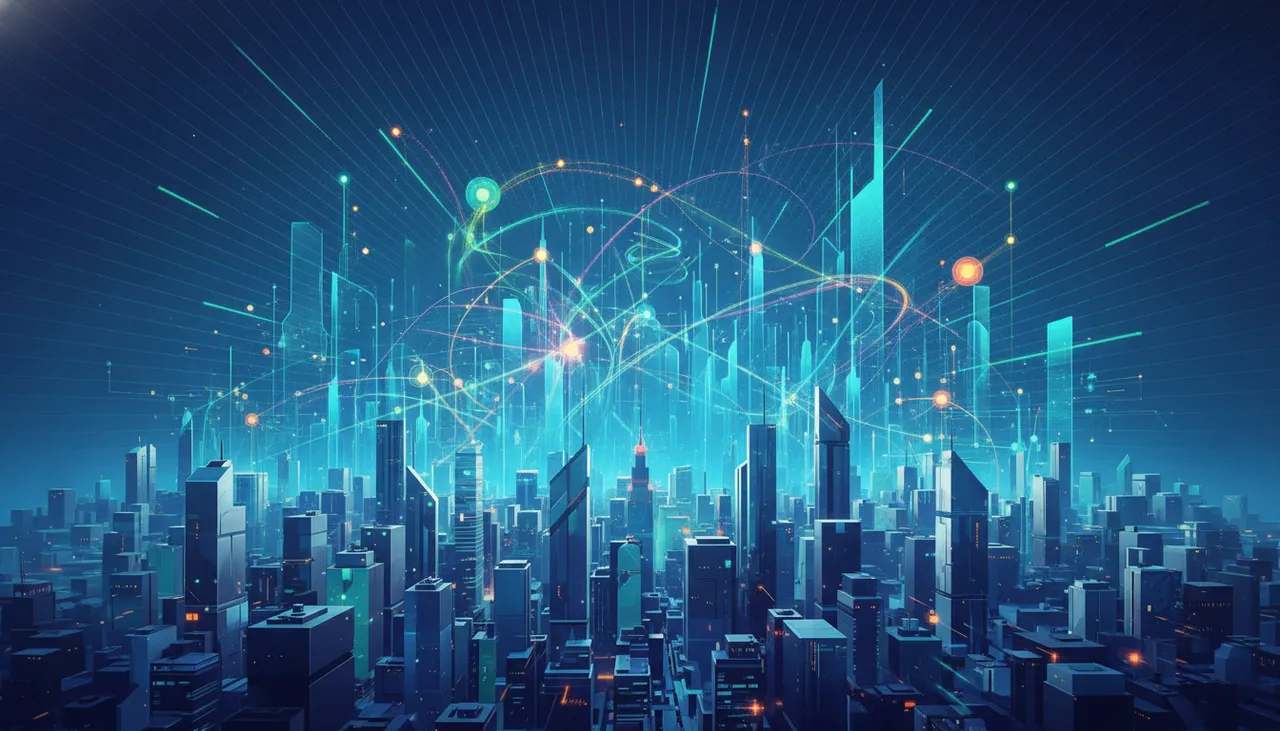
In the rapidly evolving world of artificial intelligence, the concept of a "Digital Twin" stands out as one of the most promising trends, bringing about a paradigm shift in how we understand and interact with the physical world. A digital twin is no longer just a virtual copy of a physical entity; it has become a dynamic system that continuously learns and evolves thanks to AI capabilities, enabling complex scenario simulations and smarter decision-making.
What's New
The latest development involves integrating advanced AI capabilities, such as machine learning and neural networks, with digital twin technologies. This integration enhances digital twins' ability to collect and analyze real-time data from sensors connected to the physical entity, allowing them to understand the behavior of physical systems with unprecedented accuracy. For example, a digital twin of a manufacturing machine can predict potential failures before they occur, or a digital twin of a city can simulate the impact of climate change or population growth on infrastructure.
Also new is the expansion of digital twin applications to include more complex and abstract systems. Instead of focusing on individual assets, it is now possible to create digital twins for entire processes, such as supply chains or smart energy grids, and even complex ecosystems. These twins rely on AI to analyze vast amounts of data, identify hidden patterns, and provide actionable insights to improve performance and efficiency.
Why It Matters
The fundamental importance of the AI-powered digital twin lies in its ability to provide comprehensive and predictive insights not possible through traditional means. This technology enables organizations and individuals to make strategic decisions based on accurate data and realistic simulations, reducing risks and increasing efficiency. For example, engineers can design and test new products in a virtual environment before manufacturing them, saving time and costs. Urban planners can experiment with different scenarios for city development without impacting real life.
Practically, readers can benefit from this trend by understanding how digital twins are applied in various fields:
- In Industry and Manufacturing: Engineers can use digital twins to optimize product design, monitor machine performance, and predict maintenance, reducing downtime and increasing productivity. Available tools include platforms like Siemens MindSphere and GE Digital Predix, which offer capabilities for creating and managing digital twins.
- In Healthcare: Doctors and researchers can create digital twins of patients to understand how their bodies respond to different treatments and design personalized treatment plans. Medical simulation software and specialized platforms for modeling vital organs are fundamental to this.
- In Urban Planning and Smart City Management: Officials can use digital twins of cities to simulate traffic flow, energy consumption, and the impact of new urban projects, helping them make informed decisions to improve quality of life. Specialized city modeling platforms like Dassault Systèmes 3DEXPERIENCE are available.
To get started, individuals and businesses can explore online courses on AI and digital twins and familiarize themselves with leading tools and platforms in the field. It is also advisable to start with small-scale projects to test the concept and identify direct benefits before scaling up.
The AI-powered digital twin is not just a technological advancement; it's a paradigm shift in how we think about complex systems. By integrating real-world data with powerful AI models, we can build a more efficient, sustainable, and intelligent future.

Comments 0
No comments yet — be the first to share your thoughts.
Share your thoughts
To comment, sign in first — we email you a one-time code (no password). This keeps the discussion clean.
Sign in to comment →