
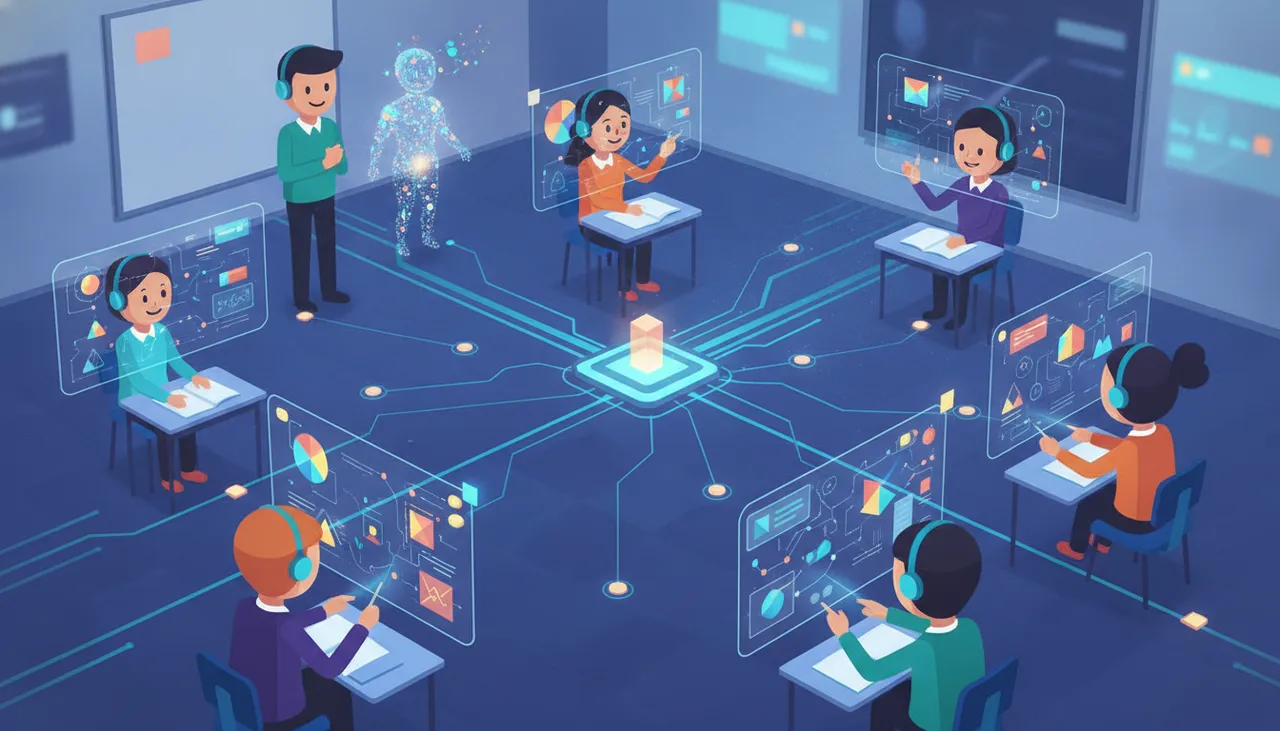
The concept of personalized education has long been a distant dream, with educators striving to meet the unique needs of each student in an often one-size-fits-all learning environment. However, with the tremendous advancements in artificial intelligence (AI), this dream has become a tangible reality. Today, we are witnessing a revolution in learning through AI-powered personalized learning paths, which are not just tools but intelligent educational systems that adapt to the learner in real-time, offering a unique and highly effective learning experience never before seen.
What's New
AI-powered personalized learning paths are advanced systems that leverage machine learning, natural language processing, and predictive analytics to customize educational content, adjust lesson sequences, and provide real-time performance insights. These tools go beyond mere content recommendations; they are capable of generating new learning materials, designing adaptive assessments, identifying skill gaps, and providing immediate guidance to students through AI assistants. By 2026, over 47% of Learning Management Systems (LMS) are expected to integrate AI to deliver personalized learning paths and real-time instructional support and guidance.
A significant development in this area is the emergence of AI-powered adaptive learning platforms. These platforms not only adjust content difficulty based on student mastery but also optimize learning styles to suit individual preferences (visual, auditory, or kinesthetic). For instance, these systems can analyze learner behavior patterns, such as the duration a student pauses on a particular sentence, the sections of a video they rewatch, or the types of errors they make, to provide targeted guidance. Real-world examples of these platforms include Pifini.ai, Docebo, 360Learning, and Absorb LMS, all of which offer advanced features like AI-assisted course creation, automated skill mapping, and personalized learning path recommendations.
Why It Matters
AI-powered personalized learning paths are crucial for several reasons. Firstly, these tools significantly enhance student engagement and motivation. 75% of students feel more motivated in personalized AI learning environments compared to 30% in traditional classrooms. This is because lessons adapt to students' interests, knowledge levels, and learning styles, fostering a sense of competence and confidence.
Secondly, these technologies contribute to dramatically improved learning outcomes. AI-powered personalized learning can improve outcomes by 25% while simultaneously reducing teacher workload. AI can identify knowledge gaps and provide targeted interventions before students fall behind, promoting a deeper understanding of the material.
Thirdly, these tools alleviate the administrative burden on educators, allowing them to focus more on the human aspects of teaching, such as empathy and motivation. Teachers who use AI tools weekly report saving an average of 5.9 hours per week, equivalent to six full weeks annually. This time can be redirected towards providing more individualized attention to students and addressing their emotional and social needs.
For the practical reader, here's how to leverage these technologies:
- Identify the Right Platform: Look for Learning Management Systems (LMS) or adaptive learning platforms that offer AI-powered personalized learning paths. Leading options in 2026 include Docebo, 360Learning, Absorb LMS, CYPHER Learning, and Pifini.ai. Evaluate platforms based on their personalization capabilities, analytics tools, content creation features, and integration with existing systems.
- Utilize Intelligent Assistant Tools: Learners can benefit from generative AI tools like ChatGPT or Google Gemini for instant clarifications, summary generation, and personalized study guides. Educators can use these tools to create diverse lesson plans, adapt materials for different student needs, and generate assessment questions.
- Focus on Adaptive Assessment: Seek platforms that offer assessments adapting to student performance, identifying strengths and weaknesses, and recommending targeted learning resources. This approach helps measure progress effectively and ensures that learning time is focused on areas needing improvement.
- Integrate Collaborative Learning: Some AI platforms can enhance collaborative learning through intelligent recommendations that support teamwork and critical thinking skills. Leverage these features to create interactive learning environments that encourage knowledge sharing.
- Continuous Training and Development: The field of AI is rapidly evolving. Therefore, both educators and learners should invest in training programs that enhance their skills in using AI tools effectively and ethically.
AI-powered personalized learning paths are not just a passing trend; they are the cornerstone of the future of education. They offer an unprecedented opportunity to make learning more effective, inclusive, and engaging for everyone by tailoring the educational experience to each individual. Investing in these tools and adopting best practices will enable us to build a generation equipped with the knowledge and skills necessary to confidently face future challenges.




Comments 0
No comments yet — be the first to share your thoughts.
Share your thoughts
To comment, sign in first — we email you a one-time code (no password). This keeps the discussion clean.
Sign in to comment →