
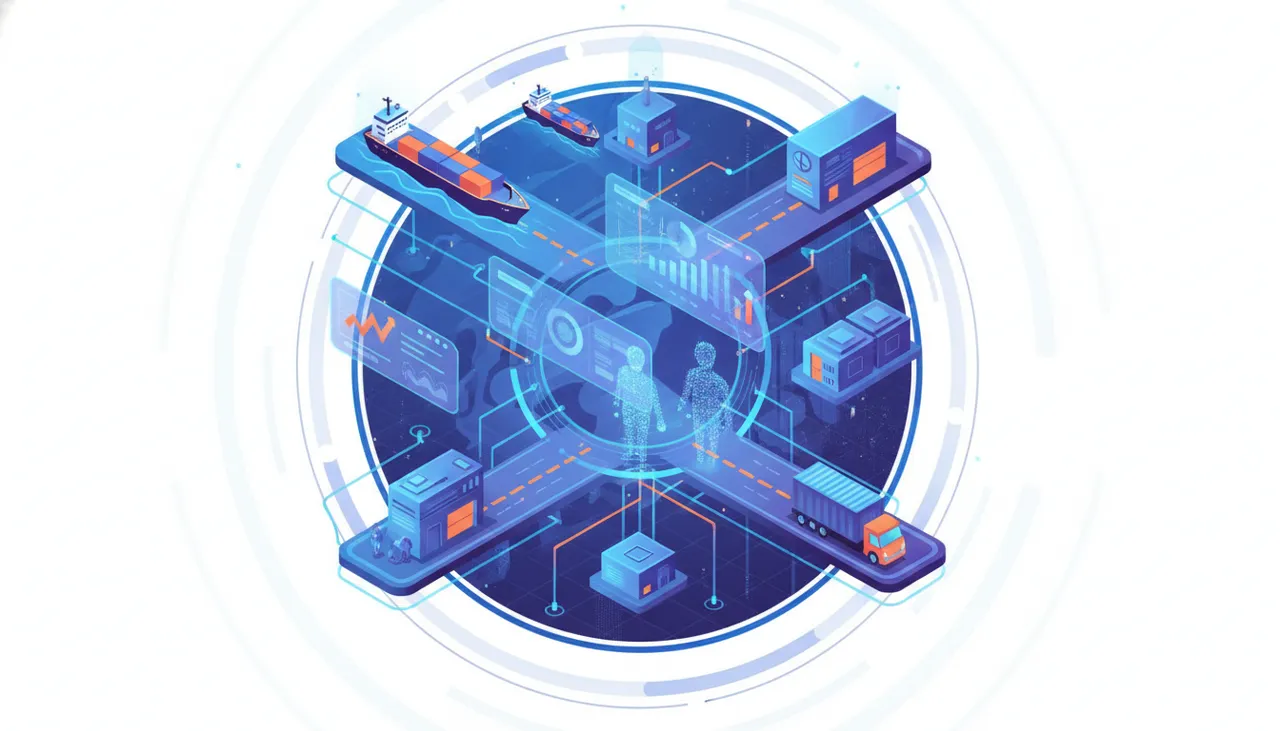
In today's rapidly changing world, supply chains have become vital arteries of the global economy. As these chains grow in complexity and are affected by numerous factors, from geopolitical fluctuations to natural disasters, artificial intelligence has emerged as a driving force to revolutionize how they are planned, managed, and optimized.
What's New: Predictive and Smart Supply Chains
The role of artificial intelligence in supply chains is no longer limited to automating routine tasks; it has expanded to transform operations from merely reacting to events to anticipating and predicting them. This transformation relies on AI's ability to process and analyze vast amounts of data in real-time, identifying hidden patterns that human analysts might miss [2, 10, 36].
One of the most prominent developments in this field is the emergence of Predictive Analytics, where machine learning algorithms use historical data, current trends, and external factors—such as traffic patterns, weather conditions, and mapping data—to forecast future demand, determine optimal delivery routes, and even predict equipment failures before they occur [2, 1, 6]. For example, the U.S. Army can anticipate demand for specific munitions based on emerging threats and operational requirements, helping to optimize inventory levels [6].
Furthermore, AI-driven inventory management is revolutionizing how companies track and optimize their stock. AI systems monitor inventory levels in real-time, automatically triggering reorder requests when stock falls below predetermined thresholds, thereby reducing the risks of stockouts or overstocking [4, 16, 19]. This proactive approach also reduces inventory holding costs and increases profitability [4, 12].
Route optimization and logistics have become significantly more efficient thanks to AI. Systems analyze logistics data, including package information, delivery locations, traffic patterns, and weather conditions, to identify the most efficient routes in real-time. This reduces fuel consumption, improves delivery times, and cuts costs [1, 7, 18]. Companies like Amazon rely on AI to manage warehouse robots and delivery fleets, boosting efficiency [1].
Why It Matters: Efficiency, Resilience, and Sustainability
These developments are crucial for businesses for several reasons:
- Increased Efficiency and Productivity: AI automates repetitive and time-consuming tasks, allowing employees to focus on higher-value strategic initiatives. AI can process information at scale and handle multiple tasks simultaneously without fatigue [5, 11, 20].
- Improved Decision-Making: By rapidly analyzing vast amounts of data, AI provides invaluable insights for informed decision-making in areas such as inventory management, marketing strategies, and pricing optimization [11, 27]. Companies can make faster and more confident decisions because they operate with live insight into their network's performance [3].
- Cost Reduction: AI-powered solutions significantly reduce operational costs by streamlining workflows, minimizing human error, optimizing inventory levels, and improving fuel consumption [2, 11, 17]. Studies indicate that AI-driven automation has cut logistics costs by 15% and reduced inventory by 35% [2].
- Enhanced Resilience and Disruption Management: AI-powered supply chains enable companies to proactively anticipate and adapt to potential disruptions. Instead of reacting after a problem occurs, AI continuously analyzes patterns to foresee issues before they escalate [3, 9, 32].
- Sustainability: AI helps logistics companies reduce their carbon footprint by optimizing fuel usage, reducing waste, and improving inventory accuracy [1, 17].
Real-World Examples
- Amazon uses AI for customer demand forecasting to ensure optimal stock levels in its vast warehouses, meeting spikes or dips in product popularity with minimal human input [1, 24].
- Walmart uses AI to optimize driver routing, reducing fuel consumption and improving delivery times [24].
- FedEx utilizes its AI-powered FedEx Surround platform to provide real-time visibility into its extensive transportation network, tracking vehicles and shipment conditions [24].
- Food and beverage manufacturers rely on AI to manage perishable goods by analyzing storage conditions and optimizing delivery routes, predicting demand for products like dairy to ensure just-in-time replenishment and reduce waste [1, 13].
How Readers Can Practically Benefit (Tools/Steps)
To leverage the power of AI in supply chains, readers can follow these steps:
- Assess Needs and Define Objectives: Start by identifying specific challenges or goals that AI solutions can address in your supply chain. Are you looking to improve demand forecasting, reduce transportation costs, or increase warehouse efficiency? [3, 9].
- Data Readiness: The success of AI models heavily depends on data quality and accuracy. Ensure you have clean, connected data from ERP systems, warehouse software, and transportation tools [3, 16].
- Phased Implementation (Pilot Projects): You don't need to implement AI all at once. Start with focused pilot projects in areas with high operational impact, such as demand forecasting or logistics planning [3].
- Choose the Right Platforms and Tools: Many AI supply chain platforms are available, such as SAP Integrated Business Planning (IBP) [23, 25, 26], Oracle SCM Cloud [23, 25, 26], and IBM Sterling Supply Chain Solutions [23, 25, 28]. These platforms offer advanced capabilities in demand forecasting, inventory optimization, and logistics management [23]. No-code AI tools like Knack also make it easier to integrate intelligent inventory tools without extensive technical expertise [16].
- Utilize AI Agents: AI agents act as “digital assistants” that increase productivity for back-office functions. They can ensure data and inputs are correct and process tasks faster than a human alone [2]. They can also handle repetitive tasks like vendor research, risk assessment, and status reporting within defined rules [28].
- Collaborate with Experts: Successful AI implementation often requires partnership with experienced logistics providers who combine technology expertise with supply chain knowledge to deliver measurable ROI [2].
Integrating AI into supply chains is not merely a luxury; it has become a competitive necessity. By embracing these technologies, companies can achieve unprecedented levels of efficiency, resilience, and sustainability, enabling them to thrive in an increasingly complex and dynamic business environment.






Comments 0
No comments yet — be the first to share your thoughts.
Share your thoughts
To comment, sign in first — we email you a one-time code (no password). This keeps the discussion clean.
Sign in to comment →