
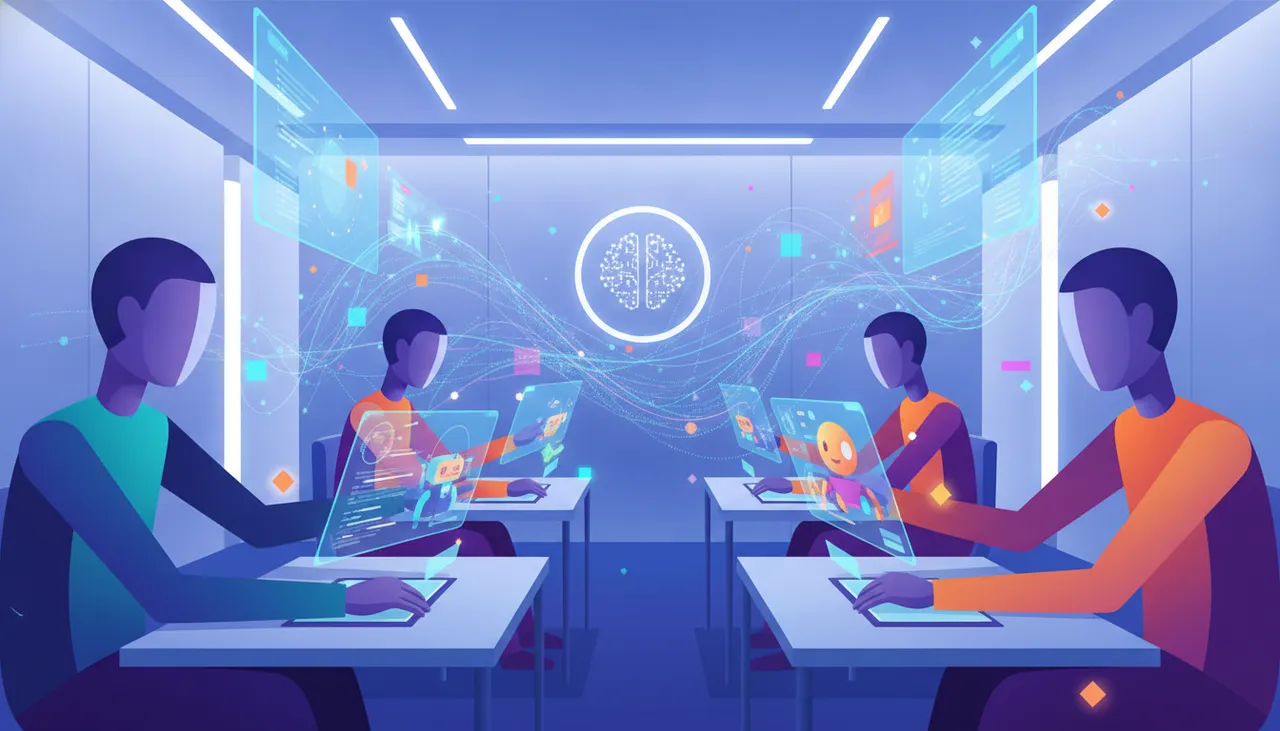
The era of one-size-fits-all education is over. With rapid advancements in AI, we are witnessing the dawn of a new age of personalized learning, where educational experiences are tailored to each student or trainee. This trend is not just an improvement; it's a true revolution promising to reshape how we acquire knowledge and skills.
What's New: Adaptive AI at the Core of Personalized Learning
Adaptive AI leverages machine learning algorithms and data to analyze learner performance and preferences, dynamically adjusting educational content, pace, and assessment methods. This means the system doesn't just deliver information; it interacts with the learner, understands their strengths and weaknesses, and provides the optimal learning path. Instead of the learner having to keep up with a fixed pace, the system adapts to their individual rhythm and style.
Research has shown that students in AI-enhanced learning environments achieve 54% higher test scores and 70% better completion rates, with ten times more engagement than traditional methods. In 2025, the number of teachers using AI tools in their work almost doubled, from 32% in 2024 to 61%. Furthermore, 69% of teachers reported improved teaching methods, 59% reported better personalized learning capabilities, and 55% reported more time for direct student interaction. The global adaptive learning market is projected to grow from $3.68 billion in 2023 to $9.32 billion by 2028, at a compound annual growth rate (CAGR) of 20.43%.
Why It Matters: Efficiency, Effectiveness, and Educational Equity
The importance of adaptive AI lies in its ability to address many challenges faced by traditional education:
- Enhancing Efficiency and Effectiveness: Adaptive AI provides individualized learning paths, increasing efficiency and reducing time wasted on irrelevant content. Teachers can save up to 5.9 hours weekly through administrative task automation, equivalent to six academic weeks per year. This allows them to focus on direct student interaction and personalized support.
- Increasing Engagement and Motivation: When students receive content aligned with their interests and skill levels, their engagement and motivation significantly increase. AI-powered systems generate 10 times more engagement than traditional methods, and 75% of students in personalized AI learning environments report being more motivated, compared to only 30% in traditional classrooms.
- Supporting Equity and Access: Adaptive AI contributes to bridging educational gaps by providing tailored support for students with special needs and overcoming language barriers, ensuring all students receive the assistance they require.
- Informed Educational Decision-Making: Adaptive learning platforms provide valuable analytics and data on learner performance, enabling educators and institutions to make better decisions regarding curriculum design, resource allocation, and targeted interventions.
Real-World Examples and Practical Tools:
Adaptive AI tools are emerging in numerous educational platforms and Learning Management Systems (LMS):
- Integrated Adaptive Learning Platforms: Companies like D2L Brightspace, 360Learning, CYPHER Learning, Docebo, and Absorb LMS offer comprehensive solutions for course creation, administrative task automation, and personalized learning at scale. These platforms use AI to generate content, provide personalized recommendations, and analyze skill gaps.
- Teaching Assistant Tools: Tools like Gemini in Google Classroom can help students create study guides and knowledge quizzes, while teachers can use them to adapt and personalize lessons. Similarly, tools like Brisk Teaching empower educators to create activities and support materials based on instructional goals and track student engagement.
- Predictive Analytics: AI systems can analyze student behavior and performance patterns to identify potential issues before they escalate, enabling early intervention.
- Professional Development and Skill Training: The use of adaptive AI is not limited to academic education but extends to professional training and skill development in companies. Platforms like Skillwell combine AI-powered adaptive learning with immersive simulation training to create personalized pathways based on verified skills data.
How to Benefit Practically:
To leverage adaptive AI in your learning or training journey, follow these steps:
- Explore AI-Powered Learning Tools: Look for adaptive learning platforms and Learning Management Systems that align with your educational or training objectives. Platforms like Brightspace, CYPHER Learning, Docebo, and Absorb LMS are excellent choices.
- Start with Existing Data: If you are an educator, use your current student data (test results, reading levels) to begin building personalized learning paths. AI can analyze this data and suggest learning paths based on student performance.
- Integrate AI Gradually: Start with specific tasks such as creating customized study materials, quick assessments, or providing instant feedback. You can use generative AI tools to create practice questions and quizzes tailored to individual skill levels.
- Track Progress and Use Analytics: Utilize the dashboards provided by AI-powered platforms to track your progress or your students' progress. These analytics help identify learning gaps and provide timely interventions.
- Maintain the Human Touch: Despite the power of AI, the role of the teacher or trainer remains crucial. Use AI as a complementary tool to enhance human interaction, not to replace it.
Adaptive AI is not just a new technology; it is a catalyst for a more flexible, efficient, and equitable educational model. By embracing these tools and methodologies, we can unlock the full learning potential of every individual and build a brighter educational future.


Comments 0
No comments yet — be the first to share your thoughts.
Share your thoughts
To comment, sign in first — we email you a one-time code (no password). This keeps the discussion clean.
Sign in to comment →