
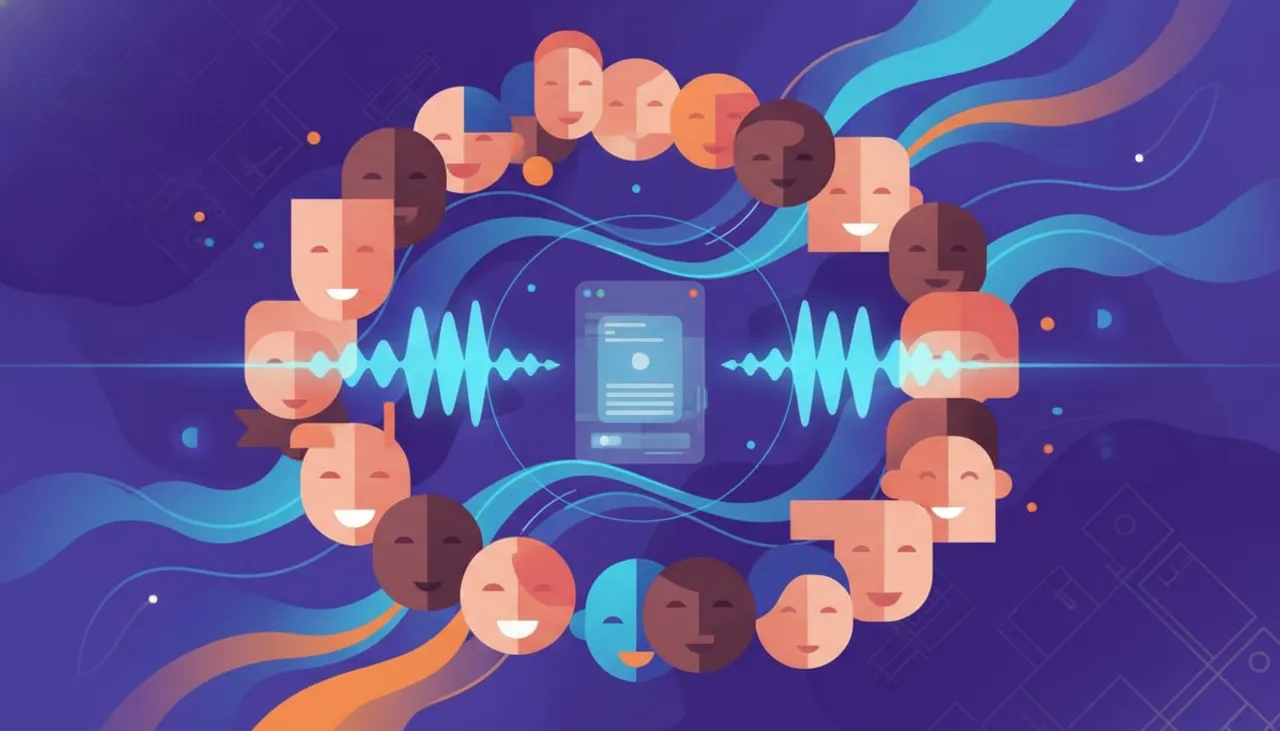
The era of cold, robotic voices in AI is definitively over. In 2026, the world is experiencing a true revolution in AI voice generation, with synthetic voices now capable of mimicking complex human intonations, emotional expressions, and even local dialects with astonishing accuracy. This development is not merely a technical improvement; it's transforming how we interact with digital content and unlocking new avenues for innovation across multiple sectors.
What's New
2026 has seen a qualitative leap in AI-powered Text-to-Speech (TTS) tools. These tools no longer just produce artificial voices, but now offer highly natural and expressive voices, often indistinguishable from real human voices. These tools allow control over tone, speed, and even the addition of various emotions such as anger, calmness, joy, or drama. Some platforms also offer high-fidelity voice cloning, enabling the creation of an artificial voice that precisely matches a human voice from a short audio sample of just 30 seconds. This progress is evident in broad support for multiple languages and dialects, including Arabic with its various accents.
Among the leading tools driving this development are ElevenLabs, considered one of the most powerful for generating realistic voices and supporting Arabic dialects, offering excellent audio quality and voice cloning capabilities. Speaktor stands out with support for over 50 languages and 29 professional voices with 14 emotional tones, suitable for budget-conscious content creators. Play.ht provides a vast library of realistic human voices with control over reading speed and intonation. Companies like Google Cloud Text-to-Speech and Amazon Polly also offer robust solutions for businesses and developers, featuring exceptional sound quality and support for many languages. Even free tools like TTSMaker and FreeTTS deliver good results for beginners and quick projects.
Reports from 2026 indicate that major companies like OpenAI are intensifying their efforts in AI voice technology, with plans to launch new voice models and a primarily voice-based device by late 2026. Smart assistants and interactive interfaces are also expected to become the primary platforms for news consumption, reducing reliance on traditional news websites.
Why It Matters
These developments are crucial for several reasons. Firstly, AI voice generation tools enable the production of professional-quality audio content at a significantly lower cost and time compared to human recording. This opens doors for small businesses, freelancers, and content creators to produce audiobooks, video voiceovers, podcasts, and even advertisements, without the need for expensive recording studios or professional voice actors.
Secondly, these technologies enhance information accessibility. Visually impaired individuals or those who prefer listening over reading can now access any written content in a natural, easy-to-listen voice. This includes articles, e-books, and even official documents, contributing to the democratization of knowledge.
Thirdly, it's revolutionizing real-time translation, with AI tools now capable of converting a speaker's voice, tone, and rhythm into dozens of languages in seconds, bridging communication gaps and facilitating global interaction. It can also be used in customer service to improve user experience through more natural and interactive voice chatbots.
How to Practically Benefit (Tools/Steps):
- Audio Content Creation: If you're a content creator, you can use tools like ElevenLabs or Speaktor to convert your scripts into professional voiceovers for videos and podcasts. Look for tools that support Arabic and the appropriate dialects for your content.
- Document Conversion to Audio: Use applications like Speechify or NaturalReader to listen to articles, books, or work documents on the go. Some of these tools offer browser extensions for ease of use.
- Learning and Education: Educational institutions can use these tools to create audio learning materials or convert textbooks into audible formats to support students with special needs.
- Automated Customer Service: For businesses, AI voices can be integrated into Interactive Voice Response (IVR) systems or voice chatbots to provide a smoother and more natural customer experience.
- Customization and Voice Cloning: If you need a unique voice for your brand, explore tools that offer voice cloning capabilities. Record a short audio sample and use it to create a complete synthetic voice.
Many of these tools offer free or trial plans, allowing you to experiment with different features before committing to a paid plan. Always review the commercial use terms if you plan to use the audio content for profit.
In conclusion, AI-generated voices are no longer just a futuristic technology; they are a reality in 2026. It's a powerful tool that can enhance productivity, broaden reach, and unlock new creative possibilities, provided it is used consciously and responsibly.



Comments 0
No comments yet — be the first to share your thoughts.
Share your thoughts
To comment, sign in first — we email you a one-time code (no password). This keeps the discussion clean.
Sign in to comment →