Executive Summary
The Used Cooking Oil Recycling project in Qatar's energy and environment sector targets a promising market opportunity. With an investment of 750,000 QAR, it achieves a net present value of -231,485 QAR, an internal rate of return of -2%, and a payback period of — years.
| Indicator | Value |
|---|---|
| Initial Investment | 750,000 QAR |
| First Year Revenue | 550,000 QAR |
| Annual Growth (CAGR) | 12% |
| Net Margin (Y1) | -7% |
| Return on Investment (Avg.) | -1% annually |
| Net Present Value (NPV) | -231,485 QAR |
| Internal Rate of Return (IRR) | -2% |
| Profitability Index (PI) | 1 |
| Payback Period | — |
| Break-even Year | — |
| Expected NPV (Probability-Weighted) | -222,411 QAR |
Assumptions and Basis
The figures in this study are based on project data, the nature of Qatar's energy and environment sector, and local market indicators, according to the following assumptions:
| Assumption | Value |
|---|---|
| Initial Capital | 750,000 QAR |
| First Year Revenue | 550,000 QAR |
| Annual Growth | 12% |
| Cost of Goods Sold (COGS) | 45% of Revenue |
| Operating Expenses | 35% of Revenue |
| Tax/Zakat | 0% |
| Discount Rate (WACC) | 10% |
| Study Horizon | 5 years |
Basis of Assumptions: Figures are estimates based on standards for small and medium-sized recycling projects in Qatar, taking into account government support for the sector and operating costs.
Project Description and Opportunity
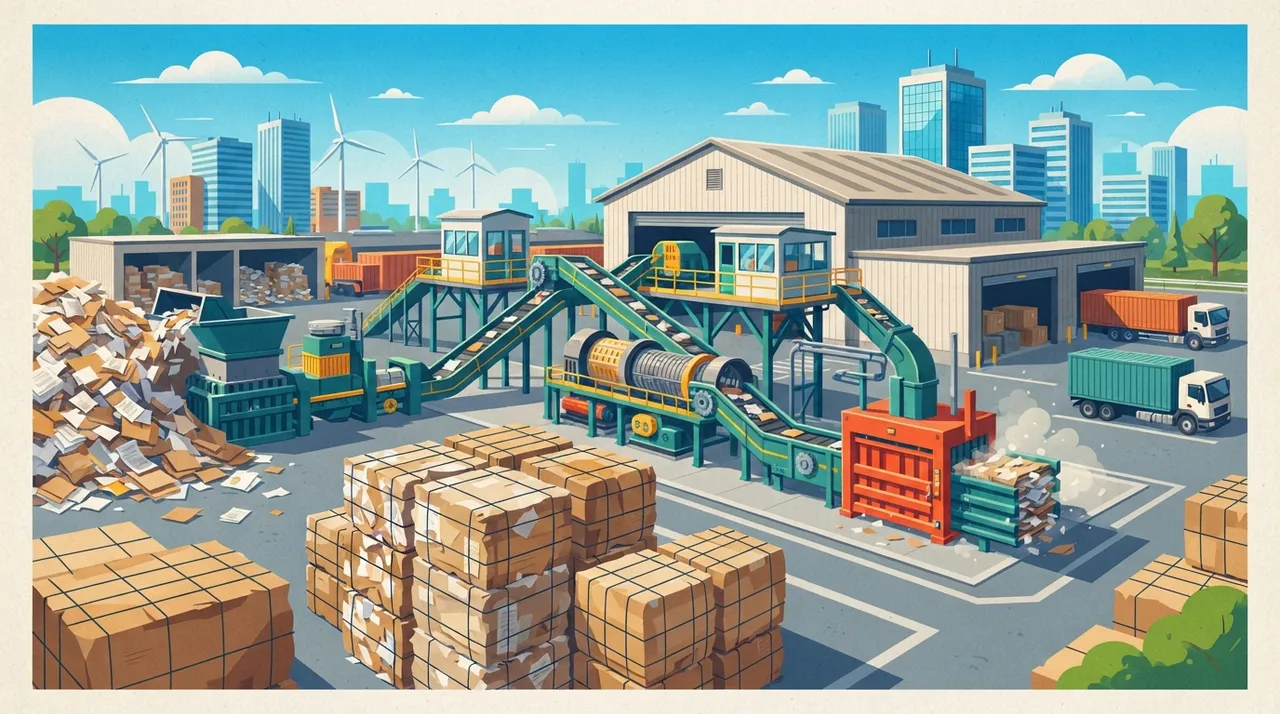
The used cooking oil recycling project in Qatar aims to convert these oils into biodiesel and other industrial products, contributing to the circular economy and reducing environmental impact. The opportunity lies in increasing environmental awareness and government support for the recycling sector in Qatar, in addition to the abundance of raw material from restaurants, hotels, and homes. The business model relies on collecting oils from various sources, processing them with modern technologies to produce valuable products, and marketing them to industrial and commercial sectors. The target client includes transport companies, factories, and energy sectors seeking environmentally friendly fuel alternatives.
Market and Demand Study
Qatar's waste management and recycling market is experiencing rapid growth, driven by increasing environmental awareness and growing pressure to achieve sustainable development. Qatar's National Development Strategy 2024-2030 aims to increase the recycling rate for all waste streams to 38%, with a focus on reducing landfill waste by over 90% in the next five years. Used cooking oil is an organic waste that constitutes a significant portion of solid waste, with approximately 3500-4000 tons produced annually in Qatar. Demand drivers for recycled products in Qatar are increasing due to the state's commitment to Qatar National Vision 2030, which places environmental sustainability at the core of its priorities.
Market Sizing (TAM / SAM / SOM)
The market sizing methodology relies on estimating the volume of used cooking oil available for collection in Qatar from restaurants, hotels, food establishments, and homes, multiplied by the potential average price of the final products (biodiesel, glycerin, industrial soap). The market is segmented based on ease of access to oil sources (large restaurants as direct clients, then hotels and cafes, and finally community collection campaigns). Total Addressable Market (TAM) is estimated based on the total annual production of used cooking oil in the country, while Serviceable Available Market (SAM) represents the percentage the project can access under current operational capacity and competition. Serviceable Obtainable Market (SOM) represents the project's expected market share in the first years of operation, considering initial collection and processing capacity.
| Level | Annual Size | Description |
|---|---|---|
| TAM — Total Market | 25.0 million QAR | Total serviceable demand |
| SAM — Available Market | 15.0 million QAR | Portion accessible by your model |
| SOM — Obtainable Market | 5.0 million QAR | Your realistic early share |
Sizing Basis: Total market size is based on estimates of used cooking oil production in Qatar (approximately 3500-4000 tons annually) and the average selling price of biodiesel and by-products, considering future expansion in oil collection.
Unit Economics
Measures the profitability of each sales unit/customer — the most accurate feasibility indicator:
| Unit Indicator | Value |
|---|---|
| Sales Unit | Ton of recycled oil |
| Avg. Price/Revenue per Unit | 2,200 QAR |
| Customer Acquisition Cost (CAC) | 150 QAR |
| Customer Lifetime Value (LTV) | 6,600 QAR |
| LTV/CAC Ratio | 44x (Healthy) |
| Contribution Margin | 20% |
Competitive Analysis
Competition in the used cooking oil collection and recycling sector in Qatar includes a few specialized local companies such as Erigo Used Cooking Oil Collection and Bio Genesis Oil. These companies offer free or paid collection services to restaurants and hotels and convert oils into biodiesel. The project's sustainable advantage can lie in adopting more efficient processing technologies, focusing on higher quality final products with specific demand, building a wider and more effective collection network, or obtaining additional environmental certifications that enhance product appeal to customers seeking sustainable solutions. The project can also benefit from strategic partnerships with government entities or large corporations with environmental commitments.
Market Entry and Pricing Strategy
The market entry strategy relies on building strong relationships with restaurants, hotels, and catering companies as primary sources of used cooking oil. Marketing will be conducted through environmental awareness programs highlighting the positive impact of recycling and offering incentives for oil collection. Direct marketing channels include contracts with large companies, digital marketing targeting the industrial sector, and participation in environmental events and exhibitions. Pricing for final products (biodiesel, glycerin) will be competitive, with an emphasis on the products' environmental added value. Consideration can also be given to offering free or symbolic-priced oil collection services to large sources to ensure a continuous flow of raw material.
Capacity and Operations
The project's production capacity begins with processing approximately 200 tons of used cooking oil per month in the first year, with a plan for gradual increase of 15-20% annually to meet growing demand and expand the collection network. Occupancy is expected to reach 60% in the first year and increase to 85% by the third year.
Daily operations focus on the efficient collection of used cooking oil from various sources and the quality of the processing operation to convert it into high-quality biodiesel. This requires a fleet of equipped collection vehicles and trained personnel for safe handling of raw materials. Strict quality control standards must be applied at all production stages to ensure the final product complies with local and international standard specifications for biodiesel. Daily operations also include inventory management, periodic equipment maintenance, and compliance with all environmental and health regulations. An effective system must be in place to track collected oil quantities and final products to ensure transparency and operational efficiency.
The technical aspects of the project include establishing a plant for processing used cooking oil and converting it into biodiesel and other products. This requires specialized equipment for filtration, distillation, and transesterification processes. It is recommended to choose the plant's location in one of the industrial areas designated for recycling, such as Al Afja Industrial Area for Recycling in Mesaieed, where the government provides dedicated land plots for these activities at reduced lease rates. The technical design must comply with Qatar's environmental standards and obtain the necessary approvals from the Ministry of Environment and Climate Change. As for suppliers, the project will rely on a wide network of restaurants, hotels, and food service companies to collect used cooking oil, in addition to suppliers of chemicals needed for the processing operation.
Projected Income Statement (5 Years)
| Item \ Year | Y1 | Y2 | Y3 | Y4 | Y5 |
|---|---|---|---|---|---|
| Revenues | 550,000 QAR | 616,000 QAR | 689,920 QAR | 772,710 QAR | 865,436 QAR |
| Cost of Sales | (247,500 QAR) | (277,200 QAR) | (310,464 QAR) | (347,720 QAR) | (389,446 QAR) |
| Gross Profit | 302,500 QAR | 338,800 QAR | 379,456 QAR | 424,991 QAR | 475,990 QAR |
| Operating Expenses | (192,500 QAR) | (215,600 QAR) | (241,472 QAR) | (270,449 QAR) | (302,902 QAR) |
| EBITDA | 110,000 QAR | 123,200 QAR | 137,984 QAR | 154,542 QAR | 173,087 QAR |
| Tax | (0 QAR) | (0 QAR) | (0 QAR) | (0 QAR) | (0 QAR) |
| Net Profit | -40,000 QAR | -26,800 QAR | -12,016 QAR | 4,542 QAR | 23,087 QAR |
| Net Margin | -7% | -4% | -2% | 1% | 3% |
Investment Cost Structure
| Item | Cost | Percentage |
|---|---|---|
| Machinery and Equipment | 300,000 QAR | 40% |
| Construction and Fittings | 187,500 QAR | 25% |
| Initial Working Capital | 112,500 QAR | 15% |
| Oil Collection Vehicles | 75,000 QAR | 10% |
| Licenses and Studies | 37,500 QAR | 5% |
| Marketing and Opening Expenses | 37,500 QAR | 5% |
Cash Flow and Break-even Point
| Year | Operating Cash Flow | Cumulative Cash Flow |
|---|---|---|
| Year 1 | 110,000 QAR | -640,000 QAR |
| Year 2 | 123,200 QAR | -516,800 QAR |
| Year 3 | 137,984 QAR | -378,816 QAR |
| Year 4 | 154,542 QAR | -224,274 QAR |
| Year 5 | 173,087 QAR | -51,187 QAR |
Estimated break-even point at annual revenue ≈ 622,727 QAR (~113% of first-year revenue), with a contribution margin of 55%. Cumulative cash break-even beyond the study horizon.
Funding Structure
| Funding Source | Percentage | Amount |
|---|---|---|
| Equity | 60% | 450,000 QAR |
| Debt Financing (5% interest) | 40% | 300,000 QAR |
Sensitivity Analysis (Revenue × Operations)
Impact of simultaneous changes in revenue and costs on Net Present Value:
| Revenue \ Operations | −10% | −5% | Base | +5% | +10% |
|---|---|---|---|---|---|
| −20% | -127,782 QAR | -231,485 QAR | -335,188 QAR | -438,891 QAR | -542,594 QAR |
| −10% | -50,004 QAR | -166,670 QAR | -283,336 QAR | -400,002 QAR | -516,668 QAR |
| Base | 27,773 QAR | -101,856 QAR | -231,485 QAR | -361,113 QAR | -490,742 QAR |
| +10% | 105,550 QAR | -37,041 QAR | -179,633 QAR | -322,225 QAR | -464,817 QAR |
| +20% | 183,328 QAR | 27,773 QAR | -127,782 QAR | -283,336 QAR | -438,891 QAR |
Scenario Analysis
| Scenario | Probability | NPV | Assessment |
|---|---|---|---|
| Pessimistic | 25% | -407,780 QAR | Unfeasible |
| Base | 50% | -231,485 QAR | Unfeasible |
| Optimistic | 25% | -18,893 QAR | Unfeasible |
Expected Present Value (Weighted): -222,411 QAR.
Risk Analysis and Management
| Risk | Probability | Impact | Mitigation |
|---|---|---|---|
| Insufficient quantities of used cooking oil | Medium | High | Build a wide collection network with restaurants and hotels, and launch community awareness campaigns to increase collection. |
| High operating costs (electricity, water, chemicals) | Medium | Medium | Seek suppliers with competitive prices, improve operational efficiency to reduce consumption, and utilize industrial electricity and water tariffs. |
| Fluctuations in global biodiesel prices | Medium | High | Diversify final products, secure long-term contracts with buyers, and monitor global market developments. |
| Regulatory challenges or changes in government policies | Low | Medium | Strict adherence to current regulations, build strong relationships with relevant government entities, and participate in any initiatives to develop the sector. |
| Competition from existing companies | Medium | Medium | Focus on competitive advantage (quality, efficiency, customer service), build a strong brand, and explore new markets for by-products. |
Organizational Structure and Team
The proposed organizational structure consists of a Project Manager with experience in industrial operations and sustainability management, a Production Manager responsible for overseeing processing operations, an oil collection team, and engineers and technicians specialized in equipment operation and maintenance. The project will also require a small administrative team for finance, marketing, and sales. Technical staff should have good knowledge of biodiesel production technologies and quality and safety standards. Local and international expertise in this field can be utilized for staff training and development.
Legal and Regulatory Aspects
The project requires obtaining several licenses and approvals from government entities in Qatar. These licenses include: Commercial Registration, Municipal Ministry approval, an environmental license from the Ministry of Environment and Climate Change, and an industrial license. Compliance with laws and regulations related to waste management and environmental protection in Qatar, such as Law No. (30) of 2002 on Environmental Protection, is also required. The Ministry of Commerce and Industry, in cooperation with the Ministry of Municipality, has facilitated license applications through the Single Window platform. Adherence to international standards for biodiesel production is also important.
Expansion and Sustainability Plan
Project expansion can be achieved by gradually increasing the plant's production capacity to meet the growing demand for biodiesel and recycling solutions. Expansion can also include extending the scope of used cooking oil collection to a larger number of sources, and possibly launching community initiatives to collect oil from homes. In the long term, the possibility of diversifying products to include other derivatives from used cooking oil, or entering into strategic partnerships with larger companies in the energy or waste management sector, can be explored. Qatar is committed to transforming 35% of its factories towards circular economy practices by 2030.
Environmental, Social, and Governance (ESG) Impact
The used cooking oil recycling project has a significant positive environmental impact, contributing to reducing pollution from improper disposal of these oils and lowering greenhouse gas emissions through the production of cleaner biodiesel. It also reduces reliance on fossil fuels and supports the sustainability goals of Qatar National Vision 2030. Socially, the project contributes to raising environmental awareness and creating job opportunities. In terms of governance, the project adheres to the Environmental, Social, and Governance (ESG) standards adopted by Qatar as part of its efforts to diversify the economy and attract investment.
Conclusions and Recommendations
The used cooking oil recycling project in Qatar represents a promising investment opportunity that aligns perfectly with national trends towards sustainability and the circular economy. The project enjoys increasing demand for its products, clear government support, and the potential to achieve viable financial returns. The recommendation is to proceed with the project, focusing on operational efficiency, product innovation, and building strong partnerships to ensure long-term success and sustainability.
Frequently Asked Questions
How much does it cost to set up a used cooking oil recycling plant in Qatar?
The estimated initial capital cost for a used cooking oil recycling project in Qatar is approximately 750,000 QAR for a small to medium-sized plant.
Is a used cooking oil recycling project profitable in Qatar?
Yes, the project is considered profitable in Qatar due to increasing government support for the recycling sector and growing demand for biodiesel, with an expected first-year revenue of approximately 550,000 QAR.
What licenses are required for a used oil recycling project in Qatar?
The project requires a commercial license, approval from the Ministry of Municipality, an environmental license from the Ministry of Environment and Climate Change, and an industrial license. These can be obtained through the Single Window platform.
What are the main products of a used cooking oil recycling plant?
The main products are biodiesel, in addition to by-products such as glycerin and industrial soap.
What are the main challenges for a used cooking oil recycling project in Qatar?
Key challenges include ensuring sufficient quantities of used cooking oil, managing operating costs, market competitiveness, and fluctuations in final product prices.
Sources and Disclaimer
- National plans and strategies of the State of Qatar (Qatar National Vision 2030, National Development Strategy)
- Reports from the Ministry of Environment and Climate Change and the Ministry of Municipality regarding waste management and recycling
- Similar feasibility studies for recycling projects in the region
- Data on industrial land and energy prices in Qatar
- Information from used cooking oil collection companies in Qatar
Disclaimer: This is a guiding study that provides financial analysis according to approved sector standards; verify the figures locally according to your project's reality before making any investment decision.