Executive Summary
The AI-Powered Home Healthcare Platform for Seniors project in the medical and health sector in the Sultanate of Oman targets a promising market opportunity. With an investment of 150,000 OMR, it achieves a net present value of -37,997 OMR, an internal rate of return of 0%, and a payback period of 5 years.
| Indicator | Value |
|---|---|
| Initial Investment | 150,000 OMR |
| First Year Revenue | 90,000 OMR |
| Annual Growth (CAGR) | 15% |
| Net Margin (Y1) | -8% |
| Return on Investment (Avg.) | 0% annually |
| Net Present Value (NPV) | -37,997 OMR |
| Internal Rate of Return (IRR) | 0% |
| Profitability Index (PI) | 1 |
| Payback Period | 5 years |
| Break-even Year | Year 5 |
| Expected NPV (Probability-Weighted) | -35,981 OMR |
Assumptions and Basis
The figures in this study are specifically derived for this project, sector, and country:
| Assumption | Value |
|---|---|
| Initial Capital | 150,000 OMR |
| First Year Revenue | 90,000 OMR |
| Annual Growth | 15% |
| Cost of Goods Sold (COGS) | 30% of Revenue |
| Operating Expenses | 45% of Revenue |
| Tax/Zakat | 0% |
| Discount Rate (WACC) | 10% |
| Study Horizon | 5 years |
Basis of Assumptions: Figures are estimates based on average operating costs and projected revenues for digital health services and home care companies in Oman, taking into account the growth of the digital health sector (5.16% CAGR for health tech, 11.36% for general digital transformation) and the exemption of healthcare services from VAT.
Project Description and Opportunity
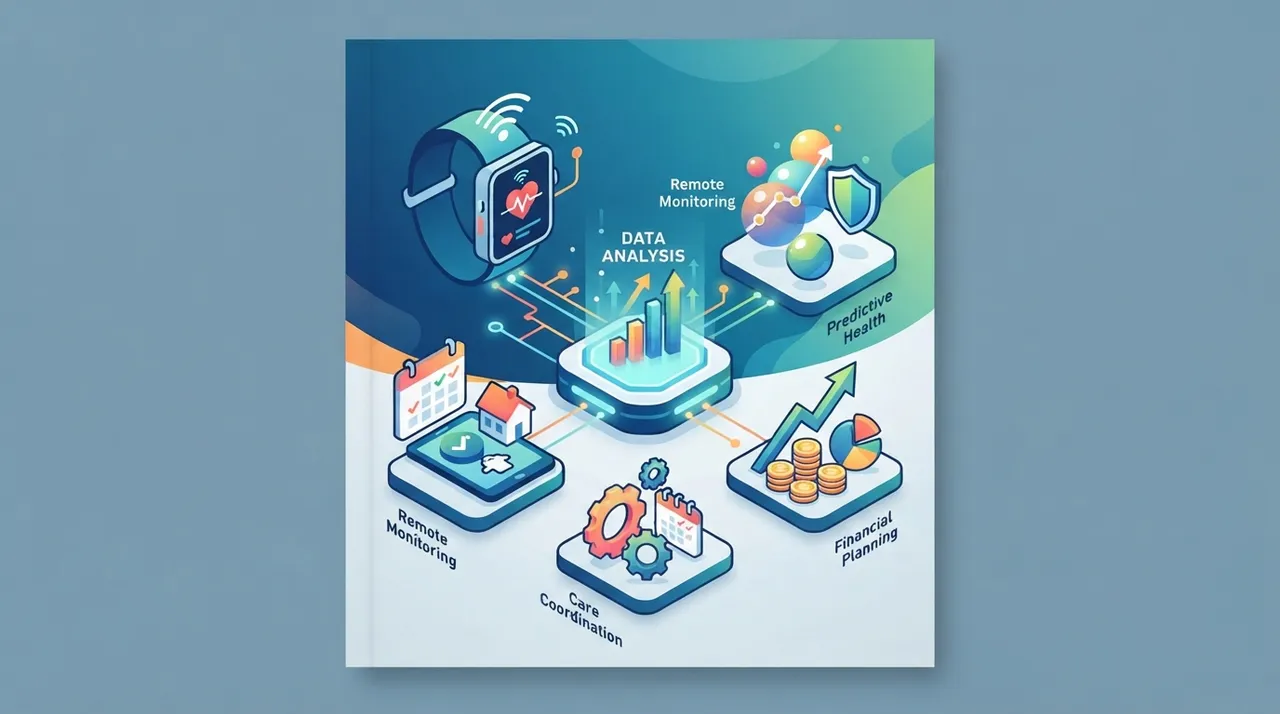
The AI-Powered Home Healthcare Platform for Seniors project aims to provide comprehensive and personalized care solutions for seniors in the Sultanate of Oman. The opportunity is based on the increasing number of elderly people in the Sultanate and the desire for high-quality healthcare in a comfortable home environment, in addition to the government's trend towards digital transformation in healthcare. The business model relies on offering monthly or annual subscription packages that include remote medical consultation services, smart health monitoring (using wearable devices), scheduling home nursing visits when needed, medication reminders, and psychological and social support. The target customers are seniors who require continuous care or assistance in managing chronic conditions, and their families looking for reliable and convenient solutions.
Market and Demand Study
The health sector in the Sultanate of Oman is experiencing steady growth, driven by "Oman Vision 2040" which focuses on developing a leading healthcare system with international standards. The size of the healthcare market in Oman is estimated at approximately 1.66 billion USD in 2025, and is expected to reach 2.02 billion USD by 2029, with a compound annual growth rate of 5.16%. Seniors represent a growing demographic, with approximately 147,645 people aged 65 and over in mid-2025, an increase of 5.73% from 2024. Forecasts indicate that the number of individuals aged 60 and over in Oman will rise to 376,716 by 2040. This population growth is accompanied by an increasing demand for home healthcare services, driven by the desire for personalized care and avoiding hospitals. The Omani government also pays special attention to senior healthcare and has launched the National Program for Elderly Care. Oman is also witnessing rapid adoption of digital technologies in the health sector, with the launch of national strategies for digital health (2024-2030) and artificial intelligence, providing a favorable environment for the growth of AI-powered platforms.
Market Sizing (TAM / SAM / SOM)
The market sizing methodology relies on estimating the size of the target segment of seniors in the Sultanate of Oman aged over 60, taking into account the high internet penetration rate (95.3% in 2025) and their ability to adopt digital solutions. The average monthly expenditure per customer on home healthcare and AI services is estimated based on local and regional market studies for home care services (private nurse visit costs range from 15-30 OMR per visit in 2025) and medical consultation costs (10-20 OMR for a general practitioner, and 30-50 OMR for a specialist). A realistic market penetration rate is then applied for the initial years, considering competition and the expected adoption rate of new technologies in the Omani health sector. Estimates are updated annually based on population growth and sector development.
| Level | Annual Size | Description |
|---|---|---|
| TAM — Total Addressable Market | 75.0 million OMR | Total serviceable demand |
| SAM — Serviceable Available Market | 25.0 million OMR | The portion your model reaches |
| SOM — Serviceable Obtainable Market | 2.5 million OMR | Your realistic early share |
Sizing Basis: The total market size is estimated based on the number of seniors in Oman (approximately 147,645 people aged 65 and over in 2025 and 376,716 aged 60 and over by 2040) and average expenditure on home healthcare, considering that approximately 35% of seniors are currently targeted by government care programs. The serviceable available market is derived from the segment of seniors who can afford to pay or are insured and have internet access (95.3% in 2025). The serviceable obtainable market represents a small percentage of the available market in the initial years of operation.
Unit Economics
Measures the profitability of each sales unit/customer — the most accurate feasibility indicator:
| Unit Indicator | Value |
|---|---|
| Sales Unit | Monthly customer subscription |
| Average Price/Revenue per Unit | 150 OMR |
| Customer Acquisition Cost (CAC) | 300 OMR |
| Customer Lifetime Value (LTV) | 2,700 OMR |
| LTV/CAC Ratio | 9x (healthy) |
| Contribution Margin | 70% |
Competitive Analysis
The home healthcare market in Oman has a presence of some traditional service providers, as well as clinics and hospitals offering limited home services. However, the sustainable advantage of our platform lies in the deep integration of AI into all aspects of the service, from AI-powered initial diagnosis, to personalized care plans, proactive monitoring, and predicting health needs, providing more efficient, effective, and personalized care. Furthermore, focusing on a seamless user experience and easy access through an integrated application and platform, in addition to building a rich database of patient health information, will represent a barrier against competitors. Moreover, we will strive to build strategic partnerships with local healthcare providers and insurance companies to enhance our reach and reliability.
Market Entry and Pricing Plan
The market entry plan relies on targeting families with elderly members and their caregivers, in addition to partnerships with hospitals, clinics, and elderly care centers that may need to complement their services. The marketing strategy will include focused digital campaigns across social media and specialized health platforms, as well as awareness workshops and community events to increase awareness of the service and its benefits. The main channels will be the platform's smart application and website, and a specialized call center. Pricing will include flexible packages suitable for various needs and budgets, offering options for monthly and annual subscriptions, and customized service packages.
Capacity and Operations
The platform's operational capacity scales from serving 50 clients in the first year to 300 clients within 5 years, focusing on AI-powered operational efficiency and reducing reliance on unnecessary physical visits. Occupancy gradually increases with trust building and service expansion.
The platform's daily operations include receiving new client requests, assessing their health needs through AI-powered questionnaires and initial remote consultations, designing an individualized care plan for each client, scheduling nursing visits (if needed), and monitoring health data received from smart devices. Service quality will be ensured through a continuous client evaluation system, periodic review of caregiver performance, and adherence to health and professional standards issued by the Omani Ministry of Health. The technical support team will operate around the clock to ensure the smooth functioning of the platform and respond to any emergencies.
The technical aspects of the project rely on developing an integrated digital platform (web application and mobile application) that uses the latest AI and machine learning technologies to process health data, analyze patterns, and provide personalized recommendations. This will require a robust technical infrastructure, including secure servers for storing sensitive data in accordance with the Omani Personal Data Protection Law (Sultanic Decree 6/2022), and advanced cybersecurity systems. AI algorithms will be developed in collaboration with medical and technical experts to ensure accuracy and reliability. As for the operational location, it will initially be limited to a small office space for managing operations and technical support, with reliance on a remote work model for many staff. Suppliers will be carefully selected to provide smart wearable devices and secure communication systems.
Projected Income Statement (5 years)
| Item \ Year | Y1 | Y2 | Y3 | Y4 | Y5 |
|---|---|---|---|---|---|
| Revenue | 90,000 OMR | 103,500 OMR | 119,025 OMR | 136,879 OMR | 157,411 OMR |
| Cost of Sales | (27,000 OMR) | (31,050 OMR) | (35,707 OMR) | (41,064 OMR) | (47,223 OMR) |
| Gross Profit | 63,000 OMR | 72,450 OMR | 83,318 OMR | 95,815 OMR | 110,187 OMR |
| Operating Expenses | (40,500 OMR) | (46,575 OMR) | (53,561 OMR) | (61,595 OMR) | (70,835 OMR) |
| EBITDA | 22,500 OMR | 25,875 OMR | 29,756 OMR | 34,220 OMR | 39,353 OMR |
| Tax | (0 OMR) | (0 OMR) | (0 OMR) | (0 OMR) | (0 OMR) |
| Net Profit | -7,500 OMR | -4,125 OMR | -244 OMR | 4,220 OMR | 9,353 OMR |
| Net Margin | -8% | -4% | -0% | 3% | 6% |
Capital Investment Structure
| Item | Cost | Percentage |
|---|---|---|
| Platform and AI Development | 52,500 OMR | 35% |
| Licenses and Legal Requirements | 15,000 OMR | 10% |
| Marketing and Customer Acquisition | 30,000 OMR | 20% |
| Salaries and Initial Operating Expenses | 37,500 OMR | 25% |
| Equipment and Smart Devices | 15,000 OMR | 10% |
Cash Flow and Break-even Point
| Year | Operating Cash Flow | Cumulative Cash Flow |
|---|---|---|
| Year 1 | 22,500 OMR | -127,500 OMR |
| Year 2 | 25,875 OMR | -101,625 OMR |
| Year 3 | 29,756 OMR | -71,869 OMR |
| Year 4 | 34,220 OMR | -37,649 OMR |
| Year 5 | 39,353 OMR | 1,704 OMR |
Estimated break-even point at annual revenue ≈ 100,714 OMR (~112% of first-year revenue), with a 70% contribution margin. Cumulative cash break-even in Year 5.
Funding Structure
| Funding Source | Percentage | Amount |
|---|---|---|
| Equity | 70% | 105,000 OMR |
| Debt Financing (6% interest) | 30% | 45,000 OMR |
Sensitivity Analysis (Revenue × Operations)
Impact of combined changes in revenue and costs on Net Present Value:
| Revenue \ Operations | −10% | −5% | Base | +5% | +10% |
|---|---|---|---|---|---|
| −20% | -24,557 OMR | -42,477 OMR | -60,398 OMR | -78,318 OMR | -96,239 OMR |
| −10% | -8,877 OMR | -29,037 OMR | -49,198 OMR | -69,358 OMR | -89,519 OMR |
| Base | 6,804 OMR | -15,597 OMR | -37,997 OMR | -60,398 OMR | -82,798 OMR |
| +10% | 22,484 OMR | -2,156 OMR | -26,797 OMR | -51,438 OMR | -76,078 OMR |
| +20% | 38,164 OMR | 11,284 OMR | -15,597 OMR | -42,477 OMR | -69,358 OMR |
Scenario Analysis
| Scenario | Probability | NPV | Assessment |
|---|---|---|---|
| Pessimistic | 25% | -76,526 OMR | Unfeasible |
| Base | 50% | -37,997 OMR | Unfeasible |
| Optimistic | 25% | 8,596 OMR | Feasible |
Expected Present Value (Weighted): -35,981 OMR.
Risk Analysis and Management
| Risk | Probability | Impact | Mitigation |
|---|---|---|---|
| Challenges in obtaining medical licenses for AI | Medium | High | Close cooperation with the Ministry of Health and regulatory bodies, and alignment with Oman's evolving AI regulatory framework. |
| Resistance to adopting new technologies by seniors or caregivers | Medium | Medium | Intensive awareness campaigns, continuous training and technical support for users, designing a user-friendly and intuitive platform. |
| Competition from traditional home healthcare providers | Medium | Medium | Focus on the competitive advantage of AI, offering integrated and innovative service packages, building strategic partnerships. |
| Concerns about health data privacy and security | High | High | Strict adherence to the Omani Personal Data Protection Law, investment in the strongest cybersecurity measures, obtaining data security certificates, providing transparency about data usage. |
| Difficulty in attracting and recruiting specialized medical staff | Medium | High | Offering competitive compensation packages, providing training and professional development opportunities in digital health and AI, building an attractive work culture. |
Organizational Structure and Team
The proposed organizational structure consists of a core team including a project manager, a technical manager (responsible for AI and platform development), an operations manager (responsible for coordinating with caregivers and clients), and a marketing manager. Licensed medical and nursing staff from the Omani Ministry of Health will be hired on a part-time or contractual basis, with a focus on experience in elderly care and digital technology use. Experts in AI and machine learning will be utilized to ensure continuous development and updating of the platform's algorithms. Average salaries in Oman range from 850-900 OMR per month in early 2026, and doctors' salaries can reach up to 5000 OMR per month depending on specialization.
Legal and Regulatory Aspects
The project requires obtaining licenses from the Omani Ministry of Health to provide home healthcare and digital health services (telemedicine). The platform must comply with regulations regarding personal data protection, especially sensitive health data, in accordance with the Omani Personal Data Protection Law (Sultanic Decree 6/2022). The use of artificial intelligence in healthcare requires adherence to ethical standards, ensuring transparency and accountability, and providing adequate human oversight. The healthcare sector is exempt from value-added tax on health services, while some medicines and medical equipment are subject to a zero-rate.
Expansion and Sustainability Plan
The expansion plan involves gradually increasing the number of beneficiary clients, expanding the scope of services to include specialized treatments or rehabilitation care, and entering into strategic partnerships with more insurance companies and hospitals. In the long term, geographic expansion within Oman to cover different regions, or even regional expansion in GCC countries, can be considered, adapting the platform to meet the needs and regulatory requirements of each market. Continuous investments in AI development and user experience improvement will contribute to maintaining competitive advantage and sustainable growth.
Environmental, Social, and Governance (ESG) Impact
The project aims to achieve significant positive social impact by improving the quality of life for seniors and enabling them to live independently in their homes, reducing pressure on hospitals and traditional care centers. It also contributes to providing flexible employment opportunities for medical and nursing staff. Environmentally, the platform reduces the need for frequent travel for healthcare, thereby reducing the carbon footprint. Governance is committed to transparency and accountability in all operations, with a focus on AI ethics and data privacy protection.
Conclusions and Recommendations
The feasibility analysis shows that the AI-Powered Home Healthcare Platform for Seniors project in the Sultanate of Oman has strong growth potential and a promising market opportunity, driven by increasing demand for home care and the government's trend towards digitalization. With proper planning, effective implementation, and adherence to regulatory standards, the project can achieve rewarding financial returns and deliver significant social value. It is recommended to proceed with the project, focusing on building a strong team, advanced technological development, and an effective marketing strategy targeting the right customer segments.
Sources and Disclaimer
- Reports from the World Health Organization and UNESCO related to aging and digital healthcare in the region.
- Market reports issued by specialized research entities in the healthcare and digital transformation sectors in the Middle East and Oman.
- Sultanic Decrees and regulations issued by the Omani Ministry of Health and the Telecommunications Regulatory Authority.
- Statistics from the National Center for Statistics and Information on population and internet usage in Oman.
- Academic articles and studies on the challenges and opportunities of digital healthcare and artificial intelligence in Oman.
Disclaimer: This is a guiding study based on sector-specific assumptions and standards at the time of preparation; verify local figures before any investment decision.