Executive Summary
The **Tech Accessories Store** project in the technology sector in Morocco targets a promising market opportunity. With an investment of **180,000 MAD**, it achieves a Net Present Value of -12,748 MAD, an Internal Rate of Return of 9%, and a payback period of 4 years.
| Indicator | Value |
|---|---|
| Initial Investment | 180,000 MAD |
| First Year Revenue | 250,000 MAD |
| Annual Growth (CAGR) | 15% |
| Net Margin (Y1) | 1% |
| Return on Investment (Avg.) | 7% annually |
| Net Present Value (NPV) | -12,748 MAD |
| Internal Rate of Return (IRR) | 9% |
| Profitability Index (PI) | 1 |
| Payback Period | 4 years |
| Breakeven Year | Year 5 |
| Expected NPV (Probability-Weighted) | -11,277 MAD |
Assumptions and Basis
The figures in this study are based on project data, the nature of the technology sector in Morocco, and local market indicators, according to the following assumptions:
| Assumption | Value |
|---|---|
| Initial Capital | 180,000 MAD |
| First Year Revenue | 250,000 MAD |
| Annual Growth | 15% |
| Cost of Goods Sold (COGS) | 60% of Revenue |
| Operating Expenses | 25% of Revenue |
| Tax/Zakat | 20% |
| Discount Rate (WACC) | 12% |
| Study Horizon | 5 years |
Basis of Assumptions: Figures are estimates based on averages for the tech and e-commerce sectors in Morocco and the proposed investment size.
Project Description and Opportunity
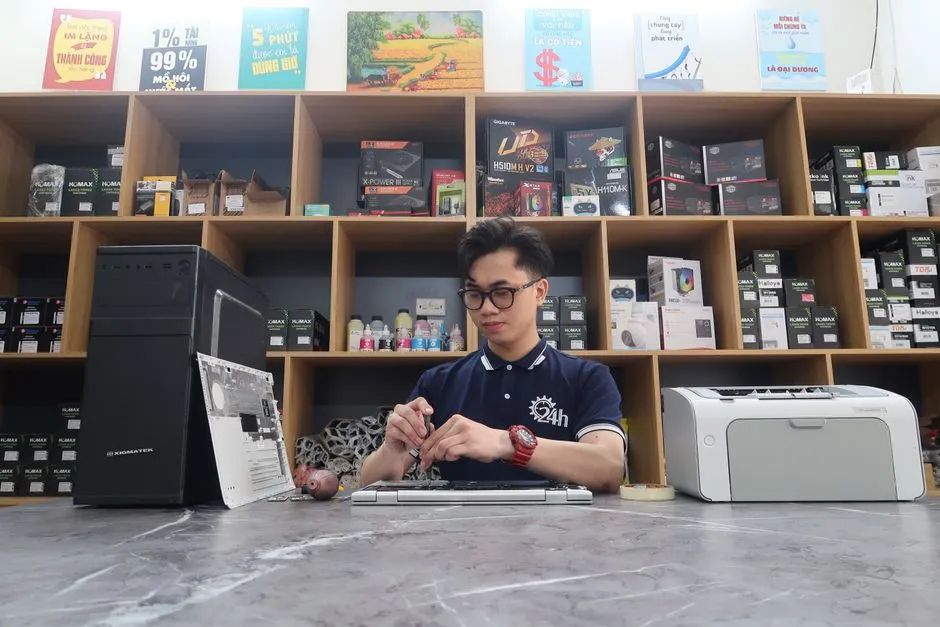
The project aims to establish a specialized store for selling high-quality tech accessories, such as phone chargers, wireless headphones, device stands, screen protectors, external batteries, and other accessories that enhance the user experience of smart devices. The project targets Moroccan consumers who are increasingly reliant on digital technology and smartphones in their daily lives. The business model adopts a mix of traditional retail through a physical store (if feasible) and online sales through a professional e-commerce store, with a focus on a distinctive customer experience and offering a diverse range of modern products.
Market and Demand Study
The technology and telecommunications market in Morocco is experiencing strong growth, with the ICT sector expected to reach $10.08 billion by 2030. This growth is supported by factors such as the launch of 5G networks, the expansion of digital services, and the increased penetration of the internet and smartphone usage. Demand for electronic accessories is growing as an integral part of daily device use, making this sector promising for growth. Key demand drivers include the need to improve device performance, extend their lifespan, and increase convenience and security in use. The continuous growth of e-commerce in Morocco, which is expected to reach $3.51 billion by 2029, also contributes to providing effective sales channels for these products.
Market Sizing (TAM / SAM / SOM)
The market has been qualitatively sized based on growth data in the ICT sector in Morocco, taking into account the percentage of spending on tech accessories as part of the total spending on smart devices. The estimate relies on market reports indicating increasing technology and internet usage and e-commerce growth forecasts. The market is segmented based on age groups, purchasing power, and interest in modern technologies, with a focus on high-density urban areas (such as Casablanca, Rabat, and Marrakech) that show the highest concentration of technology spending.
| Level | Annual Size | Description |
|---|---|---|
| TAM — Total Available Market | 7000.0 million MAD | Total serviceable demand |
| SAM — Serviceable Available Market | 2000.0 million MAD | The segment your model reaches |
| SOM — Serviceable Obtainable Market | 200.0 million MAD | Your realistic early share |
Basis of Sizing: Total Available Market (TAM) reflects a portion of the Moroccan ICT market expected to reach $10.08 billion by 2030. Serviceable Available Market (SAM) represents a percentage of that focused on consumer accessories. Serviceable Obtainable Market (SOM) is a realistic and achievable percentage in the first year.
Unit Economics
Measures the profitability of each sales unit/customer — the most accurate feasibility indicator:
| Unit Indicator | Value |
|---|---|
| Sales Unit | Sales Unit |
| Average Price/Revenue per Unit | 120 MAD |
| Customer Acquisition Cost (CAC) | 80 MAD |
| Customer Lifetime Value (LTV) | 240 MAD |
| LTV/CAC Ratio | 3x (Healthy) |
| Contribution Margin | 40% |
Competitive Analysis
The Moroccan market for tech accessories is characterized by competition from major electronics stores, specialized phone stores, and local and international e-commerce stores. The project's sustainable advantage lies in offering a diverse and curated selection of high-quality products, with a focus on excellent customer service, a flexible return policy, and fast delivery. The store can also differentiate itself by offering unique or specially designed accessories and providing value-added offers such as extended warranties or installation services.
Market Entry and Pricing Plan
The market entry plan is based on an integrated marketing strategy that includes digital and traditional channels. Social media marketing campaigns (Facebook, Instagram, TikTok) will be used to target young, tech-savvy demographics. Content marketing through blogs and product reviews will also be emphasized. Pricing will involve a competitive strategy with attractive promotions and discounts. Cash-on-delivery will be activated as a primary option due to its prevalence in Morocco, in addition to secure electronic payment options. Contracts will be made with reliable delivery companies to ensure fast and efficient shipping to all Moroccan cities.
Capacity and Operations
The capacity ranges from 2000 sales units per month initially, with 40% utilization in the first year, reaching 80% in the third year with improved supply chain efficiency and logistics operations.
Daily operations include efficient inventory management to ensure the availability of required products and avoid shortages or overstock. A system for managing orders, shipping, and delivery will be implemented, with precise tracking of delivery operations and resolution of any issues that may arise. Quality is the cornerstone of the project, so products will be inspected before sale, and suppliers offering guarantees will be dealt with. Excellent technical support and customer service will also be provided to answer customer inquiries and assist them in product selection.
The technical aspect of the project includes selecting a strategic location for the physical store in a bustling commercial area with high traffic (if a physical store exists). For the online store, a professional e-commerce platform will be relied upon, providing ease of use, security, and integrated payment and shipping options. Reliable wholesale suppliers for tech accessories will be identified, both locally from wholesale markets (such as Derb Omar) and internationally, with a focus on product quality and competitive prices.
Projected Income Statement (5 Years)
| Item \ Year | Y1 | Y2 | Y3 | Y4 | Y5 |
|---|---|---|---|---|---|
| Revenue | 250,000 MAD | 287,500 MAD | 330,625 MAD | 380,219 MAD | 437,252 MAD |
| Cost of Sales | (150,000 MAD) | (172,500 MAD) | (198,375 MAD) | (228,131 MAD) | (262,351 MAD) |
| Gross Profit | 100,000 MAD | 115,000 MAD | 132,250 MAD | 152,087 MAD | 174,901 MAD |
| Operating Expenses | (62,500 MAD) | (71,875 MAD) | (82,656 MAD) | (95,055 MAD) | (109,313 MAD) |
| EBITDA | 37,500 MAD | 43,125 MAD | 49,594 MAD | 57,033 MAD | 65,588 MAD |
| Tax | (300 MAD) | (1,425 MAD) | (2,719 MAD) | (4,207 MAD) | (5,918 MAD) |
| Net Profit | 1,200 MAD | 5,700 MAD | 10,875 MAD | 16,826 MAD | 23,670 MAD |
| Net Margin | 1% | 2% | 3% | 4% | 5% |
Investment Cost Structure
| Item | Cost | Percentage |
|---|---|---|
| Initial Inventory Purchase | 90,000 MAD | 50% |
| Store Setup (Rent, Decor, Furniture) | 36,000 MAD | 20% |
| Marketing and Advertising | 27,000 MAD | 15% |
| Setup Fees and Licenses | 9,000 MAD | 5% |
| Initial Operating Expenses (Salaries, Bills) | 18,000 MAD | 10% |
Cash Flow and Breakeven Point
| Year | Operating Cash Flow | Cumulative Cash Flow |
|---|---|---|
| Year 1 | 37,200 MAD | -142,800 MAD |
| Year 2 | 41,700 MAD | -101,100 MAD |
| Year 3 | 46,875 MAD | -54,225 MAD |
| Year 4 | 52,826 MAD | -1,399 MAD |
| Year 5 | 59,670 MAD | 58,271 MAD |
Estimated breakeven point at annual revenue ≈ 246,250 MAD (~99% of first-year revenue), with a 40% contribution margin. Cumulative cash breakeven in Year 5.
Funding Structure
| Funding Source | Percentage | Amount |
|---|---|---|
| Equity | 70% | 126,000 MAD |
| Debt Financing (7% interest) | 30% | 54,000 MAD |
Sensitivity Analysis (Revenue × Operating Costs)
The impact of changes in both revenue and costs on Net Present Value:
| Revenue \ Operating Costs | −10% | −5% | Base | +5% | +10% |
|---|---|---|---|---|---|
| −20% | 34,352 MAD | -3,328 MAD | -42,318 MAD | -85,801 MAD | -132,901 MAD |
| −10% | 57,902 MAD | 15,512 MAD | -27,279 MAD | -74,407 MAD | -127,013 MAD |
| Base | 81,451 MAD | 34,352 MAD | -12,747 MAD | -63,385 MAD | -121,126 MAD |
| +10% | 105,001 MAD | 53,192 MAD | 1,382 MAD | -52,642 MAD | -115,238 MAD |
| +20% | 128,551 MAD | 72,031 MAD | 15,512 MAD | -42,318 MAD | -109,351 MAD |
Scenario Analysis
| Scenario | Probability | NPV | Assessment |
|---|---|---|---|
| Pessimistic | 25% | -63,385 MAD | Not Feasible |
| Base | 50% | -12,747 MAD | Not Feasible |
| Optimistic | 25% | 43,772 MAD | Feasible |
Expected Present Value (Weighted): -11,277 MAD.
Risk Analysis and Management
| Risk | Probability | Impact | Mitigation |
|---|---|---|---|
| Intense competition from major and online stores | High | Medium | Differentiation with unique products, excellent customer service, targeted marketing. |
| Product price fluctuations and changing tech trends | Medium | Medium | Diversify suppliers, follow latest trends, effectively manage inventory to avoid accumulation of old products. |
| Logistical difficulties and delivery delays | Medium | High | Contract with reliable delivery companies, track shipments, provide customer service to resolve issues. |
| Low trust in online purchasing and cash-on-delivery | Medium | Medium | Build a good store reputation, provide secure and diverse payment options, clear return and exchange policy. |
| Product quality issues or manufacturing defects | Low | Medium | Select reliable suppliers, inspect products before sale, clear warranty policy for customers. |
Organizational Structure and Team
The proposed organizational structure consists of a project manager who oversees overall operations, a sales associate for the physical store (if applicable), a manager for the e-commerce store and digital marketing, and a logistics and customer service manager. The project can start with a small, multi-tasking team, gradually expanding as the project grows. The team requires good knowledge of tech products, and skills in customer service and digital marketing.
Legal and Regulatory Aspects
Establishing the project in Morocco requires obtaining the necessary licenses, which include company registration (SARL or SARL AU are the most common legal forms for small and medium-sized enterprises) with the Moroccan Office of Industrial and Commercial Property (OMPIC) and the commercial register. A tax identification card must be obtained and registration for Value Added Tax (TVA) is required if sales exceed the prescribed limit. Compliance with consumer protection laws and personal data protection is also mandatory, especially for e-commerce.
Expansion and Sustainability Plan
The expansion plan involves increasing the range of products offered to include broader categories of tech accessories and targeting new customer segments. Geographic expansion can be achieved by opening additional physical sales points in other Moroccan cities, or by strengthening digital presence and reaching regional markets. Partnerships with telecommunications companies or major electronics stores can also be explored. Sustainability aims to build a strong brand with customer loyalty and continuous improvement of product and service quality.
Environmental, Social, and Governance (ESG) Impact
The project focuses on reducing environmental impact by selecting suppliers who adopt eco-friendly practices and encouraging packaging recycling. Socially, the project contributes to providing employment opportunities and training Moroccan youth in trade and technology. Governance is committed to transparency and accountability standards in all aspects of work, including dealing with customers, suppliers, and legal obligations.
Conclusions and Recommendations
The tech accessories store project in Morocco has promising growth opportunities, driven by the expansion of the technology market and e-commerce. With effective management, a focus on quality, a strong marketing strategy, and excellent customer service, good financial returns can be achieved, and a successful brand can be established in this vital sector.
Frequently Asked Questions
How much does it cost to set up a tech accessories store in Morocco?
The estimated cost to set up a tech accessories store in Morocco is approximately 180,000 MAD, including initial inventory, fittings, and initial marketing.
Is a tech accessories store project profitable in Morocco?
Yes, the project is considered profitable due to the growth of the technology market and increased demand for accessories, with expected first-year revenues of approximately 250,000 MAD and a contribution margin of 40%.
What licenses are required to open a tech accessories store in Morocco?
The project requires company registration (SARL or SARL AU), obtaining a commercial register, a tax identification card, and registration for Value Added Tax, in addition to complying with consumer protection laws.
What is the average selling price of tech accessories in Morocco?
The average selling price of a tech accessory unit is approximately 120 MAD, with prices varying depending on the product type and quality.
What are the main challenges the project might face?
Challenges include intense competition, product price fluctuations, logistical difficulties in delivery, low trust in online purchasing, and product quality issues.
Sources and Disclaimer
- Mordor Intelligence and Research and Markets reports on the information technology and e-commerce market in Morocco.
- Specialized websites for feasibility studies and small projects in Morocco.
- E-commerce platforms and tech accessory stores in Morocco.
- Analysis of customer acquisition cost and customer lifetime value in Morocco.
- Moroccan government websites on taxes and company formation.
Disclaimer: This is a guiding study that provides financial analysis according to approved industry standards; verify figures locally according to your project's reality before any investment decision.