Executive Summary
The plastic recycling project in the energy and environment sector in Kuwait targets a promising market opportunity. With an investment of ٧٥٬٠٠٠ KWD, it achieves a Net Present Value of ٦٬٨١٨ KWD, an Internal Rate of Return of ١٣٪, and a payback period of 3.6 years.
| Indicator | Value |
|---|---|
| Initial Investment | ٧٥٬٠٠٠ KWD |
| First-Year Revenue | ٩٠٬٠٠٠ KWD |
| Annual Growth (CAGR) | ١٠٪ |
| Net Margin (Y1) | ٣٪ |
| Return on Investment (Avg.) | ٩٪ annually |
| Net Present Value (NPV) | ٦٬٨١٨ KWD |
| Internal Rate of Return (IRR) | ١٣٪ |
| Profitability Index (PI) | ١ |
| Payback Period | ٤ years |
| Break-even Year | Year ٤ |
| Expected NPV (Probability-Weighted) | ٧٬٨٤١ KWD |
Assumptions and Basis
The figures in this study are based on project data, the nature of Kuwait's energy and environment sector, and local market indicators, according to the following assumptions:
| Assumption | Value |
|---|---|
| Initial Capital | ٧٥٬٠٠٠ KWD |
| First-Year Revenue | ٩٠٬٠٠٠ KWD |
| Annual Growth | ١٠٪ |
| Cost of Goods Sold (COGS) | ٥٥٪ of Revenue |
| Operating Expenses | ٢٥٪ of Revenue |
| Tax/Zakat | ٠٪ |
| Discount Rate (WACC) | ١٠٪ |
| Study Horizon | ٥ years |
Basis of Assumptions: Figures are estimates for a small project based on collecting and processing plastic to produce pellets, taking into account average raw material and final product prices in the Kuwaiti market and operating costs.
Project Description and Opportunity
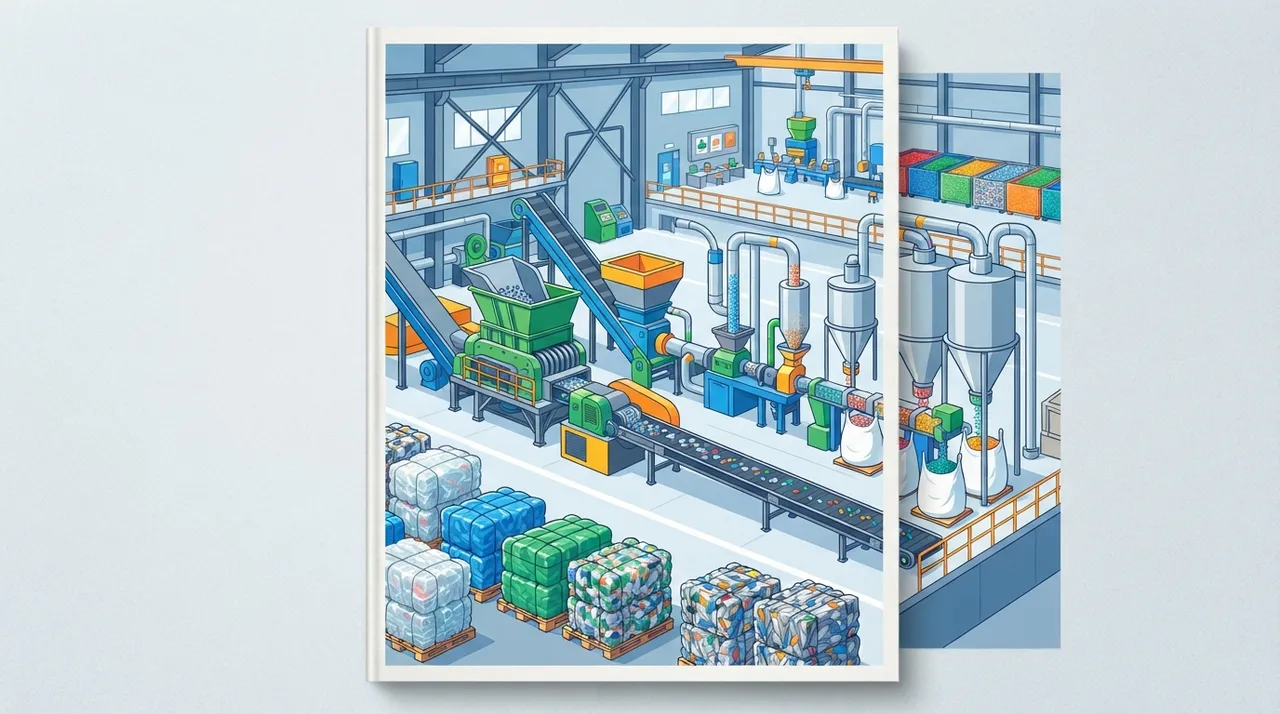
The plastic recycling project in Kuwait aims to process plastic waste and convert it into plastic pellets or other usable products, contributing to reducing environmental pollution and promoting the circular economy. The business idea relies on collecting various plastic waste, such as water bottles and detergent containers, from different sources like homes, businesses, and factories, then sorting, washing, shredding, and melting it to produce high-quality plastic pellets. The project primarily targets local factories that use plastic as a raw material in their industries, such as packaging, furniture, and building materials manufacturing. Kuwait produces approximately 314,000 tons of plastic waste annually, with only 8% currently recycled, indicating a large untapped opportunity in this sector.
Market and Demand Study
The Kuwaiti market is experiencing increasing demand for recycled products and environmentally friendly raw materials. Plastic waste poses a significant environmental challenge in Kuwait, with an estimated 314,000 tons generated annually, most of which is disposed of in landfills. This represents a great opportunity for recycling projects to reduce environmental impact and provide raw materials. Demand drivers include increasing environmental awareness, government support for recycling initiatives, and rising prices of virgin plastic, which makes recycled alternatives more economically attractive for factories. There is also growing interest from local companies in achieving sustainability goals and reducing their carbon footprint.
Market Sizing (TAM / SAM / SOM)
Market sizing is based on estimating the total volume of plastic waste generated in Kuwait annually, which is approximately 314,000 tons. This volume is converted into monetary value based on the average selling price per ton of recycled plastic pellets. Total Addressable Market (TAM) is estimated based on all plastic waste that can be recycled. Serviceable Available Market (SAM) focuses on plastic waste that the project can efficiently collect and process, considering logistical and operational constraints. Serviceable Obtainable Market (SOM) represents the realistic share the project can capture in the early years, considering competition and the project's operational capacity. These estimates were determined based on available data on waste volume and current recycling rates in Kuwait.
| Level | Annual Volume | Description |
|---|---|---|
| TAM — Total Market | 31.4 million KWD | Total Addressable Demand |
| SAM — Available Market | 15.7 million KWD | Portion reachable by your model |
| SOM — Realistic Target | 3.1 million KWD | Your realistic early share |
Sizing Basis: Market sizing is based on the annual volume of plastic waste generated in Kuwait (314,000 tons) and its conversion into monetary value based on average prices of recycled plastic.
Unit Economics
Measures the profitability of each sales unit/customer — the most accurate feasibility indicator:
| Unit Indicator | Value |
|---|---|
| Sales Unit | Ton of Plastic Pellets |
| Avg. Price/Revenue per Unit | ٣٠٠ KWD |
| Customer Acquisition Cost (CAC) | ٥٠ KWD |
| Customer Lifetime Value (LTV) | ٣٬٠٠٠ KWD |
| LTV/CAC Ratio | ٦٠× (healthy) |
| Contribution Margin | ٤٥٪ |
Competitive Analysis
There are several plastic recycling factories and companies in Kuwait, such as Metal & Recycling Co. (MRC) and Be'atuna Recycling Company. These companies compete for plastic waste sources and customers. The project's sustainable advantage will be its focus on the quality of produced plastic pellets, offering customized solutions to customers, building a strong network for collecting waste from diverse sources, and applying modern technologies to reduce costs and increase efficiency. Partnerships with government entities and civil society organizations, such as the Omniya initiative, to raise awareness and facilitate waste collection will also be a significant competitive element.
Go-to-Market Strategy and Pricing
The go-to-market strategy relies on building strong relationships with local factories that use plastic as a raw material, waste management companies, municipalities, and commercial centers to secure continuous sources of plastic waste. Products (recycled plastic pellets) will be marketed through participation in industrial and environmental exhibitions, targeted digital marketing for businesses, and offering free samples to potential buyers. Distribution channels will be direct to beneficiary factories, with a focus on offering competitive prices and high quality. Pricing will be based on production costs and market prices for virgin and recycled plastic, with incentives for large orders and long-term contracts.
Capacity and Operations
The factory will start with an initial production capacity of 1000 tons of plastic pellets annually, with a plan for gradual expansion to reach 3000 tons within 3-5 years, at an occupancy rate starting from 50% in the first year and increasing to 80% in the third year.
Daily operations include collecting plastic waste, sorting it manually or automatically by type and color, washing it to remove impurities, shredding it into small pieces (flakes), drying it, then melting and extruding it to produce plastic pellets. Strict quality control procedures will be applied at each stage to ensure the quality of the final product. Daily operations also include equipment maintenance, inventory management, and logistics handling. Workers will be trained in best practices for sorting and safe operation of equipment.
The project requires a site in an industrial area with essential services, ranging from 800 to 1500 square meters to accommodate production lines and storage. Key equipment includes sorting machines (manual or automatic), washing machines, shredding machines (granulators), drying machines, and pelletizing (extrusion) machines. Emphasis will be placed on reliable equipment suppliers, with the possibility of importing integrated production lines for higher efficiency. Raw materials will consist of various types of plastic waste such as PET, HDPE, and PP, which will be sourced from waste collection companies, factories, and commercial and industrial establishments.
Projected Income Statement (5 Years)
| Item \ Year | Y1 | Y2 | Y3 | Y4 | Y5 |
|---|---|---|---|---|---|
| Revenue | ٩٠٬٠٠٠ KWD | ٩٩٬٠٠٠ KWD | ١٠٨٬٩٠٠ KWD | ١١٩٬٧٩٠ KWD | ١٣١٬٧٦٩ KWD |
| Cost of Sales | (٤٩٬٥٠٠ KWD) | (٥٤٬٤٥٠ KWD) | (٥٩٬٨٩٥ KWD) | (٦٥٬٨٨٥ KWD) | (٧٢٬٤٧٣ KWD) |
| Gross Profit | ٤٠٬٥٠٠ KWD | ٤٤٬٥٥٠ KWD | ٤٩٬٠٠٥ KWD | ٥٣٬٩٠٦ KWD | ٥٩٬٢٩٦ KWD |
| Operating Expenses | (٢٢٬٥٠٠ KWD) | (٢٤٬٧٥٠ KWD) | (٢٧٬٢٢٥ KWD) | (٢٩٬٩٤٨ KWD) | (٣٢٬٩٤٢ KWD) |
| EBITDA | ١٨٬٠٠٠ KWD | ١٩٬٨٠٠ KWD | ٢١٬٧٨٠ KWD | ٢٣٬٩٥٨ KWD | ٢٦٬٣٥٤ KWD |
| Tax | (٠ KWD) | (٠ KWD) | (٠ KWD) | (٠ KWD) | (٠ KWD) |
| Net Profit | ٣٬٠٠٠ KWD | ٤٬٨٠٠ KWD | ٦٬٧٨٠ KWD | ٨٬٩٥٨ KWD | ١١٬٣٥٤ KWD |
| Net Margin | ٣٪ | ٥٪ | ٦٪ | ٨٪ | ٩٪ |
Investment Cost Structure
| Item | Cost | Percentage |
|---|---|---|
| Equipment Purchase and Installation | ٣٠٬٠٠٠ KWD | ٤٠٪ |
| Site Preparation and Infrastructure | ١٨٬٧٥٠ KWD | ٢٥٪ |
| Initial Working Capital | ١١٬٢٥٠ KWD | ١٥٪ |
| Licensing and Consultation Costs | ٧٬٥٠٠ KWD | ١٠٪ |
| Initial Wages and Salaries | ٧٬٥٠٠ KWD | ١٠٪ |
Cash Flow and Break-even Point
| Year | Operating Cash Flow | Cumulative Cash Flow |
|---|---|---|
| Year ١ | ١٨٬٠٠٠ KWD | -٥٧٬٠٠٠ KWD |
| Year ٢ | ١٩٬٨٠٠ KWD | -٣٧٬٢٠٠ KWD |
| Year ٣ | ٢١٬٧٨٠ KWD | -١٥٬٤٢٠ KWD |
| Year ٤ | ٢٣٬٩٥٨ KWD | ٨٬٥٣٨ KWD |
| Year ٥ | ٢٦٬٣٥٤ KWD | ٣٤٬٨٩٢ KWD |
Estimated break-even point at an annual revenue of ≈ ٨٣٬٣٣٣ KWD (~٩٣٪ of first-year revenue), with a ٤٥٪ contribution margin. Cumulative cash break-even in Year ٤.
Funding Structure
| Funding Source | Percentage | Amount |
|---|---|---|
| Equity | ٧٠٪ | ٥٢٬٥٠٠ KWD |
| Debt Financing (7% interest) | ٣٠٪ | ٢٢٬٥٠٠ KWD |
Sensitivity Analysis (Revenue × Operations)
Impact of combined changes in revenue and costs on Net Present Value:
| Revenue \ Operations | −10٪ | −5٪ | Base | +5٪ | +10٪ |
|---|---|---|---|---|---|
| −20٪ | ٢٣٬١٨٢ KWD | ٦٬٨١٨ KWD | -٩٬٥٤٥ KWD | -٢٥٬٩٠٩ KWD | -٤٢٬٢٧٣ KWD |
| −10٪ | ٣٥٬٤٥٥ KWD | ١٧٬٠٤٥ KWD | -١٬٣٦٤ KWD | -١٩٬٧٧٣ KWD | -٣٨٬١٨٢ KWD |
| Base | ٤٧٬٧٢٧ KWD | ٢٧٬٢٧٣ KWD | ٦٬٨١٨ KWD | -١٣٬٦٣٦ KWD | -٣٤٬٠٩١ KWD |
| +10٪ | ٦٠٬٠٠٠ KWD | ٣٧٬٥٠٠ KWD | ١٥٬٠٠٠ KWD | -٧٬٥٠٠ KWD | -٣٠٬٠٠٠ KWD |
| +20٪ | ٧٢٬٢٧٣ KWD | ٤٧٬٧٢٧ KWD | ٢٣٬١٨٢ KWD | -١٬٣٦٤ KWD | -٢٥٬٩٠٩ KWD |
Scenario Analysis
| Scenario | Probability | NPV | Assessment |
|---|---|---|---|
| Pessimistic | ٢٥٪ | -١٧٬٧٢٧ KWD | Not feasible |
| Base | ٥٠٪ | ٦٬٨١٨ KWD | Feasible |
| Optimistic | ٢٥٪ | ٣٥٬٤٥٥ KWD | Feasible |
Expected Present Value (Weighted): ٧٬٨٤١ KWD.
Risk Analysis and Management
| Risk | Probability | Impact | Mitigation |
|---|---|---|---|
| Fluctuations in recycled raw material prices | Medium | High | Long-term contracts with suppliers and customers, diversification of waste sources, and improving production efficiency to reduce costs. |
| Insufficient availability of high-quality plastic waste | Medium | Medium | Developing a strong and diverse collection network, partnering with government and private entities for waste collection programs, and awareness campaigns to increase source segregation. |
| Changes in environmental regulations and legislation | Low | Medium | Continuous monitoring of legislative changes, building good relationships with government agencies, and rapid adaptation to any new requirements. |
| Competition from existing or new factories | Medium | Medium | Focus on quality, product innovation, cost efficiency, and providing excellent customer service to build customer loyalty. |
| Challenges in financing future expansion | Medium | Medium | Maintaining a strong financial record, exploring diverse financing options (debt, equity, grants), and flexible expansion plans. |
Organizational Structure and Team
The organizational structure will consist of a General Manager for the project, an Operations Manager, a Sales and Marketing Manager, and a Finance and Administration Officer. Technical staff requirements include production engineers, maintenance technicians, and operation and sorting workers. Skilled and trained labor will be hired to ensure operational efficiency and product quality. The average monthly salary for workers in Kuwait ranges from 70 to 800 Kuwaiti Dinars, depending on the type of work and experience. Continuous training programs will be provided to enhance the team's skills in recycling and occupational safety.
Legal and Regulatory Aspects
The project requires obtaining multiple licenses from government agencies in Kuwait, such as the Environment Public Authority to ensure compliance with environmental standards, and the Ministry of Commerce and Industry for industrial activity licensing. Approvals from the Municipality and the Ministry of Electricity and Water must also be obtained. Companies in Kuwait are subject to a 15% income tax on foreign companies, while no income tax is imposed on Kuwaiti companies wholly owned by Kuwaiti citizens or citizens of GCC countries. However, Kuwaiti shareholding companies are obligated to pay Zakat (1% of net profits) and a national labor support contribution (2.5% of net profits for listed companies) and a Kuwait Foundation for the Advancement of Sciences contribution (1% of net profits for Kuwaiti shareholding companies).
Expansion and Sustainability Plan
Expansion and sustainability plans include increasing the factory's production capacity by adding new production lines or upgrading existing equipment, expanding the waste collection network to include new areas and sources, and diversifying products to include different types of plastic pellets or even manufacturing finished products from recycled plastic. Sustainability can be achieved through innovation in recycling processes, research and development to improve product quality, and building strategic partnerships with major factories and government institutions to support the circular economy in Kuwait.
Environmental, Social, and Governance (ESG) Impact
The project directly contributes to mitigating environmental pollution from plastic waste, which constitutes 13% of total solid waste in Kuwait. It also reduces carbon emissions associated with virgin plastic production and conserves natural resources. The social impact lies in creating new job opportunities, raising environmental awareness in society, and contributing to achieving Kuwait's sustainable development goals. Governance will be based on transparency and accountability, with adherence to environmental and social standards and best practices in waste management.
Conclusions and Recommendations
The plastic recycling project in Kuwait is a promising investment opportunity with high economic and environmental feasibility. With increasing environmental awareness and government support for the recycling sector, and the presence of large quantities of untapped plastic waste, the project has strong foundations for success. It is recommended to proceed with the project, focusing on operational efficiency, product quality, and building strong relationships with all stakeholders to ensure its sustainability and growth.
Frequently Asked Questions
Is plastic recycling profitable in Kuwait?
Yes, plastic recycling in Kuwait is profitable. Studies indicate a net profit margin ranging from 10-20%, and the project can generate good revenues due to increasing demand for recycled materials and the large quantity of waste produced.
How much does it cost to set up a small plastic recycling plant in Kuwait?
The cost of setting up a small plastic recycling plant in Kuwait starts from approximately 75,000 Kuwaiti Dinars and can reach 250,000 Kuwaiti Dinars or more, depending on the project size and equipment used.
What licenses are required for a plastic recycling project in Kuwait?
The project requires licenses from the Environment Public Authority, the Ministry of Commerce and Industry, and the Municipality.
How much plastic waste is generated in Kuwait annually?
The amount of plastic waste generated in Kuwait is estimated at approximately 314,000 tons annually, with only 8% of it being recycled.
What types of plastic can be recycled?
Common recyclable types include PET (water bottles), HDPE (detergent containers), and PP (chairs and boxes).
Sources and Disclaimer
- Kuwait Environment Public Authority
- Kuwait Plastic Waste Management Market Reports
- Feasibility studies for similar recycling projects
- Experts and consultants in the environmental and industrial sector in Kuwait
- Data on prices of virgin plastic materials and recycled materials
Disclaimer: This is a guiding study that provides a financial analysis according to approved industry standards; verify the figures locally according to your project's reality before any investment decision.