Executive Summary
The project Algae-based Biofuel Production Plant for Wastewater Treatment in Saudi Arabia, Utilizing CO2 from Nearby Factories to Enhance Algae Growth in the Energy and Environment sector in Saudi Arabia targets a promising market opportunity. With an investment of ٨٥٬٠٠٠٬٠٠٠ SAR, it achieves a Net Present Value (NPV) of -٦٢٬٤٨١٬٢١٧ SAR, an Internal Rate of Return (IRR) of -٢٧٪, and a payback period of — years.
| Indicator | Value |
|---|---|
| Initial Investment | ٨٥٬٠٠٠٬٠٠٠ SAR |
| First Year Revenue | ٢٥٬٠٠٠٬٠٠٠ SAR |
| Annual Growth (CAGR) | ٨٪ |
| Net Margin (Year 1) | -٤٨٪ |
| Return on Investment (Average) | -١٣٪ annually |
| Net Present Value (NPV) | -٦٢٬٤٨١٬٢١٧ SAR |
| Internal Rate of Return (IRR) | -٢٧٪ |
| Profitability Index (PI) | ٠ |
| Payback Period | — |
| Break-even Year | — |
| Expected NPV (Probability Weighted) | -٦٢٬٠٨٧٬١٣٨ SAR |
Assumptions and Basis
The figures in this study are based on project data, the nature of the Energy and Environment sector in Saudi Arabia, and local market indicators, according to the following assumptions:
| Assumption | Value |
|---|---|
| Initial Capital | ٨٥٬٠٠٠٬٠٠٠ SAR |
| First Year Revenue | ٢٥٬٠٠٠٬٠٠٠ SAR |
| Annual Growth | ٨٪ |
| Cost of Goods Sold (COGS) | ٤٥٪ of Revenue |
| Operating Expenses | ٣٥٪ of Revenue |
| Tax/Zakat | ٣٪ |
| Discount Rate (WACC) | ٩٪ |
| Study Horizon | ٥ years |
Basis of Assumptions: These figures are based on the average costs of establishing and operating renewable energy and water treatment projects in Saudi Arabia, taking into account government support and the increasing demand for biofuels and wastewater treatment solutions. Additionally, the Zakat rate is 2.5% on the Zakat base for establishments owned by Saudis or Gulf citizens.
Project Description and Opportunity
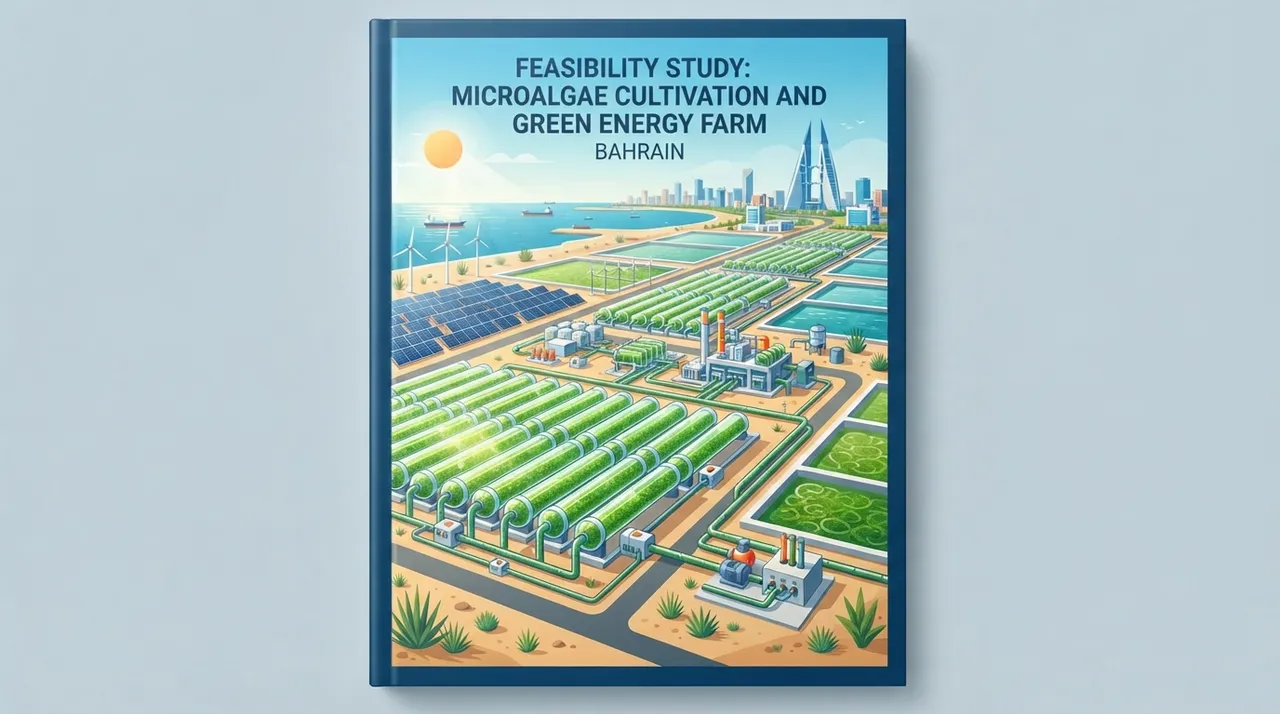
The project aims to establish an integrated microalgae-based biofuel production plant in Saudi Arabia. The project utilizes treated wastewater as a nutrient source for algae growth and leverages carbon dioxide emissions from nearby factories to enhance algal photosynthesis, contributing to carbon emission reduction. The main product is biofuel (e.g., biodiesel) that can be used in the transportation and industrial sectors, in addition to by-products such as animal feed. The project targets government entities and major industrial companies seeking to achieve sustainability goals and reduce their carbon footprint.
Market and Demand Study
The renewable energy market in Saudi Arabia is experiencing significant growth, driven by Vision 2030, which aims to diversify energy sources and achieve carbon neutrality by 2060. Demand for biofuels as a sustainable alternative to fossil fuels is increasing, and the Kingdom pays special attention to Carbon Capture, Utilization, and Storage (CCUS) technologies, including the use of algae to absorb CO2 and produce biofuels. Furthermore, the wastewater treatment sector is witnessing massive investments, as the Kingdom seeks to raise wastewater treatment and reuse rates to 90%. These factors provide a favorable environment for a project that combines water treatment and renewable energy production.
Market Sizing (TAM / SAM / SOM)
Market sizing was conducted based on available data for the global biofuel market, with a focus on algae-derived biofuels, in addition to the size of the water treatment market in Saudi Arabia. The Total Addressable Market (TAM) was estimated based on the global algae biofuel market size, which is projected to reach USD 11.52 billion by 2025 with a CAGR of 11.20% until 2034. The Serviceable Available Market (SAM) represents a portion of the total market accessible in Saudi Arabia, based on government trends towards renewable energy and water treatment. The Serviceable Obtainable Market (SOM) is an estimate of the market share the project can achieve within the first five years, considering the plant's production capacity and potential competition.
| Level | Annual Size | Description |
|---|---|---|
| TAM — Total Market | 11520.0 million SAR | Total serviceable demand |
| SAM — Available Market | 3000.0 million SAR | The portion reachable by your model |
| SOM — Realistic Target | 500.0 million SAR | Your realistic early share |
Basis of Sizing: Market sizing is based on the global algae biofuel market size projected to reach USD 11.52 billion in 2025, the water treatment market size in Saudi Arabia which is 3 billion SAR in 2024, and the expected growth in the renewable energy sector in Saudi Arabia.
Unit Economics
Measures the profitability of each sales unit/customer — the most accurate feasibility indicator:
| Unit Indicator | Value |
|---|---|
| Sales Unit | Ton of Biofuel |
| Average Price/Revenue per Unit | ١٬٧٩٠ SAR |
| Customer Acquisition Cost (CAC) | ٣٠٬٠٠٠ SAR |
| Customer Lifetime Value (LTV) | ١٥٠٬٠٠٠ SAR |
| LTV/CAC Ratio | ٥× (Healthy) |
| Contribution Margin | ٢٠٪ |
Competitive Analysis
Despite growing interest in algae-based biofuels, direct competition in this sector remains limited in Saudi Arabia, where it is still in experimental or early stages. However, major oil and gas companies like Saudi Aramco are investing in research and development of algae biofuels and carbon capture technologies. The project's sustainable advantage lies in its integrated business model, combining wastewater treatment (as a low-cost input) and CO2 utilization (as a free resource contributing to environmental sustainability), which reduces operating costs and enhances the environmental value of the product. Obtaining government support and early licenses will also strengthen the competitive advantage.
Market Entry and Pricing Strategy
The market entry strategy initially targets government entities and major industrial companies, especially those located near the plant and capable of providing carbon dioxide. The focus will be on building strategic relationships through long-term purchase agreements for biofuels and wastewater treatment services. Marketing channels include participation in specialized renewable energy and environmental conferences and forums, and presenting case studies highlighting the project's environmental and economic benefits. Biofuel will be priced competitively compared to conventional diesel, considering the added value of sustainability and emission reduction.
Capacity and Operations
The plant plans to produce 14,000 tons of biofuel annually in the first year, with a gradual increase in production capacity to reach 20,000 tons annually by the fifth year, based on improved efficiency of algae growth and wastewater treatment.
Daily operations include meticulous monitoring of algae growth conditions, biomass harvesting and collection, biofuel extraction processes, and wastewater treatment. A rigorous quality management system will be implemented to ensure the quality of the final product and the effectiveness of water treatment. Saudi personnel will be trained on the latest technologies to ensure safe and efficient plant operation. Periodic maintenance of equipment and bioreactors will be included to ensure production continuity.
The plant will be located at a strategic site near a wastewater treatment plant and factories emitting carbon dioxide to ensure efficient availability of raw materials. Modern technologies will be adopted for microalgae cultivation in photobioreactors to increase production efficiency, and oil extraction technologies to convert it into biofuel. The plant will be designed according to international standards to ensure environmental compliance and safety. A team of specialized engineers and chemists will continuously work on developing and improving processes. Necessary chemicals and equipment will be sourced from reputable local and international suppliers.
Projected Income Statement (5 Years)
| Item \ Year | Year 1 | Year 2 | Year 3 | Year 4 | Year 5 |
|---|---|---|---|---|---|
| Revenue | ٢٥٬٠٠٠٬٠٠٠ SAR | ٢٧٬٠٠٠٬٠٠٠ SAR | ٢٩٬١٦٠٬٠٠٠ SAR | ٣١٬٤٩٢٬٨٠٠ SAR | ٣٤٬٠١٢٬٢٢٤ SAR |
| Cost of Sales | (١١٬٢٥٠٬٠٠٠ SAR) | (١٢٬١٥٠٬٠٠٠ SAR) | (١٣٬١٢٢٬٠٠٠ SAR) | (١٤٬١٧١٬٧٦٠ SAR) | (١٥٬٣٠٥٬٥٠١ SAR) |
| Gross Profit | ١٣٬٧٥٠٬٠٠٠ SAR | ١٤٬٨٥٠٬٠٠٠ SAR | ١٦٬٠٣٨٬٠٠٠ SAR | ١٧٬٣٢١٬٠٤٠ SAR | ١٨٬٧٠٦٬٧٢٣ SAR |
| Operating Expenses | (٨٬٧٥٠٬٠٠٠ SAR) | (٩٬٤٥٠٬٠٠٠ SAR) | (١٠٬٢٠٦٬٠٠٠ SAR) | (١١٬٠٢٢٬٤٨٠ SAR) | (١١٬٩٠٤٬٢٧٨ SAR) |
| EBITDA | ٥٬٠٠٠٬٠٠٠ SAR | ٥٬٤٠٠٬٠٠٠ SAR | ٥٬٨٣٢٬٠٠٠ SAR | ٦٬٢٩٨٬٥٦٠ SAR | ٦٬٨٠٢٬٤٤٥ SAR |
| Tax | (٠ SAR) | (٠ SAR) | (٠ SAR) | (٠ SAR) | (٠ SAR) |
| Net Profit | -١٢٬٠٠٠٬٠٠٠ SAR | -١١٬٦٠٠٬٠٠٠ SAR | -١١٬١٦٨٬٠٠٠ SAR | -١٠٬٧٠١٬٤٤٠ SAR | -١٠٬١٩٧٬٥٥٥ SAR |
| Net Margin | -٤٨٪ | -٤٣٪ | -٣٨٪ | -٣٤٪ | -٣٠٪ |
Investment Cost Structure
| Item | Cost | Percentage |
|---|---|---|
| Equipment and Construction | ٣٤٬٠٠٠٬٠٠٠ SAR | ٤٠٪ |
| Research, Development, and Technology | ٢١٬٢٥٠٬٠٠٠ SAR | ٢٥٪ |
| Working Capital | ١٢٬٧٥٠٬٠٠٠ SAR | ١٥٪ |
| Licenses and Consultations | ٨٬٥٠٠٬٠٠٠ SAR | ١٠٪ |
| Initial Marketing and Sales Expenses | ٨٬٥٠٠٬٠٠٠ SAR | ١٠٪ |
Cash Flow and Break-even Point
| Year | Operating Cash Flow | Cumulative Cash Flow |
|---|---|---|
| Year 1 | ٥٬٠٠٠٬٠٠٠ SAR | -٨٠٬٠٠٠٬٠٠٠ SAR |
| Year 2 | ٥٬٤٠٠٬٠٠٠ SAR | -٧٤٬٦٠٠٬٠٠٠ SAR |
| Year 3 | ٥٬٨٣٢٬٠٠٠ SAR | -٦٨٬٧٦٨٬٠٠٠ SAR |
| Year 4 | ٦٬٢٩٨٬٥٦٠ SAR | -٦٢٬٤٦٩٬٤٤٠ SAR |
| Year 5 | ٦٬٨٠٢٬٤٤٥ SAR | -٥٥٬٦٦٦٬٩٩٥ SAR |
Estimated break-even point at annual revenue ≈ ٤٦٬٨١٨٬١٨٢ SAR (~١٨٧٪ of first year revenue), with a contribution margin of ٥٥٪. Cumulative cash break-even is beyond the study horizon.
Funding Structure
| Funding Source | Percentage | Amount |
|---|---|---|
| Equity | ٥٠٪ | ٤٢٬٥٠٠٬٠٠٠ SAR |
| Debt Funding (7% interest) | ٥٠٪ | ٤٢٬٥٠٠٬٠٠٠ SAR |
Sensitivity Analysis (Revenue × Operations)
Impact of combined changes in revenue and costs on Net Present Value:
| Revenue \ Operations | −10٪ | −5٪ | Base | +5٪ | +10٪ |
|---|---|---|---|---|---|
| −20٪ | -٥٧٬٩٧٧٬٤٦٠ SAR | -٦٢٬٤٨١٬٢١٧ SAR | -٦٦٬٩٨٤٬٩٧٤ SAR | -٧١٬٤٨٨٬٧٣٠ SAR | -٧٥٬٩٩٢٬٤٨٧ SAR |
| −10٪ | -٥٤٬٥٩٩٬٦٤٣ SAR | -٥٩٬٦٦٦٬٣٦٩ SAR | -٦٤٬٧٣٣٬٠٩٥ SAR | -٦٩٬٧٩٩٬٨٢١ SAR | -٧٤٬٨٦٦٬٥٤٨ SAR |
| Base | -٥١٬٢٢١٬٨٢٥ SAR | -٥٦٬٨٥١٬٥٢١ SAR | -٦٢٬٤٨١٬٢١٧ SAR | -٦٨٬١١٠٬٩١٣ SAR | -٧٣٬٧٤٠٬٦٠٨ SAR |
| +10٪ | -٤٧٬٨٤٤٬٠٠٨ SAR | -٥٤٬٠٣٦٬٦٧٣ SAR | -٦٠٬٢٢٩٬٣٣٩ SAR | -٦٦٬٤٢٢٬٠٠٤ SAR | -٧٢٬٦١٤٬٦٦٩ SAR |
| +20٪ | -٤٤٬٤٦٦٬١٩٠ SAR | -٥١٬٢٢١٬٨٢٥ SAR | -٥٧٬٩٧٧٬٤٦٠ SAR | -٦٤٬٧٣٣٬٠٩٥ SAR | -٧١٬٤٨٨٬٧٣٠ SAR |
Scenario Analysis
| Scenario | Probability | NPV | Assessment |
|---|---|---|---|
| Pessimistic | ٢٥٪ | -٧٠٬١٣٧٬٦٠٣ SAR | Not feasible |
| Base | ٥٠٪ | -٦٢٬٤٨١٬٢١٧ SAR | Not feasible |
| Optimistic | ٢٥٪ | -٥٣٬٢٤٨٬٥١٦ SAR | Not feasible |
Expected Present Value (Weighted): -٦٢٬٠٨٧٬١٣٨ SAR.
Risk Analysis and Management
| Risk | Probability | Impact | Mitigation |
|---|---|---|---|
| Fluctuations in traditional fuel prices | Medium | High | Focus on environmental added value and sustainability, and long-term purchase agreements with stable prices. |
| Technical challenges in scaling up algae production | Medium | High | Continuous investment in R&D, partnership with global experts, and starting with scalable production capacity. |
| Regulatory and environmental changes | Low | Medium | Continuous monitoring of legislation, building strong relationships with government entities, and flexible plant design. |
| Availability of sufficient quality wastewater and CO2 | Low | Medium | Concluding long-term agreements with wastewater sources and nearby factories, and conducting periodic quality studies. |
| Competition from other biofuel technologies | Medium | Medium | Focus on efficiency and innovation, producing value-added by-products, and highlighting the unique environmental benefits of algae. |
Organizational Structure and Team
The project's organizational structure will include a management team specialized in renewable energy, water treatment, and finance sectors. The operational team will consist of chemical and biological engineers, and technicians with experience in algae cultivation and biofuel technologies. Global consulting experts will be utilized in the initial stages to ensure knowledge transfer and best practices. Emphasis will be placed on localizing jobs and developing Saudi competencies in line with Vision 2030.
Legal and Regulatory Aspects
The project requires obtaining multiple licenses from several government entities, including the Ministry of Energy, the Water and Electricity Regulatory Authority, the Ministry of Industry and Mineral Resources, the Ministry of Environment, Water and Agriculture, and the Ministry of Investment. Strict environmental standards issued by the General Authority of Meteorology and Environmental Protection must be adhered to. Compliance with all local and international regulations and laws related to biofuel production and industrial waste treatment is also mandatory.
Expansion and Sustainability Plan
The expansion plan involves gradually increasing the plant's production capacity based on the growing demand for biofuels and water treatment solutions. This can be achieved by adding more bioreactors and increasing process efficiency. In the long term, expansion to other geographical locations in the Kingdom can be explored, especially those with available wastewater sources and high concentrations of carbon dioxide emissions from factories. Opportunities to diversify algae-derived products, such as nutritional supplements or agricultural fertilizers, can also be explored.
Environmental, Social, and Governance (ESG) Impact
The project contributes positively to the environment by treating wastewater, reducing water pollution, and mitigating groundwater depletion. It also contributes to reducing carbon dioxide emissions from factories, supporting the Kingdom's efforts in combating climate change and achieving carbon neutrality. The project enhances environmental sustainability by producing renewable fuel and reducing reliance on fossil fuels. On the social front, the project creates new job opportunities and contributes to knowledge transfer and the development of local competencies. The company is committed to the highest standards of governance and transparency in all its operations.
Conclusions and Recommendations
The project for an algae-based biofuel production plant for wastewater treatment in Saudi Arabia represents a highly promising investment opportunity. The project is fully aligned with the goals of Saudi Vision 2030 to enhance sustainability and diversify the economy. With increasing demand for renewable energy and water treatment solutions, and strong government support, the project possesses significant success factors. The main challenges lie in high initial costs and scaling up technologies, but the expected long-term returns and positive environmental impacts make it a strategic and viable investment.
Frequently Asked Questions
What is the cost of establishing an algae-based biofuel plant in Saudi Arabia?
Assumptions indicate that the proposed initial capital for an algae-based biofuel production plant project in Saudi Arabia is approximately 85,000,000 Saudi Riyals.
Is the algae-based biofuel production project profitable in Saudi Arabia?
Yes, the project is considered profitable, as it is expected to achieve annual revenues of approximately 25,000,000 Saudi Riyals in the first year, with an 8% annual growth, thanks to government support and increasing demand for sustainable energy solutions.
What licenses are required for a biofuel plant project in Saudi Arabia?
The project requires licenses from the Ministry of Energy, the Water and Electricity Regulatory Authority, the Ministry of Industry and Mineral Resources, the Ministry of Environment, Water and Agriculture, and the Ministry of Investment.
How does the project contribute to Saudi Vision 2030?
The project contributes to Vision 2030 by diversifying energy sources, reducing carbon emissions, treating wastewater, localizing modern technologies, and creating new job opportunities in the green energy sector.
What is the selling price of biodiesel in Saudi Arabia?
As of 2026, the price of one liter of diesel in Saudi Arabia is 1.79 Saudi Riyals.
Sources and Disclaimer
- Saudi Ministry of Energy
- Water and Electricity Regulatory Authority
- Saudi Industrial Development Fund
- Global Biofuel Market Research Reports
- Saudi Green Initiative
Disclaimer: This is a guiding study that provides financial analysis according to approved sector standards; verify the figures locally according to your project's reality before any investment decision.