
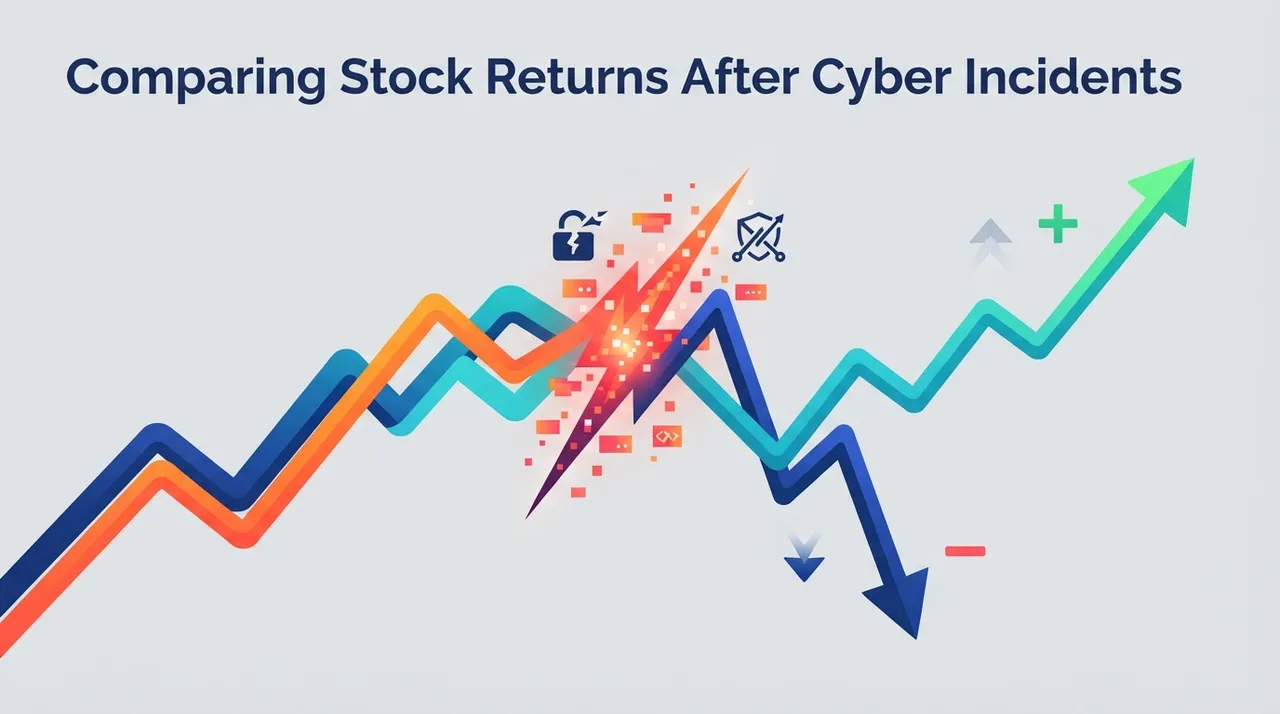
What it is: Comparing Stock Returns After Cyber Incidents
Comparing stock returns after cyber incidents is an analytical approach focused on measuring and analyzing the direct and indirect financial impact of cyber incidents (such as data breaches, ransomware attacks, or digital service outages) on the stock performance of affected companies in the financial market. This approach goes beyond merely identifying immediate losses to gain a deeper understanding of how the market responds to these events, their impact on investor confidence, and the company's value in the short and medium term. The analysis relies on studying changes in stock prices after an incident occurs, comparing them to the performance of general market indices or similar unaffected companies' stocks, to accurately determine the extent of the negative (or in rare cases, positive) impact. It also includes analyzing factors such as company size, industry type, incident nature, and the effectiveness of the company's response in mitigating the impact.
This type of analysis typically involves using econometric models to estimate abnormal returns attributed directly to the cyber incident. These returns represent the difference between the actual stock returns and the expected returns in the absence of the incident. The goal is to provide actionable insights for investors, financial analysts, and risk managers to help them make informed decisions. For example, investors can use this data to assess risks associated with specific companies, while managers can use it to justify investments in cybersecurity measures or improve crisis response plans.
Why it helps
- Accurate Cyber Risk Assessment: Provides concrete data on the true cost of cyber incidents to a company's market value, helping to assess risks more accurately and prioritize cybersecurity investments.
- Improved Investment Decisions: Enables investors and financial analysts to understand how the market reacts to cyber incidents, helping them make more informed investment decisions, whether by reducing exposure to companies with poor security records or capitalizing on buying and selling opportunities after events.
- Enhanced Crisis Management Strategies: Companies can use the results of these comparisons to evaluate the effectiveness of their cyber incident response plans and modify them to improve future responses and minimize financial damages.
- Support for Governance and Compliance: Helps identify best practices in cybersecurity and provides evidence of the importance of investing in data governance and compliance with security standards to reduce legal and financial risks.
- Identifying Resilient Companies: Highlights companies that demonstrate high resilience to cyber incidents, as some companies show the ability to recover quickly or even increase their stock value after an incident due to their strong response and transparency, making them attractive investment targets.
How to get value
- Smart Partner and Client Selection: If you are a freelancer or entrepreneur offering services to other companies, use this analysis to assess the stability of your potential clients or partners. Companies that show stable stock returns after cyber incidents (or those that haven't experienced major incidents) often have robust security infrastructure and effective risk management. This reduces the likelihood of your own project being affected by their security issues, ensuring business continuity and timely payments, and increasing your productivity by minimizing unexpected interruptions or problems.
- Developing Specialized Consulting Services: If you have expertise in cybersecurity or risk management, you can leverage this research to offer specialized consulting services to companies, helping them understand the impact of cyber incidents on their market value. Design offerings that focus on improving cyber resilience and incident response strategies, demonstrating the value of your services by pointing to potential losses revealed by stock return studies. This can open new markets for you and significantly increase your income.
- Building an Informed Investment Portfolio (for Entrepreneurial Investors): If you are an entrepreneur with personal investments or investing a portion of your business profits, use this analysis to guide your company selections. Avoid companies with poor cybersecurity records or those that show sharp declines in stock returns after incidents. Focus on companies that demonstrate strong response and resilience, which protects your investments and increases your long-term returns, thereby strengthening your own business capital.
Smart use tip
Don't just look at the immediate drop in stock price after a cyber incident. Focus on analyzing the stock's behavior over the medium term (3 to 6 months) after the incident. This period often reveals the company's true ability to recover and regain market confidence, or the continued deterioration of performance. This gives you a deeper, more reliable insight into the company's resilience and risk management, which can be effectively utilized in your investment decisions or long-term partnerships.








Comments 0
No comments yet — be the first to share your thoughts.
Share your thoughts
To comment, sign in first — we email you a one-time code (no password). This keeps the discussion clean.
Sign in to comment →