
What it is

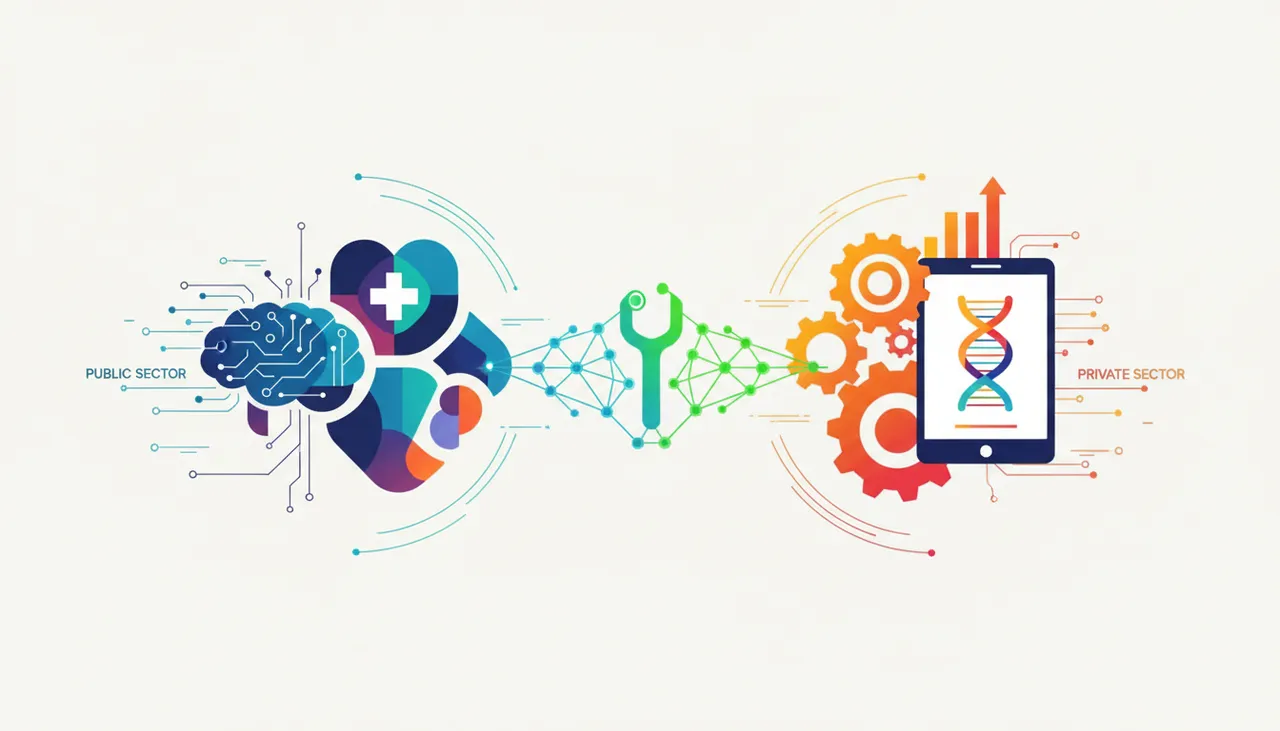
The term 'AI in Healthcare: Public vs. Private Sector' refers to the study and comparison of how Artificial Intelligence technologies are integrated and utilized in different healthcare systems, whether managed by governments (public sector) or by commercial and private entities (private sector). It's not about choosing one over the other, but rather understanding the unique challenges and opportunities each sector faces when adopting these advanced technologies. AI here encompasses a wide range of technologies such as machine learning, natural language processing, computer vision, and big data analytics, which are used to improve diagnosis, treatment development, operational management, and personalized patient care.
In the public sector, the focus is often on improving efficiency, reducing costs, and providing equitable and comprehensive healthcare to a large population. In contrast, in the private sector, the primary drivers might be rapid innovation, offering personalized and premium services, achieving a competitive advantage, and profitability. Each context requires different strategies for AI implementation, considering budget constraints, regulatory frameworks, data privacy, and available infrastructure.
Why it helps
Improved Diagnostic Accuracy and Treatment: AI contributes to analyzing vast amounts of medical data, such as radiology images, lab results, and electronic health records, to detect patterns and provide more accurate and faster diagnoses. It can also assist physicians in making informed treatment decisions based on evidence, reducing errors and increasing treatment effectiveness. Private hospitals benefit from rapid and accurate diagnoses to provide advanced care, while public institutions can use it to enhance the capabilities of doctors in remote areas or those lacking specialists.
Personalized Healthcare: AI can analyze patient genetic and medical data to develop customized treatment plans tailored to each individual's needs, enhancing treatment effectiveness and reducing side effects. This application finds significant acceptance in the private sector, where premium and personalized services can be offered, but it also represents an opportunity for the public sector to improve healthcare outcomes for specific population groups by understanding common disease patterns.
Automation of Administrative and Operational Tasks: AI helps automate many routine and administrative tasks in hospitals and clinics, such as appointment scheduling, inventory management, insurance claims processing, and even initial medical note-taking. This reduces the administrative burden on medical staff, allowing them to focus more on patient care. All institutions benefit from this aspect; the private sector achieves higher operational efficiency, and the public sector can serve a larger number of patients with fewer resources.
Drug Discovery and Development: AI accelerates the process of discovering new drugs and improving existing ones by analyzing chemical compounds, predicting their efficacy, and testing them virtually. This significantly reduces the time and cost required for drug development, benefiting both public and private sectors by providing newer and more effective treatments for patients.
Disease Prevention and Public Health Surveillance: AI can analyze public health data, such as outbreak patterns, environmental factors, and health behaviors, to predict potential epidemics and develop effective preventive strategies. This aspect is particularly crucial for the public sector in public health, where resources can be proactively directed to protect communities. The private sector can also offer personalized preventive health solutions to individuals.
How to get value
As an entrepreneur in the field of AI, you can leverage these trends by developing specialized software solutions that serve specific needs in either the public or private sector. For example, you can create a cloud-based AI platform to analyze X-ray or MRI images, providing accurate and quick preliminary reports to doctors. This platform can be of significant value to public hospitals in rural areas lacking radiology specialists, allowing them to get expert opinions remotely and quickly. Simultaneously, private hospitals can use it to increase the efficiency of their radiology departments and reduce patient waiting times, thereby enhancing their service quality and increasing customer satisfaction. You can offer this service on a monthly subscription model (SaaS), ensuring recurring income. Start by targeting a few small clinics or hospitals to gather feedback and refine your product, then gradually expand based on the success stories you achieve. You can also build and process a large clinical database to provide consultations to pharmaceutical companies for identifying promising drug candidates or identifying populations most susceptible to certain diseases, opening new avenues for revenue.
Smart use tip:
Focus on the actual problems faced by healthcare systems today, whether in operational efficiency or quality of care. Start by offering a solution to a small, specific problem, such as improving appointment scheduling using AI, or analyzing patient data to identify individuals at risk of chronic diseases. Once you prove the value of your solution in a limited domain, it becomes easier to expand your services or build more complex solutions. Collaborating with doctors and healthcare professionals from the outset is crucial to ensure your solution is practical and meets real market needs.







Comments 0
No comments yet — be the first to share your thoughts.
Share your thoughts
To comment, sign in first — we email you a one-time code (no password). This keeps the discussion clean.
Sign in to comment →